
Posted: January 29, 2024
5 Tips to Reduce Your Road Salt Use
Road Salt is toxic to freshwater ecosystems and harms our urban streams. What can you do to reduce your use of this common pollutant?
Road Salt is everywhere in the National Capital Region over the winter months. Unfortunately, we know that the salt spread on roads, sidewalks, driveways, and parking lots ends up washing into our urban creeks and streams, causing problems for those ecosystems. In the 30 streams that we have monitored over the past 4 years, 90% of the sites routinely saw levels of contamination from salt that cause harm to freshwater species.
Canadians today tend to misuse and overapply road salt. While municipalities and private companies need to tackle this issue at a large scale, there is much you can do as an individual to reduce road salt use. Even if you’re not the one who applies road salt for your household, skip ahead to Tip #5 to take action.
Tip #1: Use alternatives for traction
Road salt is a chemical de-icer, which can lead to a lot of misunderstanding about how it works. The salt dissolves in water, and in so doing, lowers the freezing point of the solution it creates. When you spread it on water, you want the salt to disappear along with the ice, as both turn into a salty watery solution and then flow away from the surface.
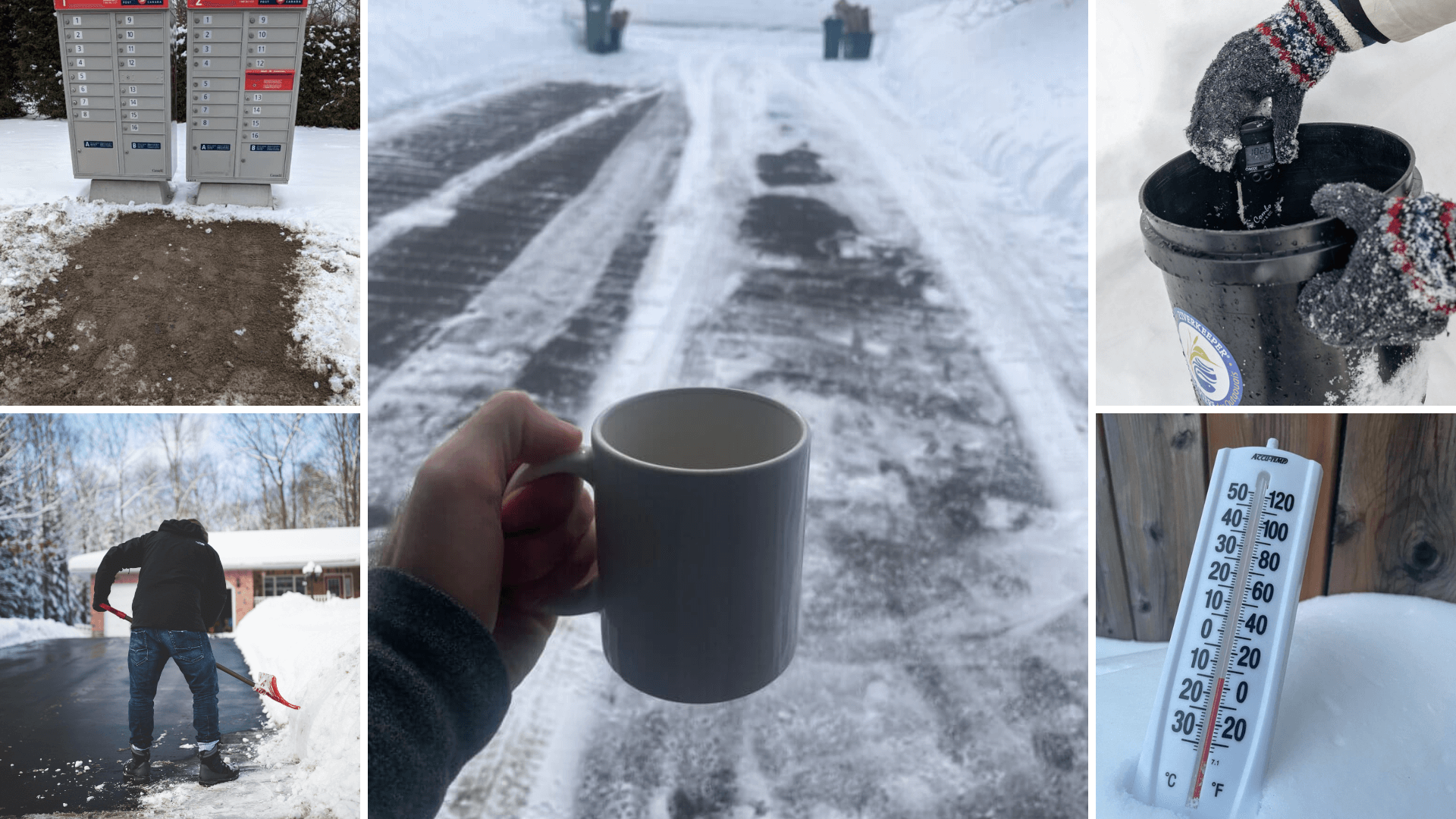
Salt is not intended for grit or traction. If you are spreading more and more salt, without waiting for it to dissolve, so that you can walk on the crystals and have a grip on the ice, you are using salt incorrectly. Instead, reach for a product like sand or gravel to provide a layer of traction between your boot and the ice. Plus, at the end of the season, you can sweep up the remaining gravel and use it again the following year, saving money and helping the environment!
Some people even suggest some more “out there” ways of gaining more traction, such as cat litter or coffee grounds!
Tip #2: Check the temperature
A solution made of road salt and water has a lower freezing point than water alone. But that salty solution will still freeze! Using road salt at extremely low temperatures doesn’t do anything at all to prevent or remove ice buildup.
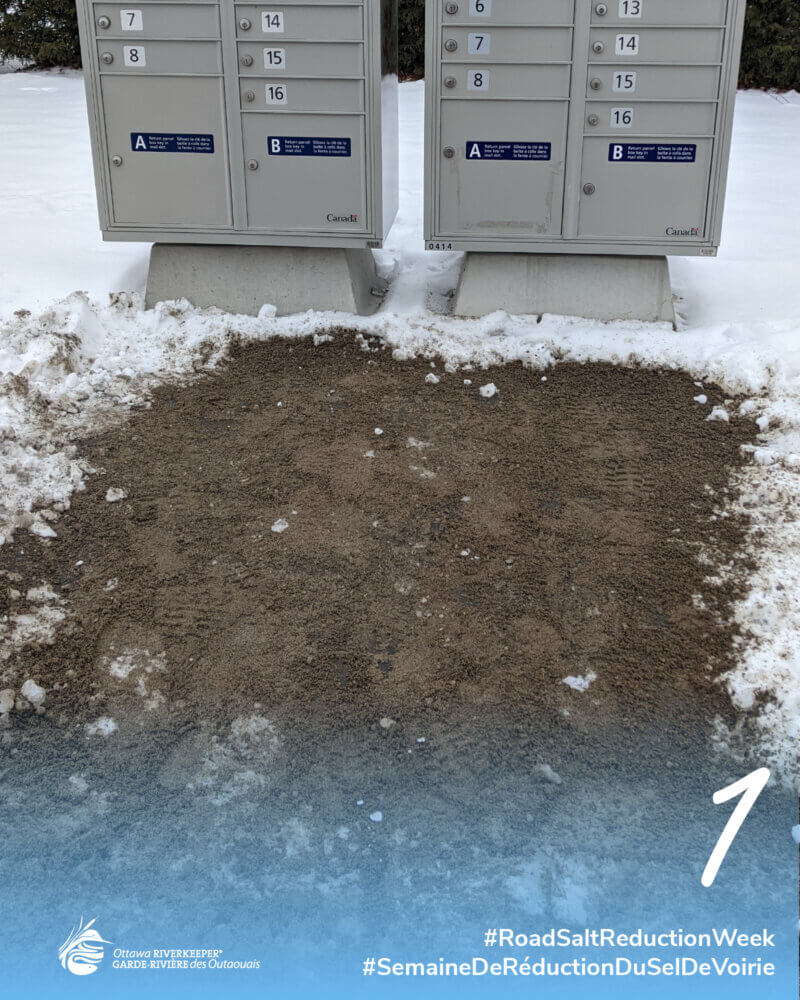
The temperature at which salt stops being effective depends on what kind of salt you are using. The most common variety is rock salt, which is the compound NaCl, and when it begins to lose effectiveness at lower temperatures you need more and more salt to achieve the same result. Once temperatures reach -10° Celsius and below, NaCl becomes so ineffective at removing ice that it is not worth using.
So next time you go to grab some salt, check the temperature, and the forecast, first! If it is lower than -10° Celsius, grab an alternative instead.
Tip #3: Use less
One of the simplest ways to reduce salt use is just that: use less salt! Applying more than enough salt won’t accomplish de-icing any better, and only serves to harm our freshwater ecosystems.
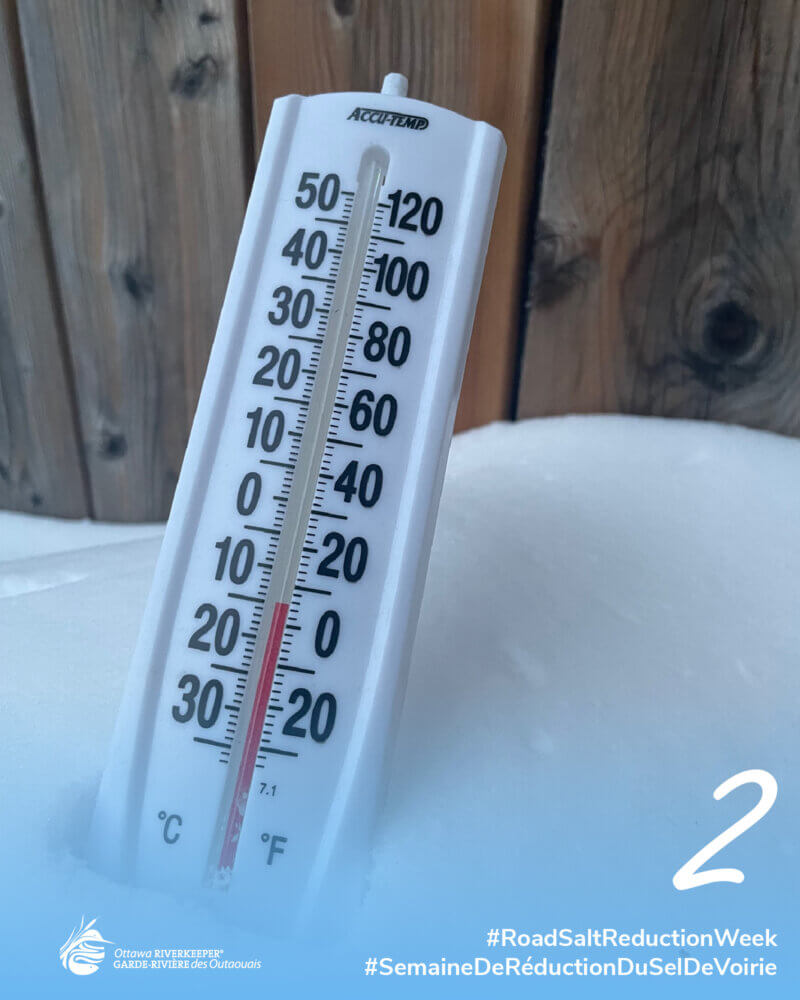
For each square metre of surface area, you only need 2 tablespoons of salt. Put another way, that’s roughly 8 tablespoons of salt per standard sidewalk square in the City of Ottawa. Or, one coffee mug full for a standard driveway.
It is also better to spread salt out instead of letting it clump together. A common rule of thumb is that if you are stepping on more than seven grains of salt in a single footstep, then that is too much salt.
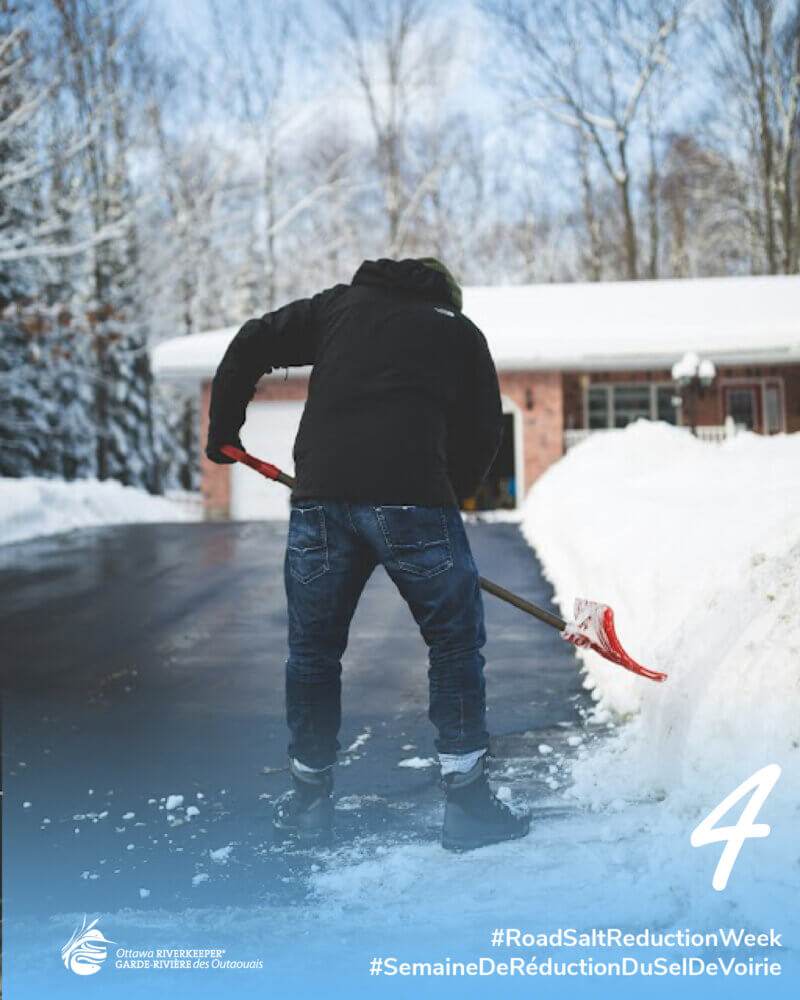
Tip #4: Shovel often
A great way to prevent the need for salt is to nip ice buildup in the bud. Shovelling snow before it has the time to melt and then re-freeze means you’ll need to spend less time worrying about ice.
Getting your shovel out also increases salt effectiveness as well, as salt will work best before ice has formed. Road salt mixes with the water and prevents ice from forming; it isn’t as useful once ice is already present. So starting from a clear surface is a great way to reduce the need for salt.
Tip #5: Spread the word
Ok, this tip is a little different, but it is a great way to reduce our collective salt use: let people know what you’ve learned about using road salt effectively! Many people are unaware of how road salt works, when they should use it (or not), and what alternative actions they could take.
Here are some ways to spread the word:
- Share a story about how you’ve reduced your road salt use.
- Test your friends’ knowledge of road salt use with our Road Salt Usage Quiz.
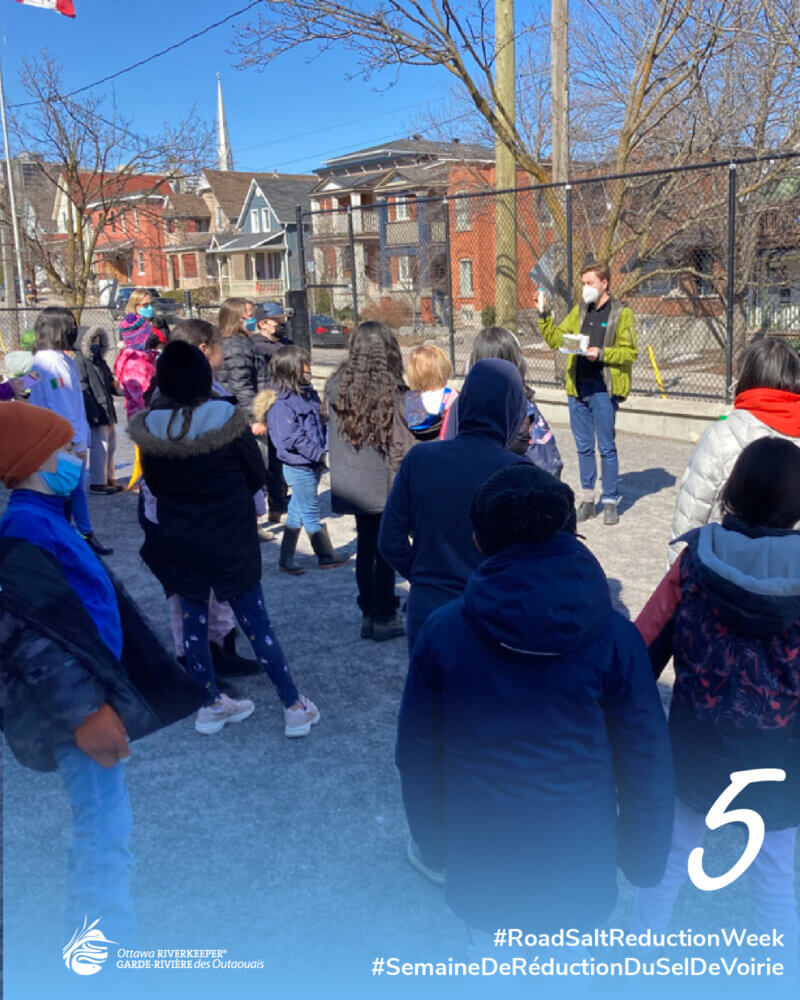
- Tell a teacher about our resources and lesson plans on road salt for grades 2-12.
- Share the data collected by community scientists about Chloride levels in local streams.
- Send people to this article! Here are links to do so on Facebook, X (Twitter), LinkedIn and by email.
Road salt overuse is a solvable problem. We can reduce our reliance on this toxic substance, which, while useful, is causing damage to our amazing urban ecosystems. Follow these tips this winter and be part of the solution!
Thanks very much for these tips!
I have another tip that works for some of us rural folks: save up our wood ashes from cleaning out our wood heat stoves each week, and spread on ice- it adds traction and the dark colour attracts the sun’s heat to help melt a pitted texture into the ice. It is very alkaline, so don’t over-use it either. A small amount is good for the plants and soil, too much is harmful. Thanks for listening!
I use a product called Ecotraction instead of salt. It is a lava rock grind that provides traction for walking on an icy path or driveway.
You can sweep it up in the Spring for use next winter. Local hardware stores sell it.