
Posted: April 15, 2022
Your questions answered: Cave Dive webinar follow-up
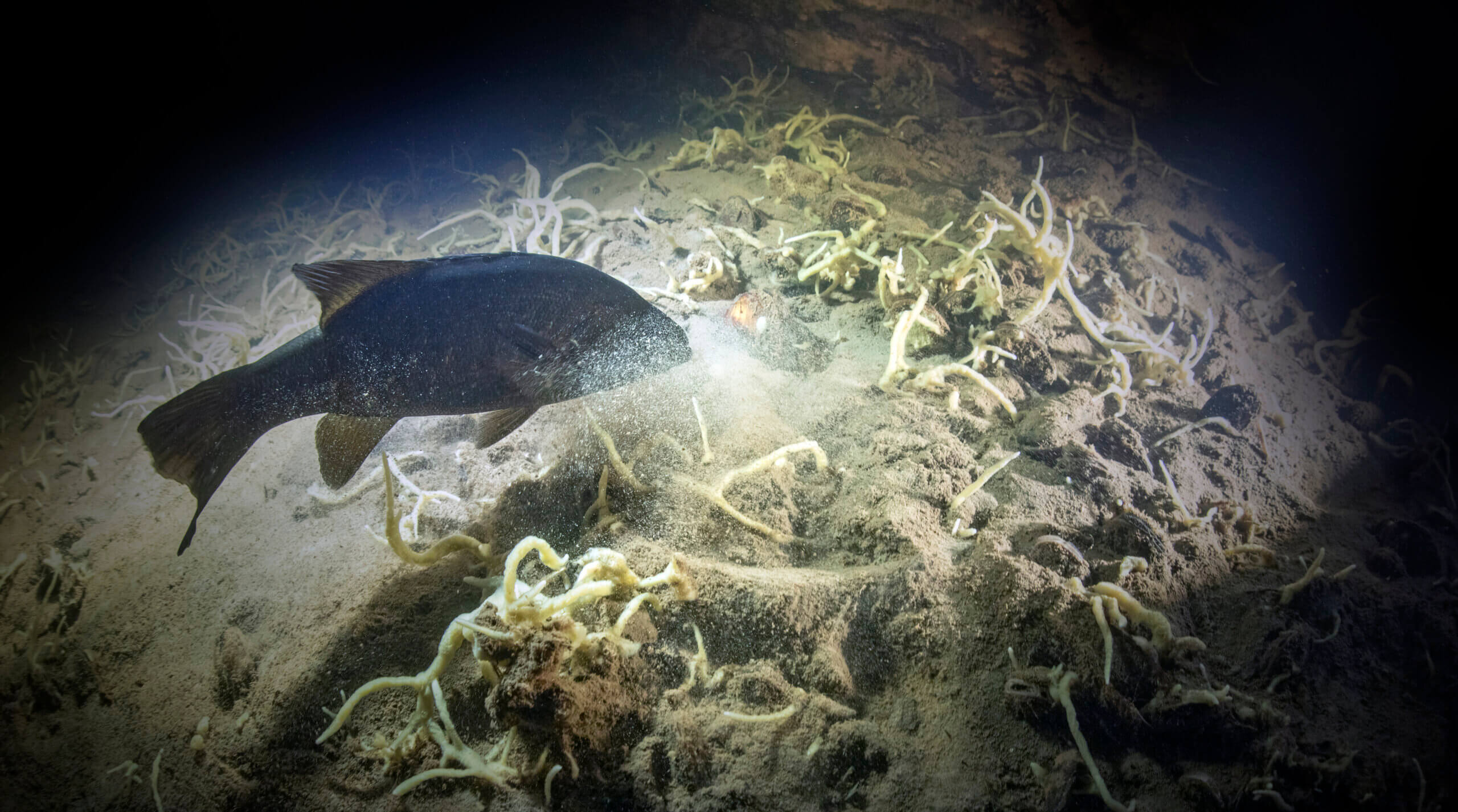
In March we hosted a webinar with André L. Martel and Jill Heinerth, and there were so many great questions that we couldn’t get to them all! In this blog, André and Jill kindly wrote out some answers to your questions. Watch the webinar and give them a read!
On March 8th 2022, Ottawa Riverkeeper hosted a webinar with Dr. André L. Martel, Research Scientist in Zoology at the Canadian Museum of Nature, and the amazing Explorer in Residence for the Royal Canadian Geographical Society, Jill Heinerth. The pair discussed their recent expeditions to explore some of the underwater caves of the Ottawa River, specifically the Gervais and Three-Island caves in the Westmeath area. Their goal was to study the wildlife found in these mostly unknown caves, with specific interest in the freshwater mussel species that call these caves home.
Watch the recording of their talk here!
As discussed at the end of the presentation, we had so many great questions, and not enough time to answer them all! André and Jill kindly offered to write up answers to some of your questions, and we have collected those answers in the blog below. Thank you to everyone who listened to the webinar and submitted questions!
Questions:
From Erik: Have there ever been marine species of mussels detected inland (aside from Zebra and Quagga)?
André: No. The river being a freshwater environment, only species of mussels and fishes adapted to living in freshwater occur inside those caves, as well as in the Ottawa River at large. In the past, long ago, anadromous species of fishes (ex. Alewife, American shad, Atlantic salmon), living in the Gulf of St. Lawrence (marine environment), may have migrated up the Ottawa river and were possibly coming up towards Ottawa to spawn, although there are no solid proof of that – let’s remember that in the 1800s sometimes Harbour seals were spotted right here in Ottawa. As of today, all species of fishes and mussels and other invertebrates found in the underwater caves near Westmeath, including across the entire Ottawa River itself, are freshwater species. One species of fish, and just about the only one, that could possibly go up and around hydro dams, wiggling its way up on land at night and migrate up around hydro dams facilities along the Ottawa River is the American Eel. Note however that this fish is now extremely rare and endangered, having been impacted by the blockage of rivers by dam construction. Also, there are no Zebras and no Quaggas in the caves, or the vicinity of the caves.
From Carol: Are log perch a host fish for mussels?
André: We do not know which species of freshwater mussels present in the caves would use the log perch as a host fish. It is possible that one of the mussel species present inside the caves use this fish, but we have no idea. There is no information in the literature that points to the log perch as the host fish of one of the mussel species found in the caves. Yet, it is possible that one of those species can use it as a host and complete larval metamorphosis on the gills of this fish. Note again the mussels species found inside the caves: Eastern Elliptio, Plain Pocketbook, Black Sandshell, Hickorynut, Triangle Floater, Eastern Lampmussel.
From Beth: How much of their life cycle do the fish, esp. the black bass, spend in the cave?
André: We do not know the answer. It is possible that some species of fish occurring in the cave are only passing, using the cave temporarily (sturgeon) to forage, or seek shelter, while other may spend much longer, residing mostly inside the caves (pikes ?); we know just about nothing on the behaviour of the fishes living inside the caves.
From Nancy: Are there any invasive species found within the cave system that might change the population dynamics of the native species?
André: We have not seen any invasive species living inside the caves, nor in the immediate surrounding. Also, there are no zebra mussels in the area, hence so far good news!
From Myriame: Which species of crayfishes were found in the caves?
André: We have not collected any crayfish until now, just filmed them. This is the next step, collecting the different species of invertebrates inside the cave for accurate species identification. The total biodiversity found inside the caves will most probably be quite astonishing.
From Nancy: Are there any species found within the caves that are not found in the adjacent Ottawa River?
Jill: We have not confirmed any species that are specifically in the cave and not in the river, but there may be differences between similar species living in one place or the other. The sponges have a different appearance in the cave, lacking the green colour we observe in the river. The crayfish may be a pale variant and we are still trying to determine if the mantle colorations are similar between river-bottom and cave-dwelling mussels.
From Carol: Do you have any speculations now based on the study of how the mussels might complete their life cycle within the caves?
André: I would say that the answer could depend on how deep inside the caves a given population of mussels lives inside the cave. For a mussel population that is found not very far from an entrance, it is possible that recruitment (arrival of young juveniles) is occurring via glochidia that originate from female mussels that live both outside the caves, and inside the caves, at a short distance from the entrance. Alternatively, for a population of mussels found deep inside the caves it is possible that all recruitment, all juveniles replenishing the population or a given mussel bed originate from females mussels permanently living deep inside the cave. We know just about nothing on the population dynamics nor on the origin (source) of the juveniles. No doubt that fishes that regularly come in and out of the caves could carry glochidia originating from female mussels living outside the caves. Fishes are very mobile critters.
From Carol: Does the cave darkness impact the colouration of the mantle and siphons on the mussels? The photos seem to show typical colouring.
Jill: We’re not sure yet, but that is one of the questions we are investigating.
From Pascal: Est-il possible qu’il y ait des espèces marines de la mer de Champlain qui soient restées emprisonnées dans ces grottes sous-marines?
André: Je ne crois pas qu’il y ait des espèces marines qui se retrouvent dans les cavernes ou même la rivière des Outaouais comme telle. Il n’y a pas non plus d’épinoches à trois épines dans le secteur (telle que retrouvée au lac Pink). Voir cependant la réponse que je donne à la question d’Erik, ci-dessus.
From anonymous: Under what conditions are you unable to cave dive?
Jill: Each day that I go cave diving, I have to assess the current environmental conditions. The flow is at times too strong. The low visibility generally causes me to minimize my goals and increase my gas buffers, but does not often account for an aborted dive. On some occasions, I have gear issues that cause me to cancel and sometimes intangible feelings will cause me to pull back on goals or abort. In my opinion, the ultimate rule for being in the exploration game for very long is that you are prepared to abort or say no.
From anonymous: Do you see big differences in the environment between winter and summer?
Jill: Yes, the temperature changes from 1°C to as warm as 20°C. The life changes throughout the seasons. The fall leaf litter is an obvious change, but I also see sponges grow and die back in different seasons. The flow is the main factor that changes conditions from dive to dive, altering the silt cover and the suspended sediments. The mussels behave differently in various flow velocities too.
From Gab: Is the life cycle stage where the larvae attach to the gills of a fish a mutualistic association between fishes and mussels? Or is it one sided (be it neutral or even parasitic in nature)?
André: First of all, it is not ‘mutualism’ in that the fish does not benefit from the glochidia attached to its gills or fins. Some say parasitism and indeed in the case of mussels spending many weeks or months on the gills of the fish it means that the fish will give up some nutrients originating from its gills/blood to ensure glochidia development; in those cases, it is parasitism, but it is a very mild level of parasitism; in the case of mussels where the glochidia attach to the fins of the fish, then really the fish feels nothing, the glochidia is so tiny and it does not affect the swimming ability of the fish either; in that sense it becomes commensalism, ie help one species and does not bother the other species (the host). If one wishes to be complete here with an answer, there is strong suggestion that the very presence of the adult mussel population in a given habitat will create many positive spin offs to the local fish populations, ie cleaner water, shelter for juvenile fish among empty shells, zooplankton and small invertebrates living among live mussels and empty shells, and in that sense helping positively the juveniles fishes living in the area, finding more food; at the end, in ecology, this is called ‘facilitation’, ie creation or improvement of a habitat by one species helping another species (almost mutualism, but not quite the same definition). Check out ‘facilitation’ in scientific journals and you will read more about this fascinating topic.
< Previous post Next post >