
Posted: March 27, 2024
Ice Conditions in the Watershed: Worrying Trends
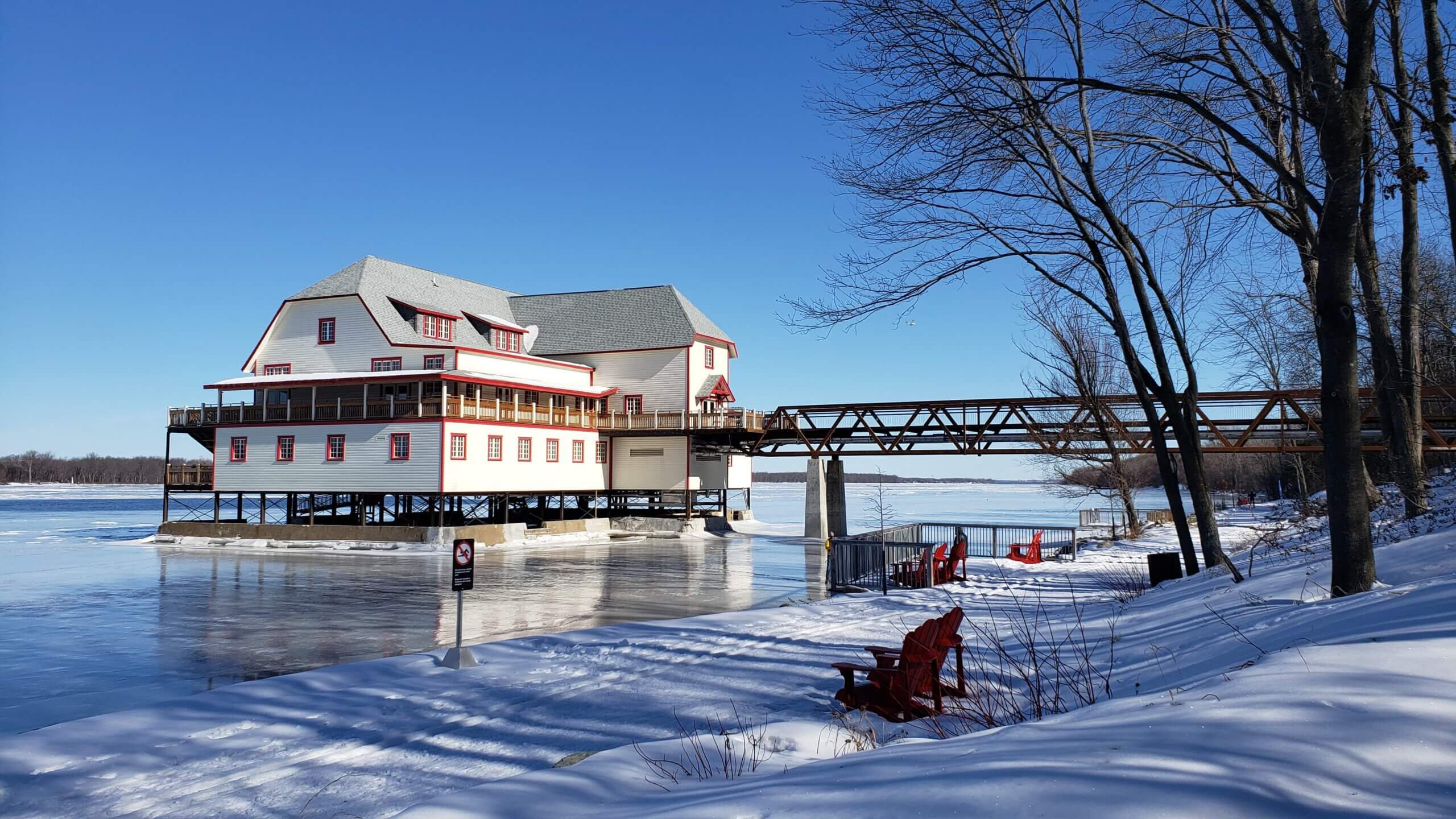
In the southern portion of the watershed, many have noticed a remarkably short period of ice cover on the river this year. This can have consequences not only for our winter activities but also for wildlife and broader watershed health.
Have you seen ice on the river? We’d barely finished asking this question to the many participants in our community-based monitoring program this winter when those same volunteers began to report that ice had formed only to retreat once again. In fact, ice retreated so early this year that we received multiple reports to our Pollution Hotline in early March from residents concerned that ice huts on the river would go through the ice, despite the required removal date being weeks away on March 15th.
At the Ottawa Riverkeeper office in the NCC River House in Ottawa, we watched the river slowly freeze and then, only one week later, begin to thaw again. Ottawa Riverkeeper volunteers reported similar observations, expressing their shock at the lack of ice and the presence of springtime birds in the middle of winter. Depending on where you are in the watershed, you might have noticed this shorter ice season yourself.
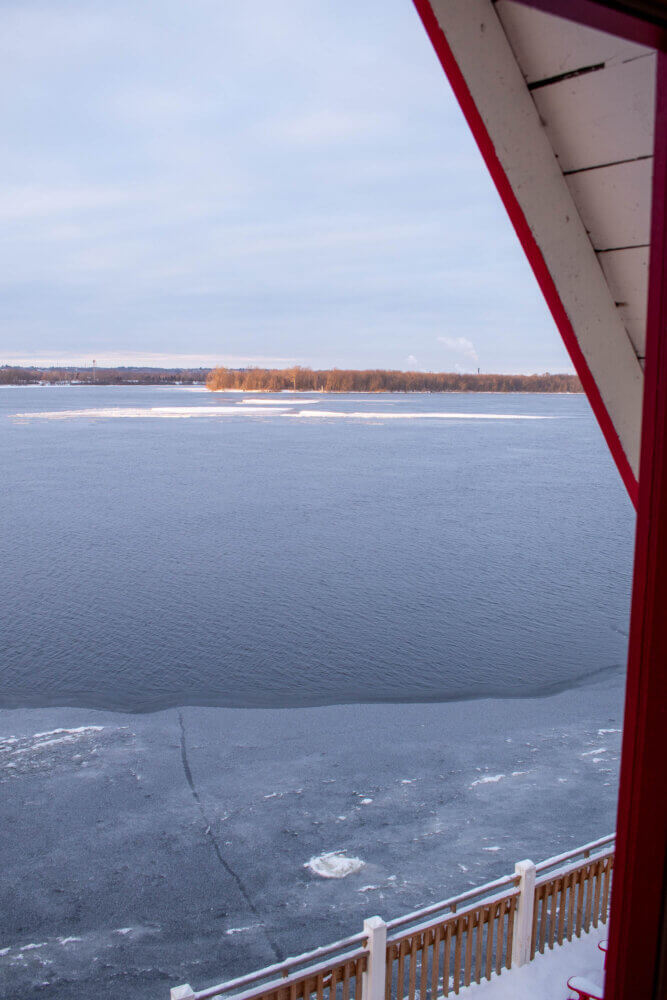
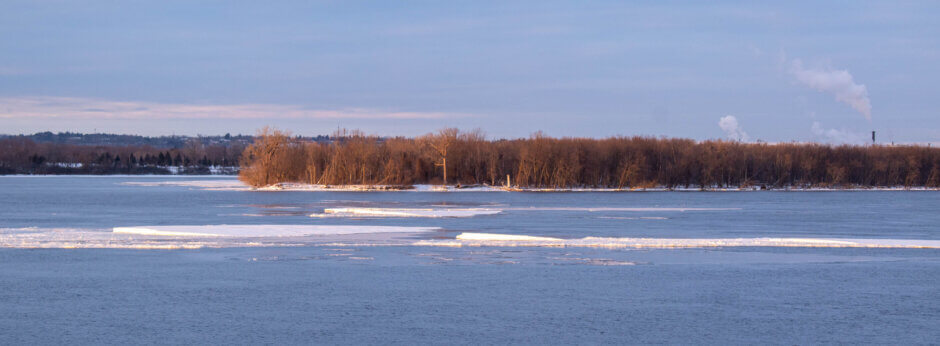
Ice conditions outside the NCC River House on February 20th, 2024.
Looking at the data
While the short ice season this year seemed obvious to many of us, the science team at Ottawa Riverkeeper was curious to see what the data says about the change in ice duration. Spoiler, it tells an interesting story!
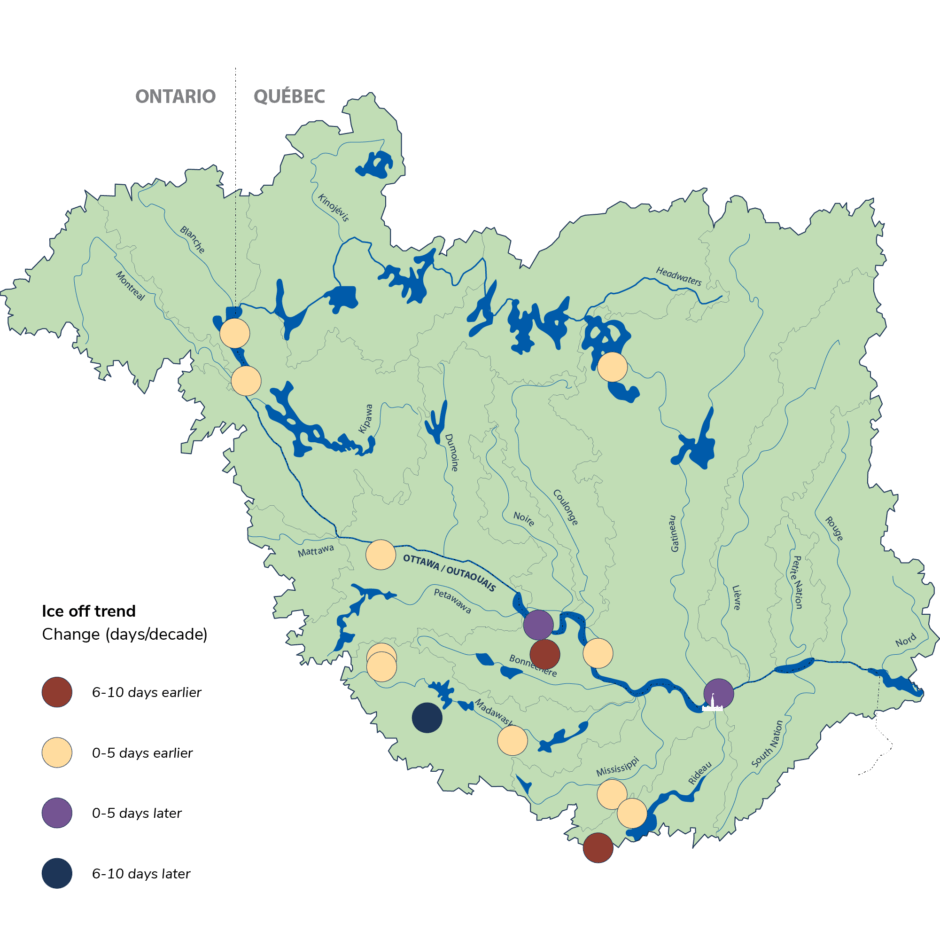
Using historical Ice-Off data from multiple locations within the watershed, the science team assessed whether waterbodies are becoming ice-free earlier and earlier. The data shows that a majority of these locations are experiencing earlier ice-off conditions in the spring, with one location becoming ice-free at a rate of 8 days earlier per decade! While the data doesn’t necessarily mean that the ice season is getting shorter, it does suggest that the timing of spring melt is changing.
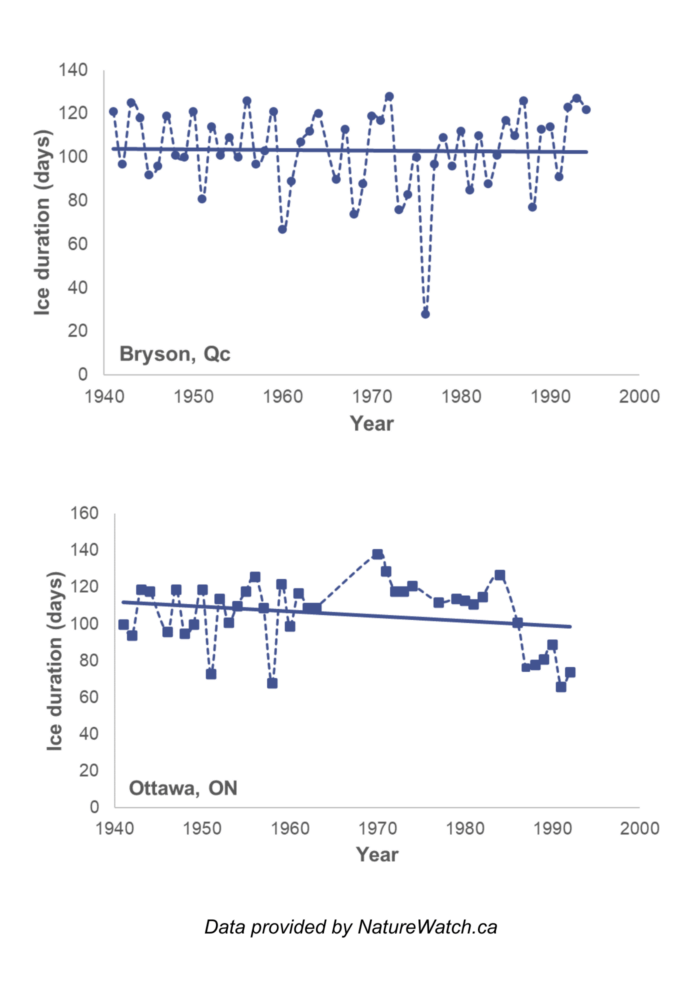
In order to understand changes in ice duration more thoroughly, we need to collect more long-term data regarding the Ice-On and Ice-Off dates within the watershed. Currently, only a few locations around the watershed have both Ice-On and Ice-Off data for a long period of time (20+ years). The trends of ice duration at each location vary, with some locations showing a decrease in ice duration, while others show no change. These findings further emphasize the need to collect more winter data around the watershed.
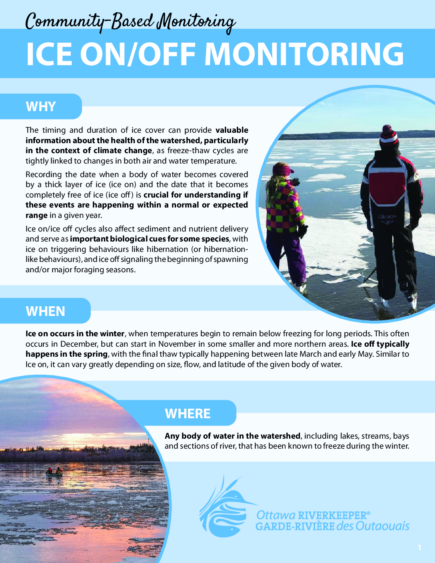
Want to help us understand changes in ice duration within the watershed? Sign up to participate in our Ice-On/Ice-Off monitoring program!
Implications for watershed health
A short ice season isn’t only concerning for those who want to enjoy a skate on the canal. It can have profound consequences for wildlife and other aspects of watershed health. For instance, earlier ice break-ups can lead to more severe ice jam flooding and ice scouring of river beds, altering habitats and impacting the way nutrients and other important materials move through the river system.

Additionally, with less ice, or even no ice, covering aquatic ecosystems in the winter, water bodies could start to warm faster. This is due to ice-free waterbodies absorbing more heat from the sun compared to ice-covered ecosystems. With these warmer water temperatures earlier in the season, we could start seeing shifts in the behaviour of animals and plants living in our nearby waterways. These could include changes in the timing of fish spawning, as well as earlier and more intense algal blooms.
You can learn more about the impacts of changing ice conditions in our earlier blog River Ice and Winter Ecology.
Watershed Health Assessment and Monitoring
Ice On/Off is an indicator in our Watershed Health Assessment and Monitoring initiative because of its profound impact on the watershed. Changes in ice trends are part of a larger story of how our watershed is changing due to the effects of human activity, in this case notably from climate change, but in other cases from changes in land use, development, and the introduction of contaminants.
Ottawa Riverkeeper will soon release a comprehensive report card on watershed health. The report card will draw upon the wealth of data amassed through the Watershed Health Assessment and Monitoring initiative to paint a vivid snapshot of the current health of the Ottawa River and its watershed, as well as the health trends we are watching. Stay tuned for more to come soon!
< Previous post Next post >