
Posted: September 16, 2025
It’s Not Just a Summer Problem: Help Track Algal Blooms Into Fall
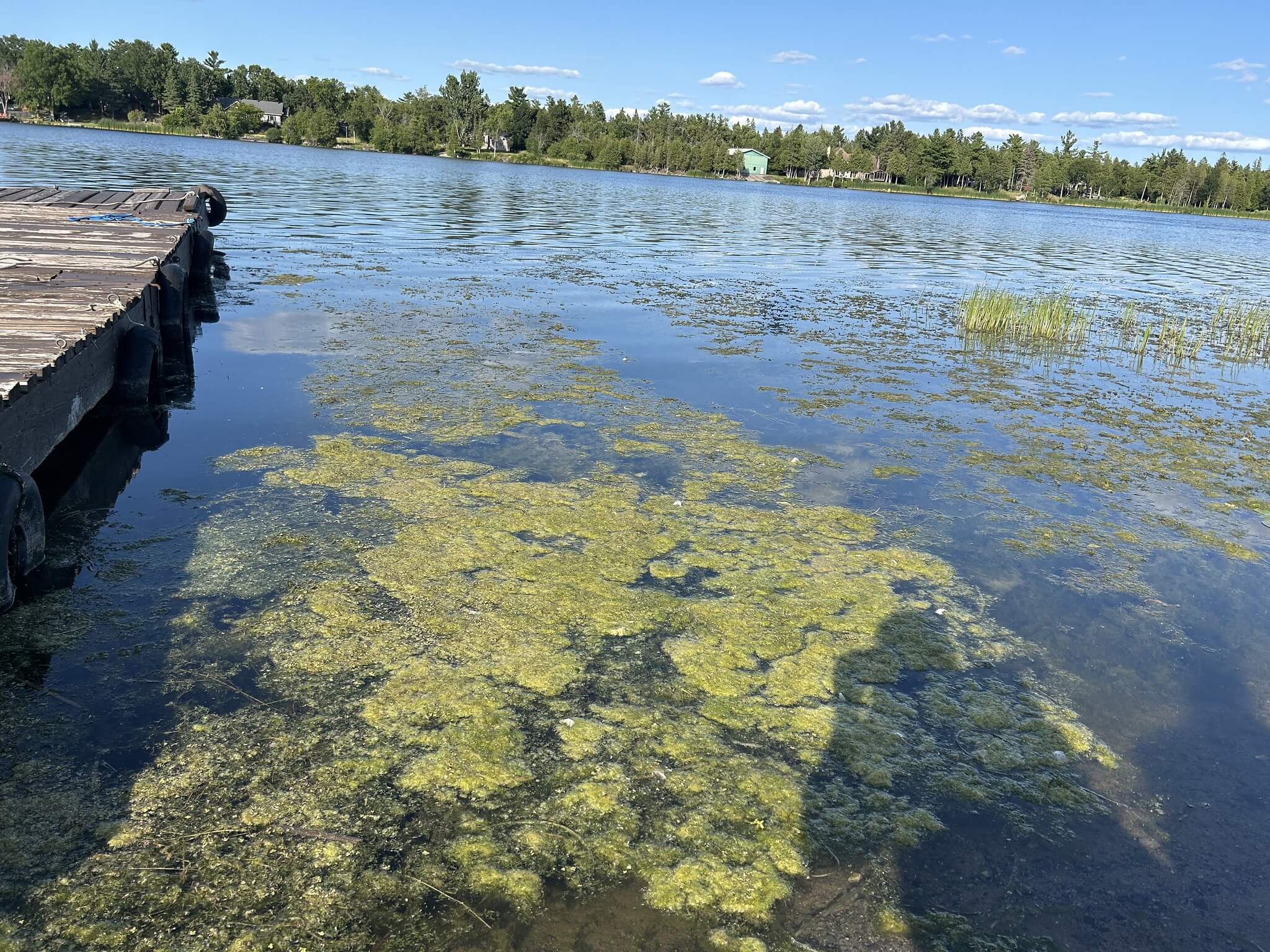
As summer draws to a close and temperatures begin to cool, you might expect algal blooms to disappear along with the heat. But surprisingly, there can be an increase in blooms in early fall. So what is driving this seasonal resurgence?
Why do we get algal blooms in the fall?
In lakes, ponds, and slow-moving bays of rivers, cooling surface waters in the fall can trigger natural mixing within the water column. During this process, cooler, nutrient-rich water that was trapped at the bottom of the water body in the summer moves to the surface. This mixing resuspends nutrients that were previously unavailable to algae. Additionally, autumn rainfall can bring in even more nutrients from the surrounding land into water bodies. Together, these factors significantly increase nutrient levels at the surface of the water, creating ideal conditions for algal blooms to form.
So, stay alert and watch for signs of algal blooms, even after summer ends.
Identifying algal blooms
What is an algal bloom?
Algae are a natural part of aquatic ecosystems: if there is water, there is algae. When conditions are balanced, algae play an important role in the food web. But when they grow out of control, they can have serious environmental impacts.
An algal bloom refers to the rapid growth of algae, typically occurring between late May and early October. Blooms can vary in intensity, from slightly cloudy water to thick surface mats and deposits that resemble scum along the shoreline. Finding some algae along rocks or the shoreline isn’t necessarily a sign of trouble. But when algae cover a significant portion of a water body, or linger for long periods, it may indicate declining watershed health. Large blooms can block sunlight needed by underwater plants, outcompete other species for nutrients, and decrease dissolved oxygen in the water when they decompose, potentially harming fish and aquatic life. In some cases, algal blooms can produce toxins that are harmful to both animals and humans
How to identify an algal bloom
Although there are multiple types of algal blooms, Ottawa Riverkeeper focuses on two main types: Green algal blooms and blue-green algal blooms (a.k.a. Cyanobacteria). Here are a few pointers to help you tell the difference between the two.
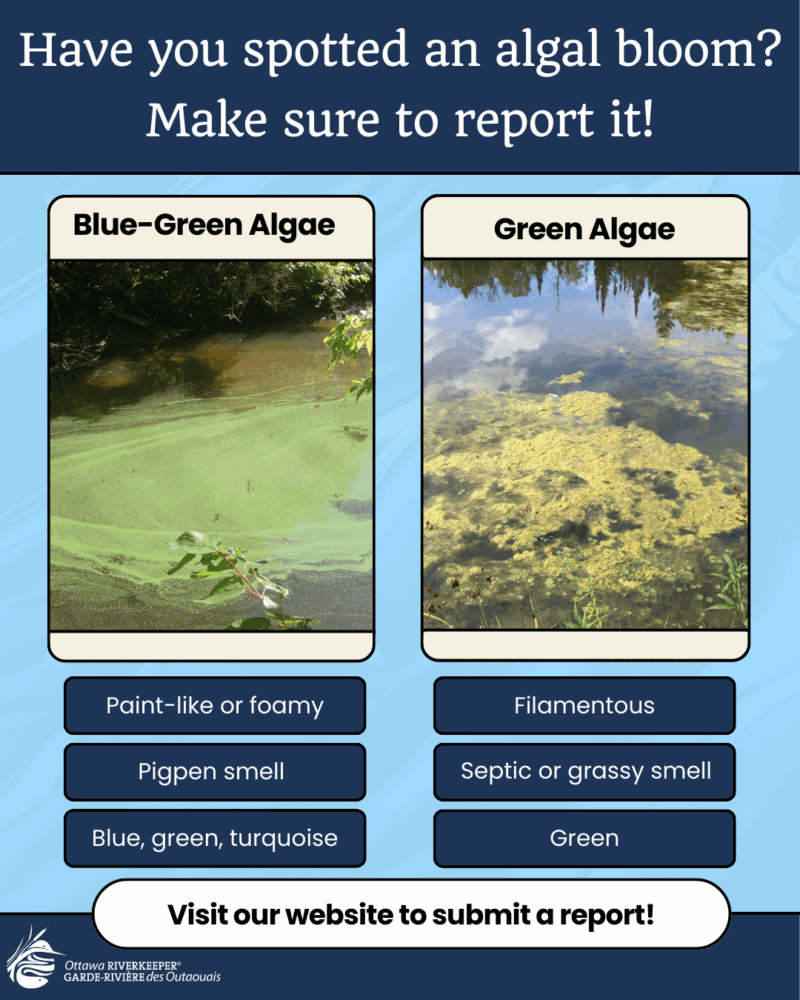
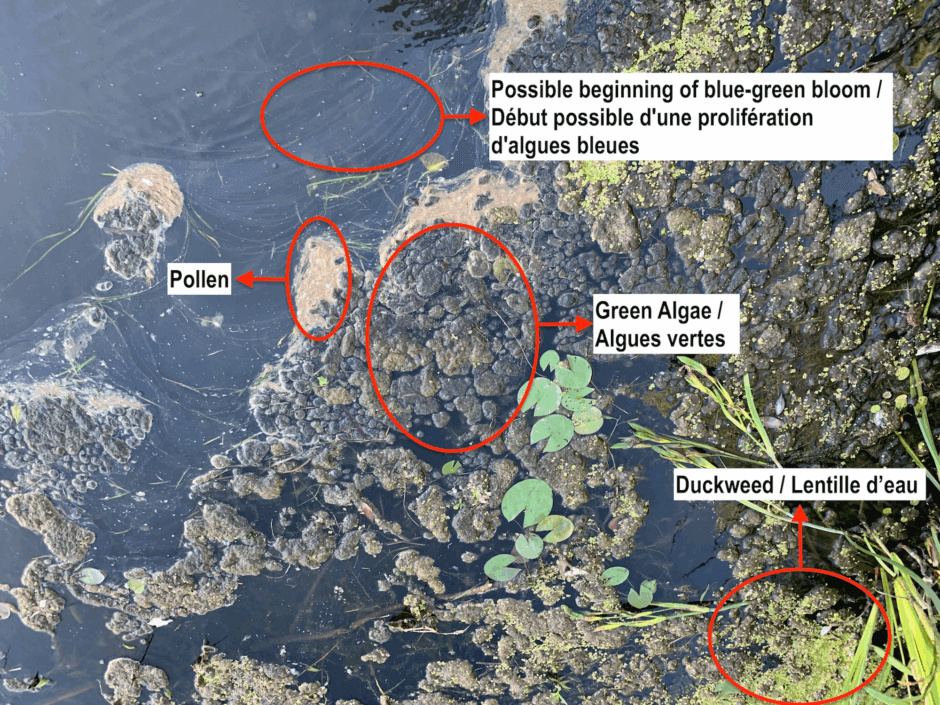
Green algal blooms tend to be green, stringy, clumpy or fluffy mats that have a septic or grassy colour. They are often found on the surface of the water or just below the surface and typically appear in spring or early summer. Green algal blooms do not produce toxins. Blue-green algae blooms are blue-ish turquoise, green and look like spilled paint or pea soup on the surface of the water. They have small green specks or clumps and often release a pigpen odour. Blue-green algae typically blooms in mid to late summer and into fall. Blue-green algal blooms may produce toxins and can pose a threat to humans and animals.
When looking for algal blooms, be careful of look-a-likes! There are a few common phenomena in our watershed that are often mistaken for algal blooms. While they do look unusual, they are perfectly natural occurrences and are nothing to be concerned about.
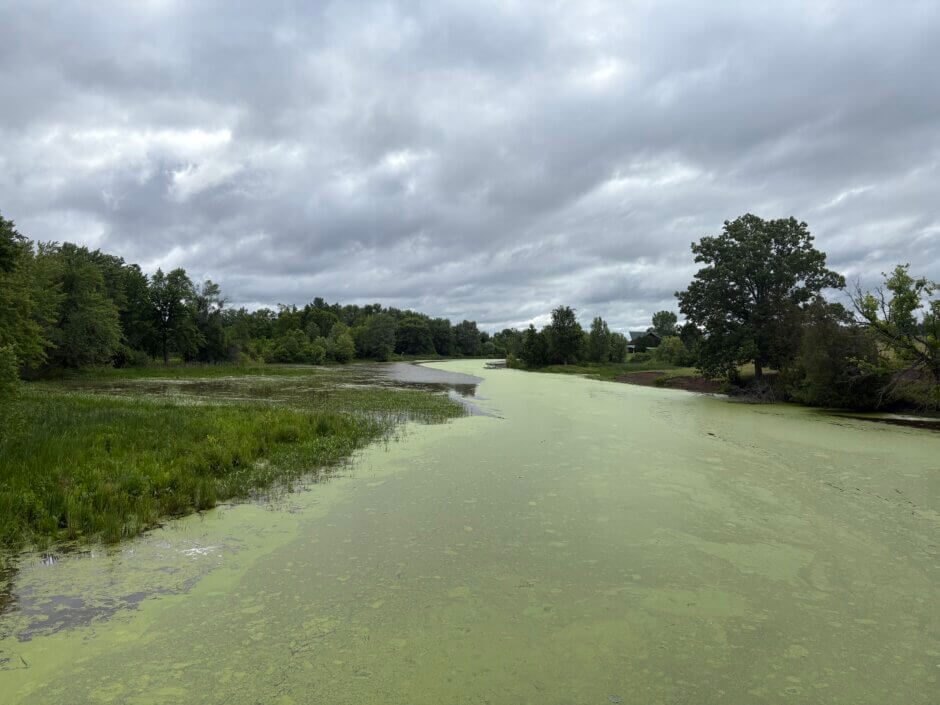
A growth of duckweed from a distance.
Photo from Nathalie, volunteer community scientist.
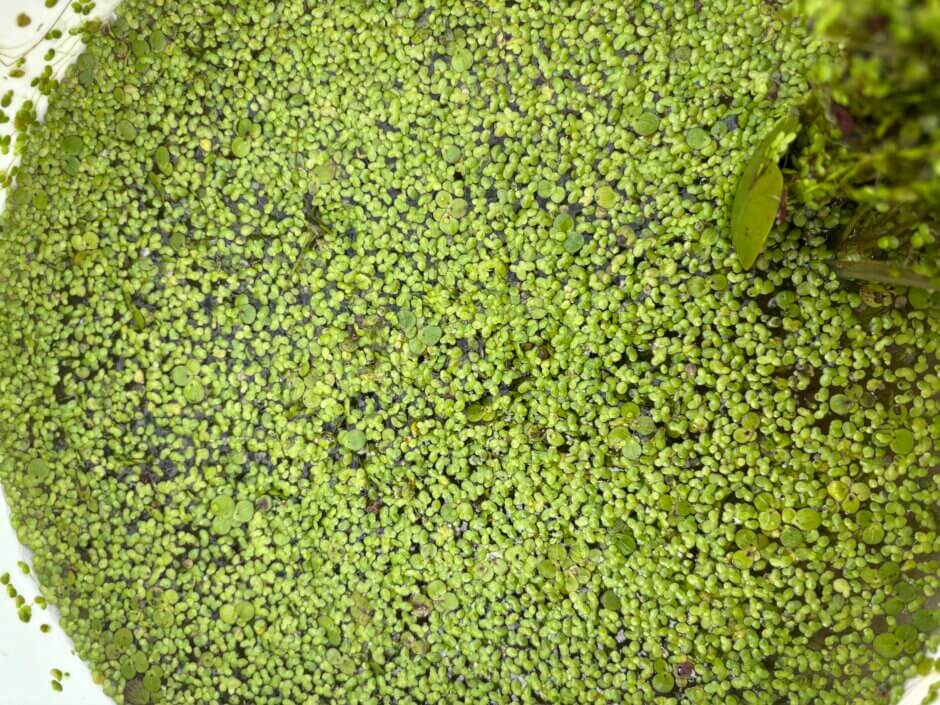
Duckweed close up.
Photo from Nathalie, volunteer community scientist.
From a distance, duckweed may look like algae based on its green textured appearance on the surface of waterways. Upon closer inspection, you will find that they are actually tiny leaves floating on the water. Another occurrence that is commonly mistaken for an algal bloom is pollen. In spring and early summer, several trees and plants that grow throughout our watershed produce high levels of pollen that may end up floating on the surface of the water in similar formations to an algal bloom. An easy way to tell the difference between pollen and algae is the colour: if it is yellow, it is likely pollen!
Report possible sightings of algal blooms
If you think you’ve identified an algal bloom, we’d love to hear from you! Reports of algal blooms help us grow our database and gain a better grasp of what is happening in our watershed. You can either report a single observation by using our Survey123 form or you can join our community-based Algal Bloom Monitoring Program to monitor a local water body on a more frequent basis.
To find out more about our Algal Bloom Monitoring Program, check out our algal bloom CBM guide or email cbm@ottawariverkeeper.ca and include “Algae” in the email subject line.
If you are concerned that you have come across a bloom of blue-green algae you can also report it to the applicable provincial authorities:
- Ontario – Spills Action Centre (1-800-268-6060)
- Quebec – Regional Offices of the Ministry of the Environment and the Fight Against Climate Change (MELCC)
Funding for this project comes from


Leave a Reply