
Posted: July 2, 2021
As Long as the Rivers Flow
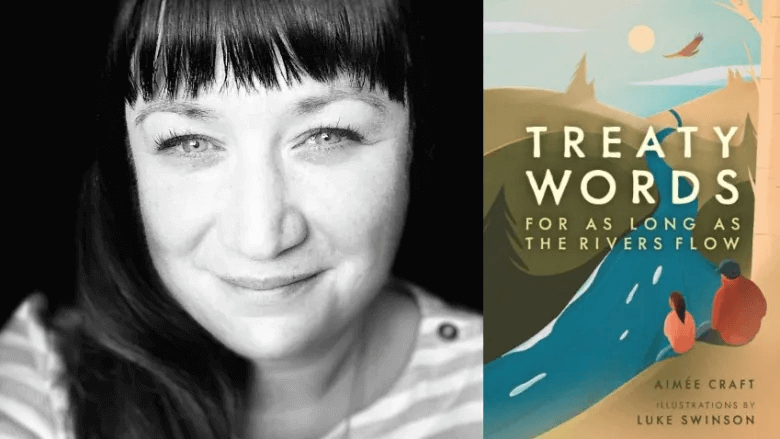
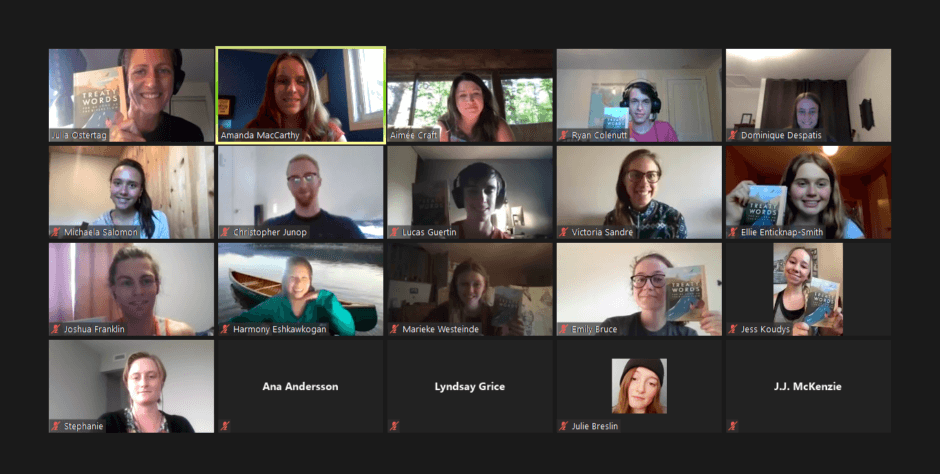
In their fourth week of the program, Youth Water Leaders explored indigenous relationships with water through generous teachings from Dr. Aimée Craft and an Algonquin language workshop with Mariette Buckshot from Kitigan Zibi Anishinabeg First Nation.
Cover image from CBC article “Aimée Craft’s children’s book Treaty Words offers an Indigenous perspective on treaties“
How has colonialism shaped Indigenous and settler relations with water? What does it mean to decolonize water? What does “Water is Life” mean? What role do Indigenous languages play in conveying Indigenous relationships with nibii/water?
These are questions that participants in the Youth Water Leaders Program considered during their fourth week in the program, first with the generous teachings from Dr. Aimée Craft and then with an Algonquin language workshop with Mariette Buckshot from Kitigan Zibi Anishinabeg First Nation.
Treaty Words
Dr. Aimée Craft is an Indigenous lawyer (Anishinaabe-Métis) and Associate Professor at the Faculty of Common Law (UOttawa) whose scholarship and community activism focuses on Indigenous laws, treaties, and water. She joined our zoom gathering from Sagkeeng First Nations in Treaty 1 territory at the mouth of the Winnipeg river. With a glass of water in her hand that originated from Shoal Lake 40 First Nation, Aimée talked about how water is healing and makes us who we are. “Water has authority,” she explained. “I am governed by this water.”
Dr. Craft’s research considers how Canadian law and Anishinaabe law are profoundly different systems based on different values, particularly around individual ownership of water (western law) and relationships with water and the importance of collective well-being (Anishinaabe legal traditions). For Anishinaabe, water has a spirit, water cannot be owned, water is life, water can heal, women are responsible for water, water must be respected, water has a duality (it gives and takes life), and water can suffer (humans have an obligation to bring a voice to water and speak for water).
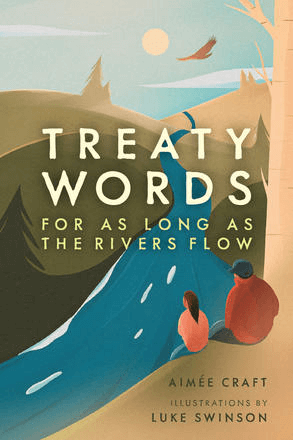
In preparation for our gathering, Youth Water Leaders read Treaty Words and asked excellent questions to Dr. Craft such as: What does it mean to grant personhood to a river? How does a river’s right to flow intersect with pressures for hydroelectric power and renewable energy? Why write a children’s book? Do children understand this message differently than adults? How can Indigenous knowledge and laws inform Environmental Impact Assessment processes, governance and decision-making?
Anishinaabemowin
The second part of Week 4 was an introductory workshop to learn about the Algonquin language (Anishinaabemowin) with a focus on the connection between language, stories, and water. The workshop was led by Mariette Buckshot, Language and Cultural Coordinator at the Kitigan Zibi Anishinabeg Cultural Education Centre.
Participants listened to Mariette’s story about water and the arrival of the settlers, and learned words in Algonquin connected to water such as nibii (water), ziibii (river), and chiiman (travel by canoe). Mariette shared with us how residential schooling separated her from her culture and language for a long time but that her work, especially with Elders, has helped her to understand her gifts as a teacher.
In light of the collective sadness felt across mikinaak minitig (turtle island) with the discovery of the 215 children at the Kamloops Residential School, we were confronted in a very visceral way to consider the connections between colonialism and relationships with water.
Last week’s teachings impressed upon the youth participants how Indigenous relationships with water and language have been impacted by colonialism and the residential school system that separated Indigenous children from their land, culture, laws, and language. Youth Water Leaders reflected upon these difficult conversations by acknowledging their sense of privilege and responsibility toward mino bimaadiziwin (collective well-being) that includes all people, land, and waters. Miigwech (thank you) to our teachers!
Some additional resources shared by Dr. Craft:
- Water Teachings: https://www.waterteachings.com/
- Nibi Declaration: https://vimeo.com/404712174
- Clay and Water: https://vimeo.com/261561860
- Decolonizing Water: http://decolonizingwater.ca/
- Land Back: https://davidsuzuki.org/what-you-can-do/what-is-land-back/