
Posted: June 30, 2022
The Youth Water Leaders Explore Science and Conservation
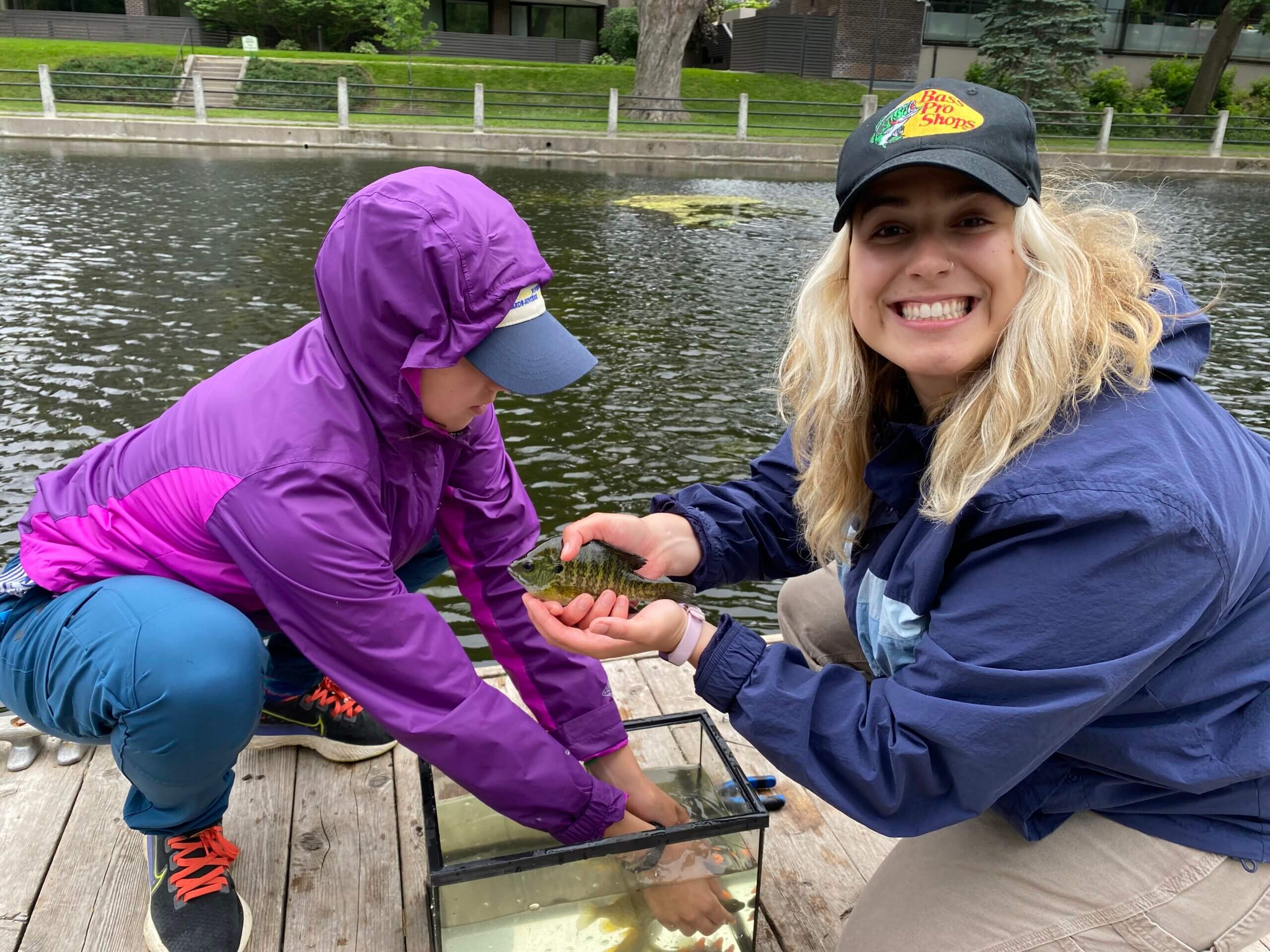
In the last couple weeks the Youth Water Leaders have learned about fisheries science, invasive species, and human impacts on freshwater ecosystems.
Since our last check-in with the Youth Water Leaders they have continued their watershed adventures by diving into science and conservation.
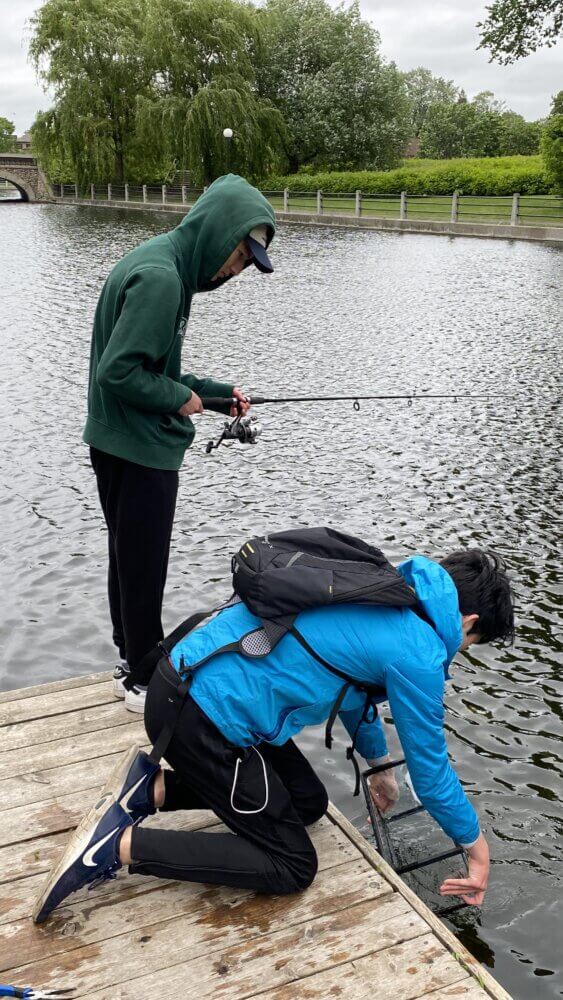
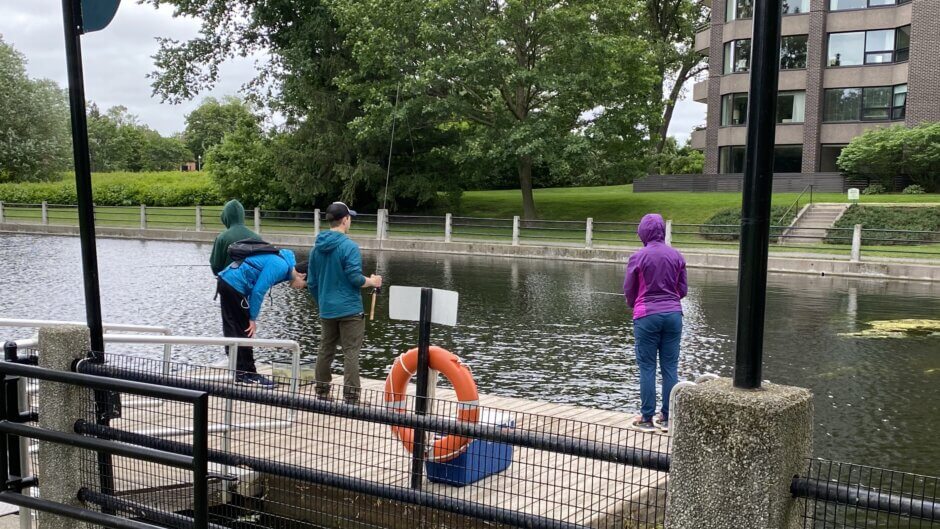
Together they learned about fishing with resident angling expert and River School Assistant Ian. On a chilly grey morning at Patterson’s Creek, Ian taught the group some best practices for catch and release to reduce mortality and harm to fish.
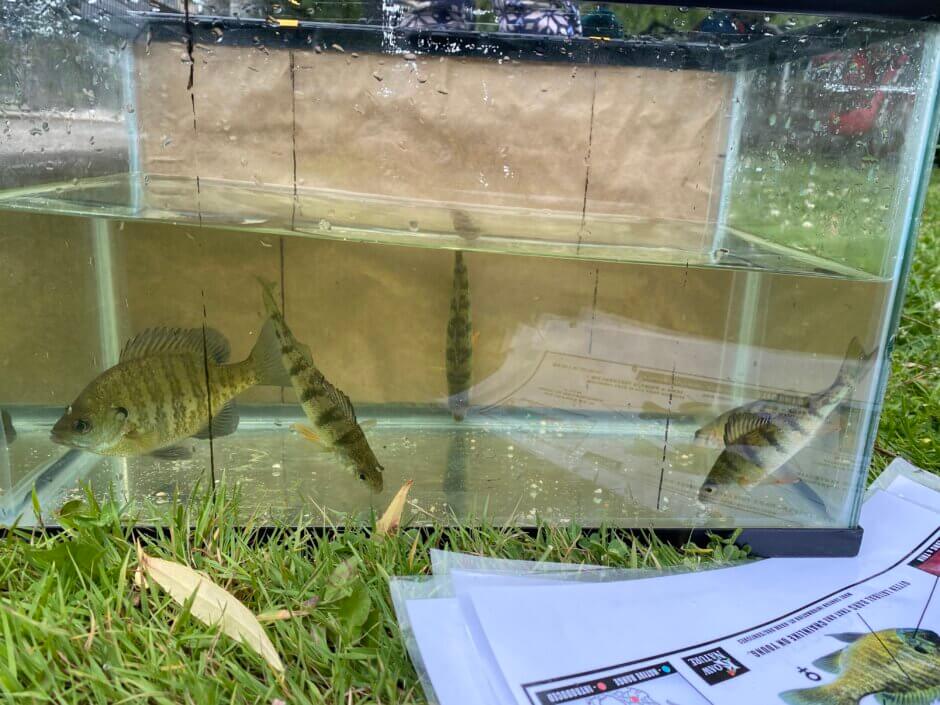
The group caught a grand total of 5 different species characteristic of a warm water fish assemblage: bluegill and pumpkinseed sunfish, rock bass, golden shiner, and yellow perch. Ian also taught the Water Leaders more about fish behaviour, fishing regulations, and fisheries induced evolution. If you would like to reduce your impact while fishing you can read some of the excellent resources Ian helped to develop for Keep Fish Wet.
The Water Leaders also learned more about invasive species in the watershed from Aline Litt, a scientist at the Canadian Council on Invasive Species. Aline showed the group how to identify some of the most prolific aquatic invasives, and shared tips on reducing their spread. Many aquatic invasives in Ontario are released into the Great Lakes in the ballast water of commercial ships. Zebra mussels are just one example that you’ve probably heard about. But did you know that despite being found in many of its tributaries, zebra mussels aren’t present in the Ottawa River? It is suspected that this is due to its soft and nutrient poor water, which can’t sustain the rapid growth of this pesky mussel.
Aline also discussed changing perspectives on invasive species management, including the importance of language. She shared research showing that people respond more effectively to positive messages that focus on the benefits of healthy and biodiverse ecosystems than the damage done by invasives. (Hot tip: this strategy can also be transferred to other issues like climate change!) The Water Leaders also learned the importance of Indigenous knowledge and land management practices, which often take relational approaches to invasive species. These perspectives focus on the role that new species play in the ecosystem, and whether they can still be useful. In recent years, invasive species have been repurposed in functional art installations, as food and in other goods.
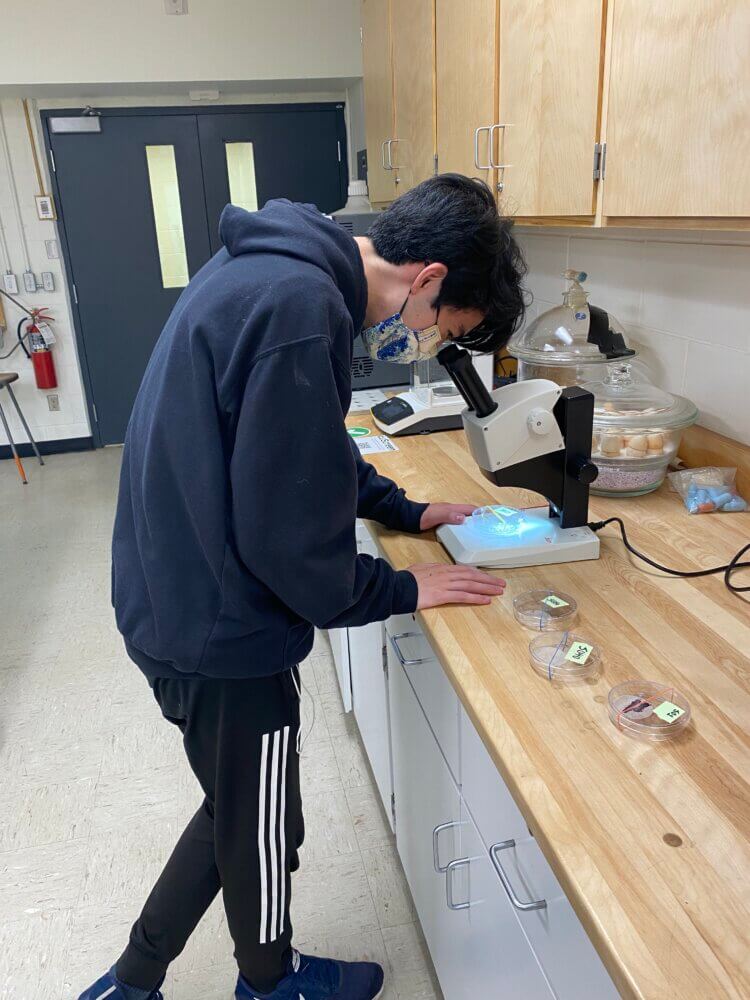
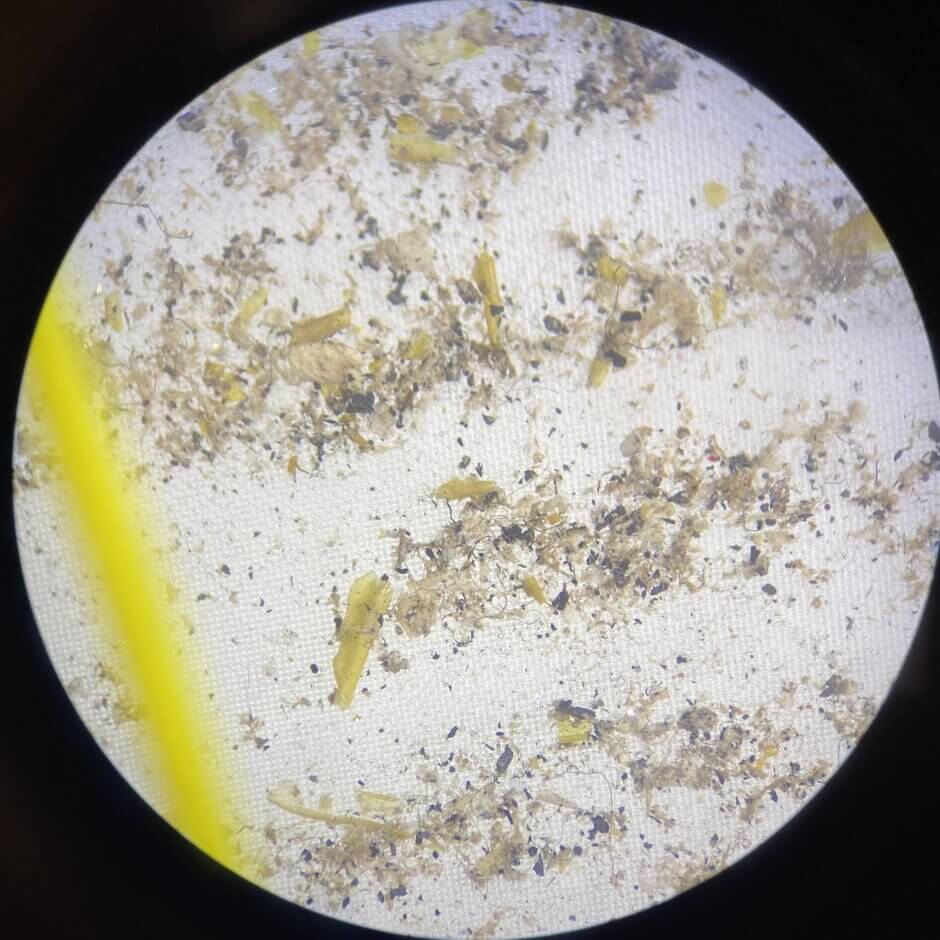
Finally, the group visited the lab of Dr Jesse Vermaire at Carleton University. Dr Vermaire studies how freshwater ecosystems are affected by changing environments, and has previously worked with Ottawa Riverkeeper to study microplastics in the Ottawa River. You can read his publication here, and learn more about Ottawa Riverkeeper and the Riverwatchers’ efforts on our website.
< Previous post Next post >