
Posted: September 15, 2022
Youth Water Leaders explore the past and present of the watershed!
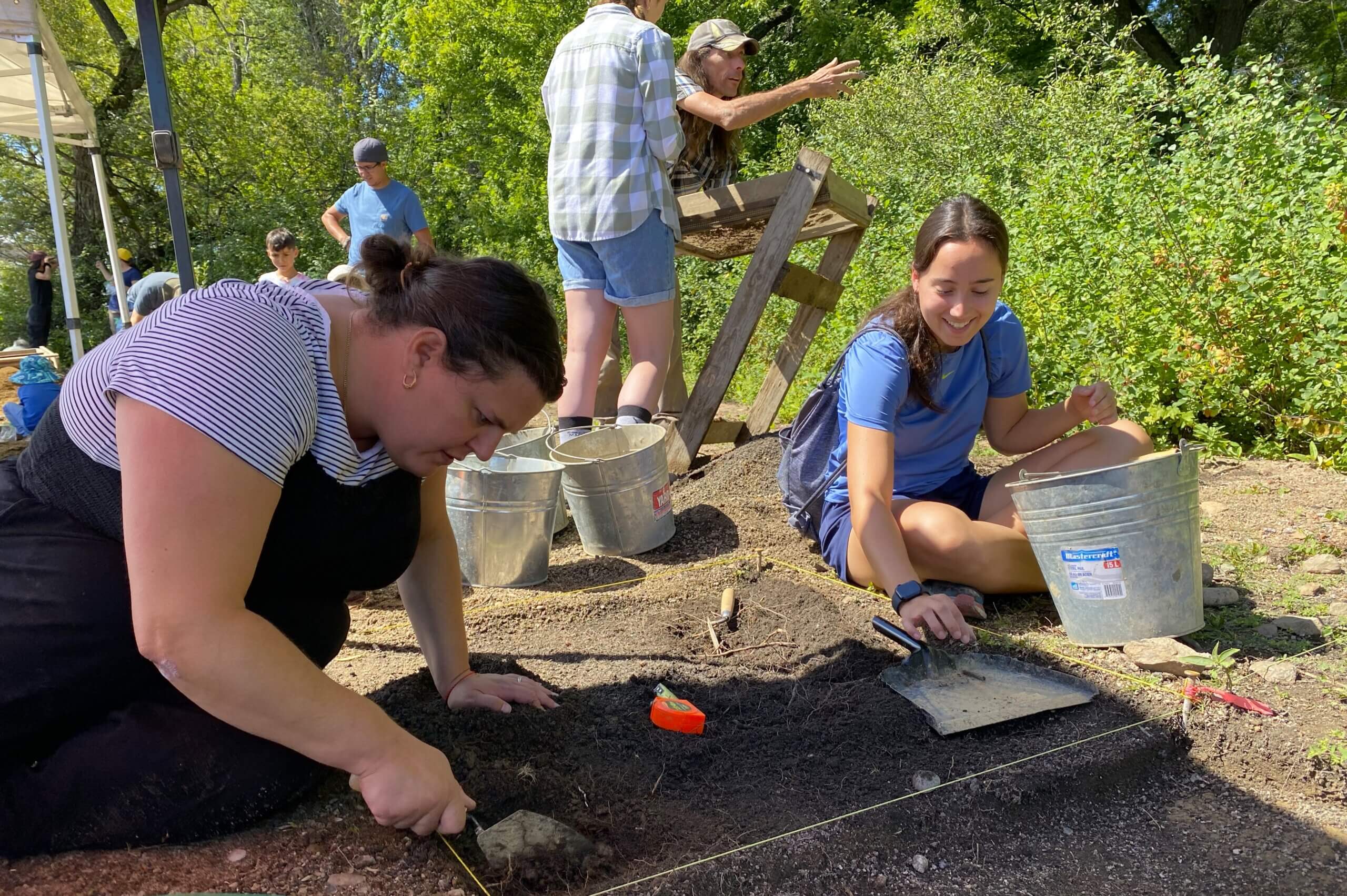
In August, Youth Water Leaders visited both the National Herbarium of Canada and an NCC archeological dig to see more of the past and present of the watershed, from its plants (or plant-like species) to its people.
Summer may be winding down but the Youth Water Leaders have been keeping busy these last few weeks!
In August, they paid a visit to the National Herbarium of Canada (part of the Canadian Museum of Nature collections) which contains over one million plant specimens, with some dating back to 1776! During their tour, led by curator Jennifer and summer student Adam, they focused especially on aquatic plants and how they shape the various freshwater ecosystems found in the watershed.
Herbariums are essentially libraries of plant specimens (a pressed plant labelled with information about where and when it was collected). These collections help us to identify new species, study how the range of species may change over time, and document the presence of invasive species. Adam showed us a number of wetland plants that he had been imaging for the herbarium’s digital collection this summer. Many of which the Youth Water Leaders were able to recognize from their adventures in the watershed, like the invasive Eurasian Water Milfoil, which is abundant in the Rideau Canal.
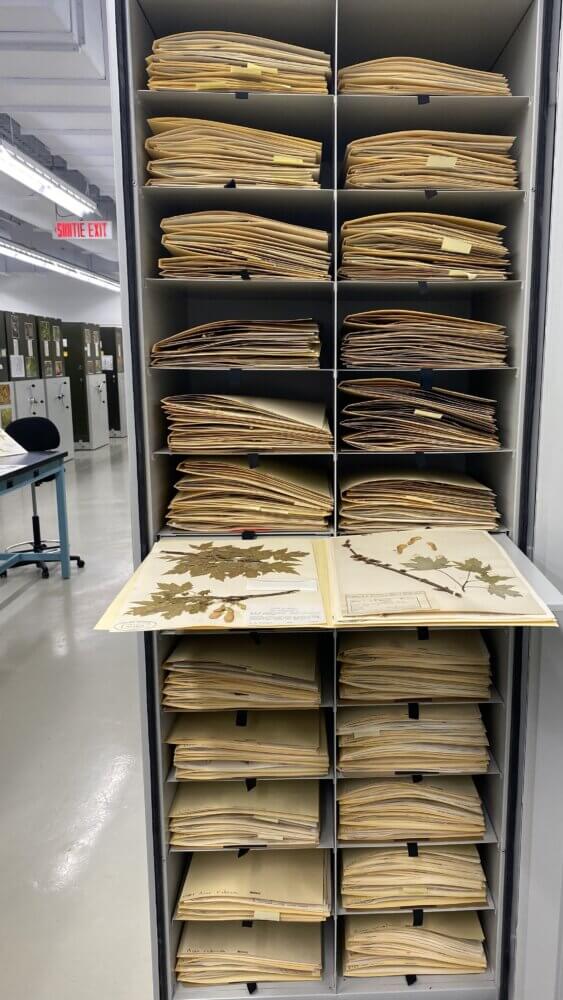
During their tour, the Youth Water leaders also visited the herbarium’s algae collection. Microalgae, which are too small to be seen with the naked eye, are stored in glass vials of alcohol. Each time a researcher wants to observe the algae under the microscope, they place a drop onto a slide, which means that over time the samples get smaller and smaller! Seaweeds are also especially delicate and often pressed flat while still in the water.
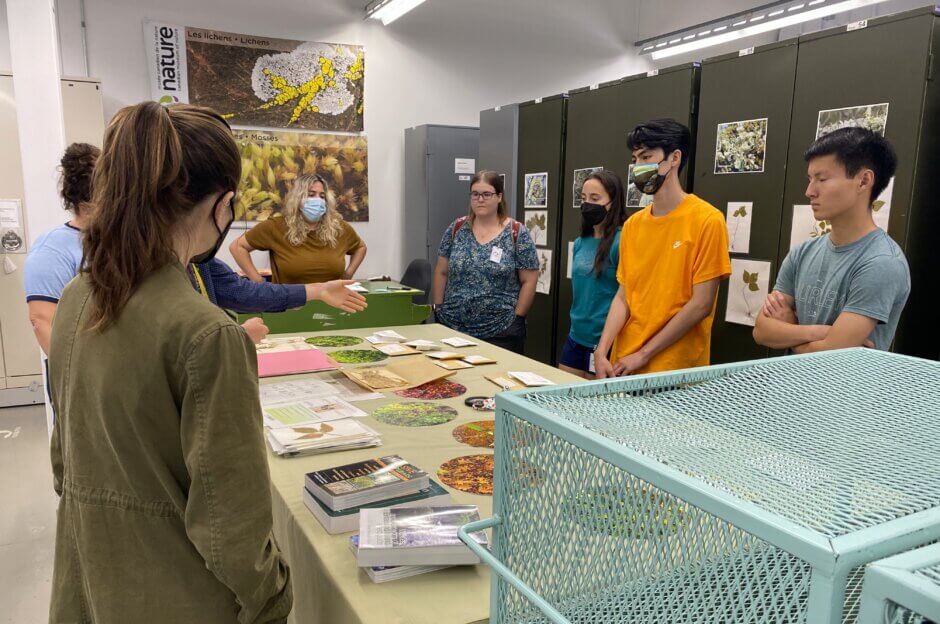
Finally the Youth Water Leaders were put to the test, using a dichotomous key to determine which of several unknown plants were poison ivy. (Luckily these specimens were laminated, so there was no risk of a rash!)
In August, the Youth Water Leaders also participated in an NCC archeological dig with archeologist Ian Badgley at Leamy Lake Park. This dig is part of an ongoing effort to help the Anishinaabe preserve their material history. Ottawa-Gatineau is part of the unceded territory of the Anishinaabe, who have lived along the Ottawa River for thousands of years.
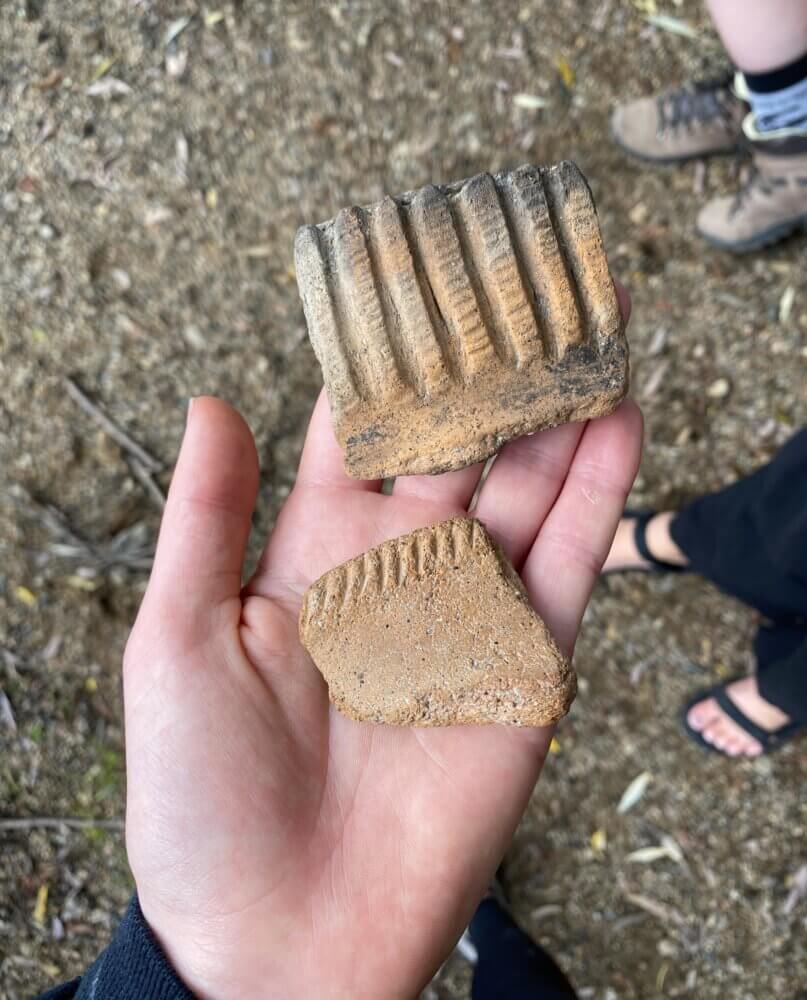
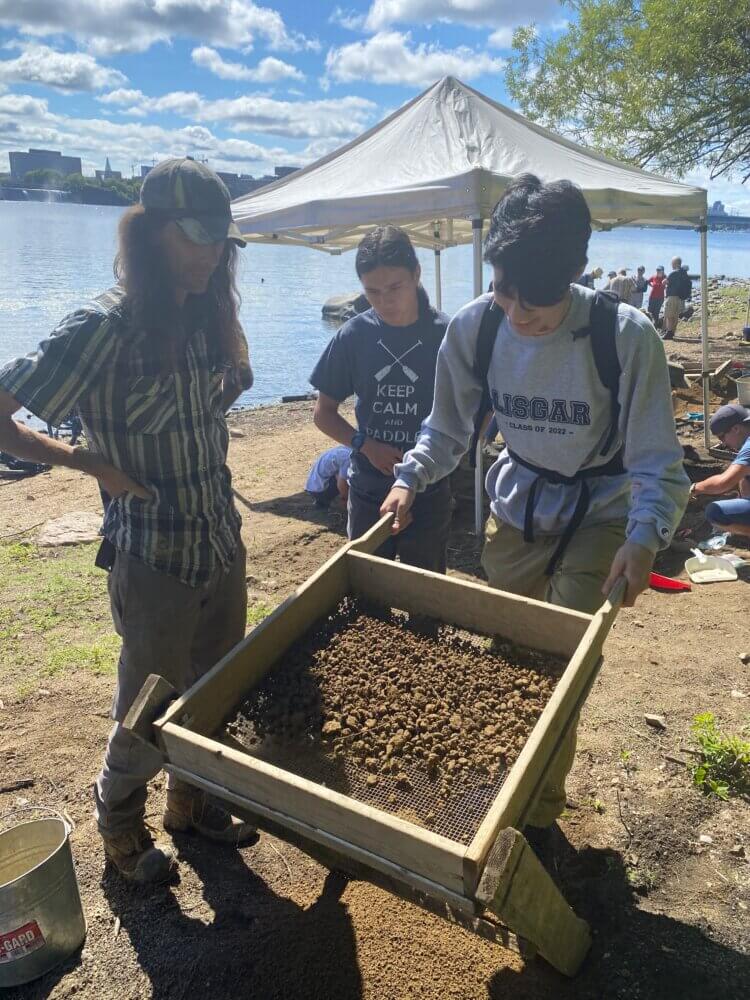
Unfortunately, many of the artefacts of Anishinaabe culture found on its banks are being eroded away by the river each year, or even stolen by treasure hunters. Artefacts found at the site include pottery and stone tools and date back more than 4000 years. The Ottawa River has long served as a route for travel and trade, and the distinct patterns on pottery fragments also tells us about the other nations that the Anishinaabe traded with throughout their history.
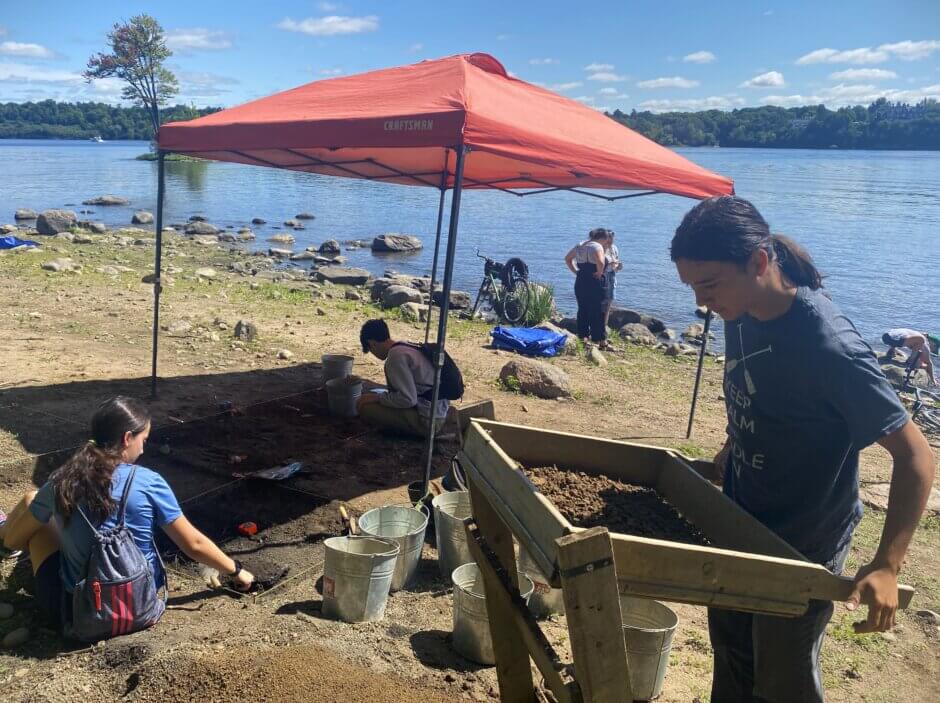
The youth were assigned to quadrats and carefully scraped away at the sand and clay to uncover any objects before sifting through the dirt to check for smaller fragments.
The Youth Water Leaders also learned more about Anishinaabe culture from Carole and Pinock, who shared knowledge about traditional crafts. Pinock Smith, Algonquin Anishinaabe from Kitigan Zibi, showed the youth how he still builds birch bark canoes using the methods his ancestors developed, while Carole shared her knowledge of traditional housing, medicines, and methods for preparing hides and furs. This incredible experience brought a great deal of context to the items being uncovered at the site.
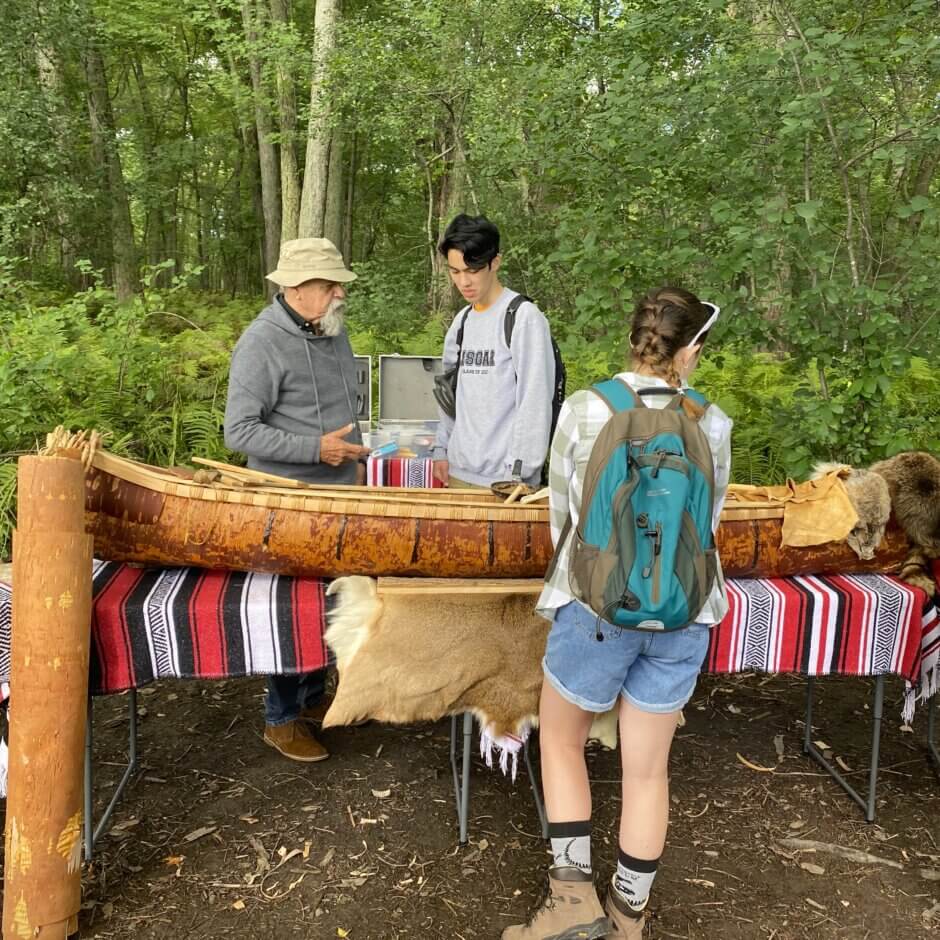
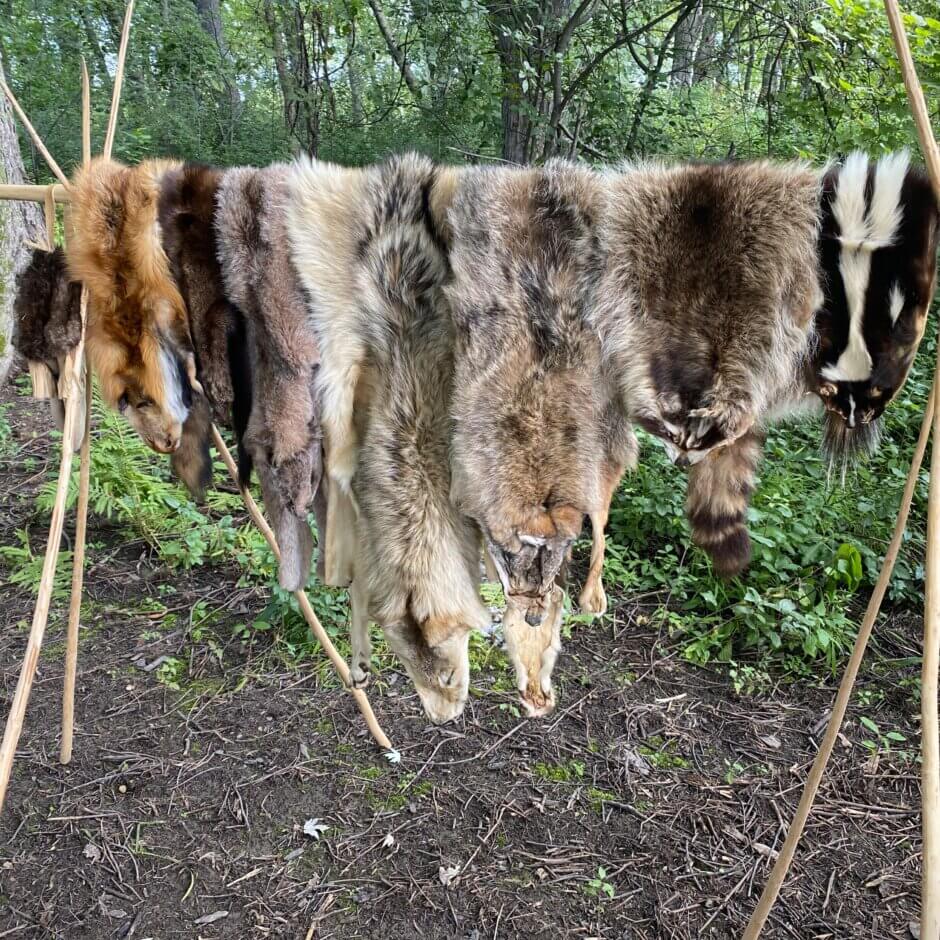
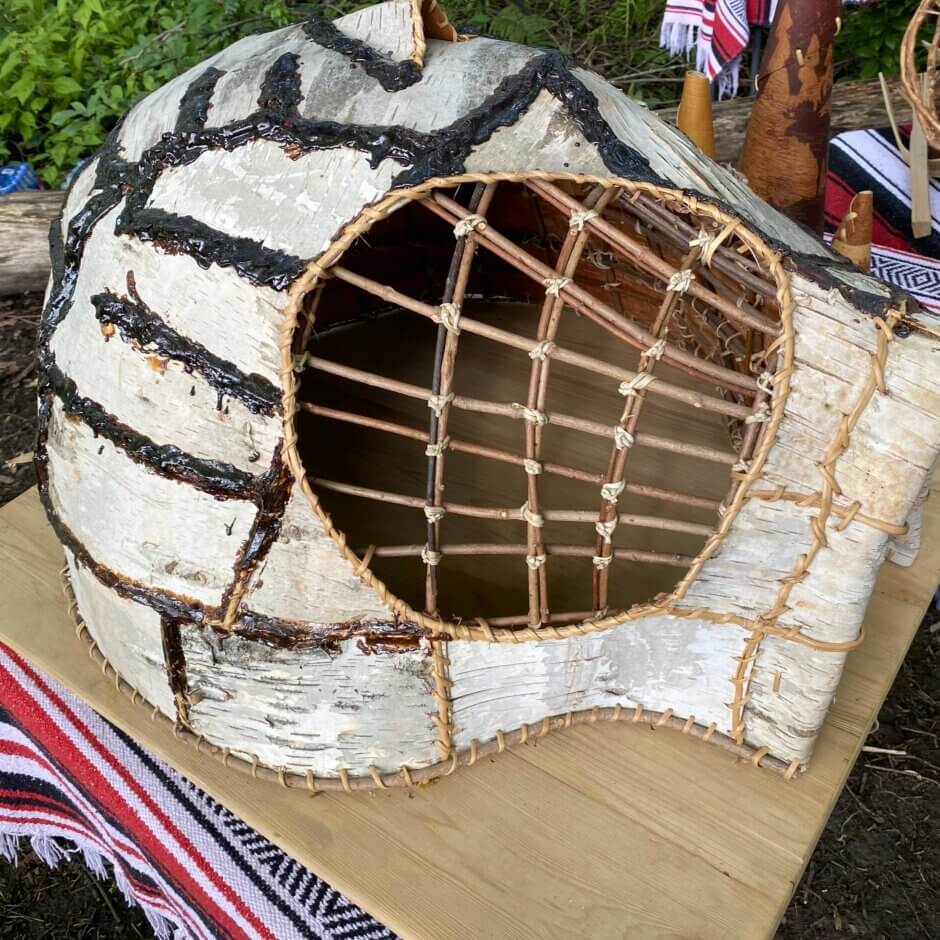
Chi miigwech to Carole and Pinock for sharing knowledge with the Youth Water Leaders.
< Previous post Next post >