
Posted: February 24, 2023
Global climate change in the nation’s capital
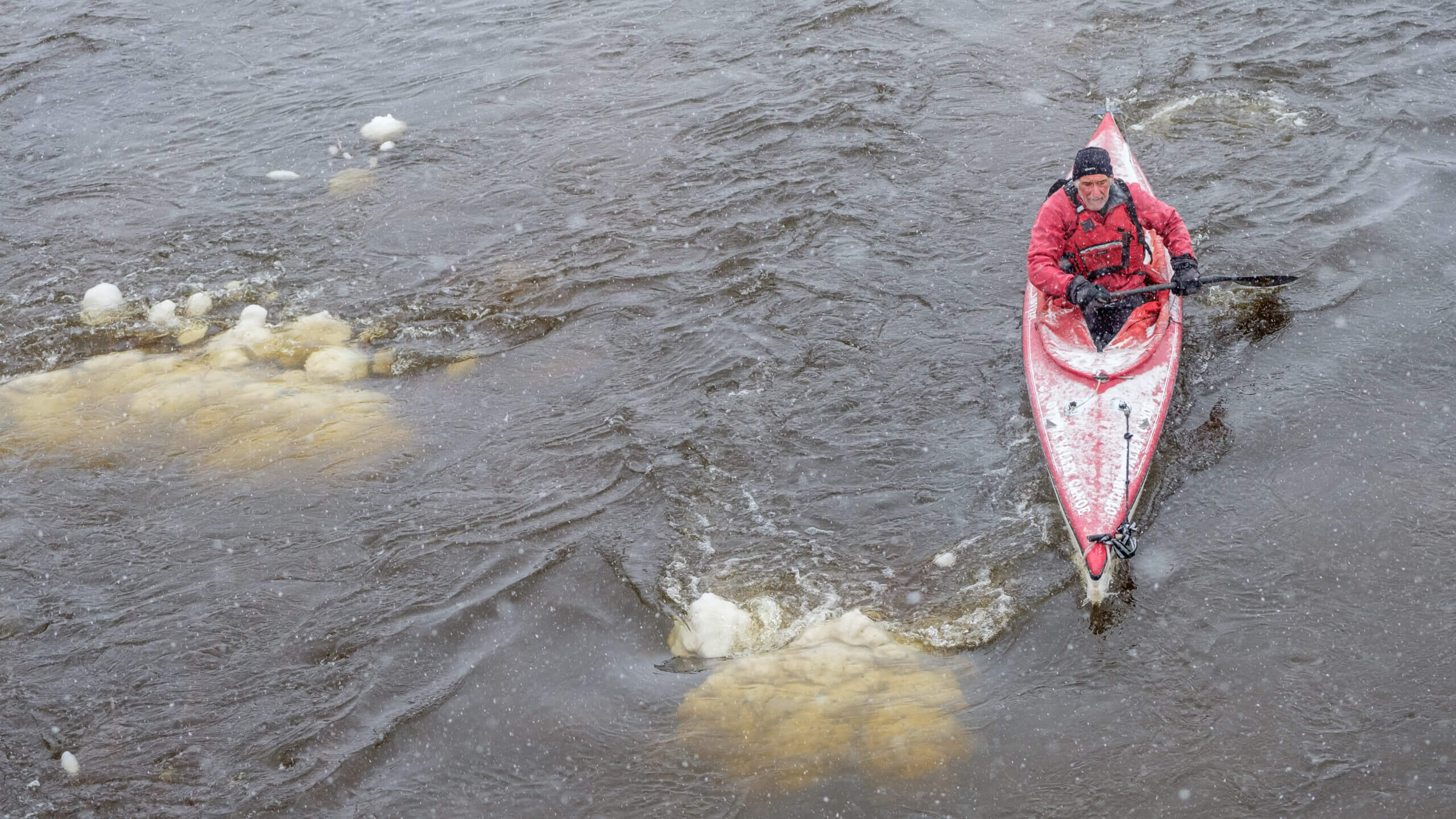
This blog, written by Max Finkelstein, examines the very visible impact that climate change is having on ice formation and cover in Ottawa River watershed this year.
Written by Max Finkelstein
As the calendar ticked over into the New year, did you notice something odd? The water is not frozen. Did the New Year bring some change in the physical properties of water? Is the freezing point lower than it was before? Nope. The air is just warmer.
As global climate change shortens our ski season, paddling is becoming an almost year-round activity in Ottawa. Not just paddling in water that never freezes, such as the rapids in the Ottawa river under the Champlain Bridge, but paddling in ‘summer’ waters.
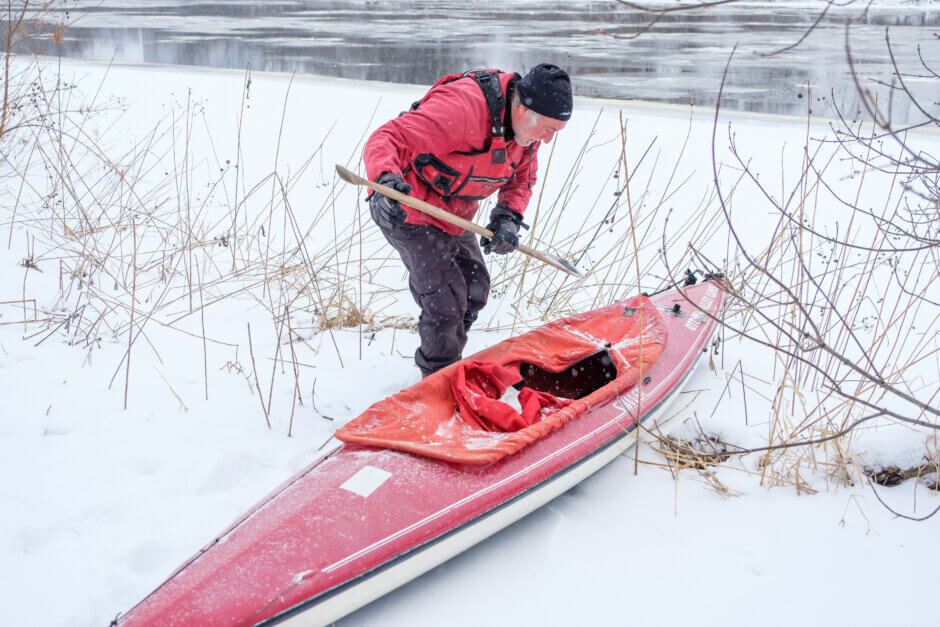
This has huge implications for winter recreation in Ottawa. For paddlers, like me, the paddling season is longer. But for skiers (like me) the skiing season is shorter! But these are implications of inconvenience. What is really important is that the ‘ice on’ and ‘ice off’ dates are a tangible record of global climate change, and you need to look no further than to our rivers this winter to see this. The ice on/ice off dates are part of the seasonal life cycles for fish and aquatic invertebrates, amphibians and God knows what else.
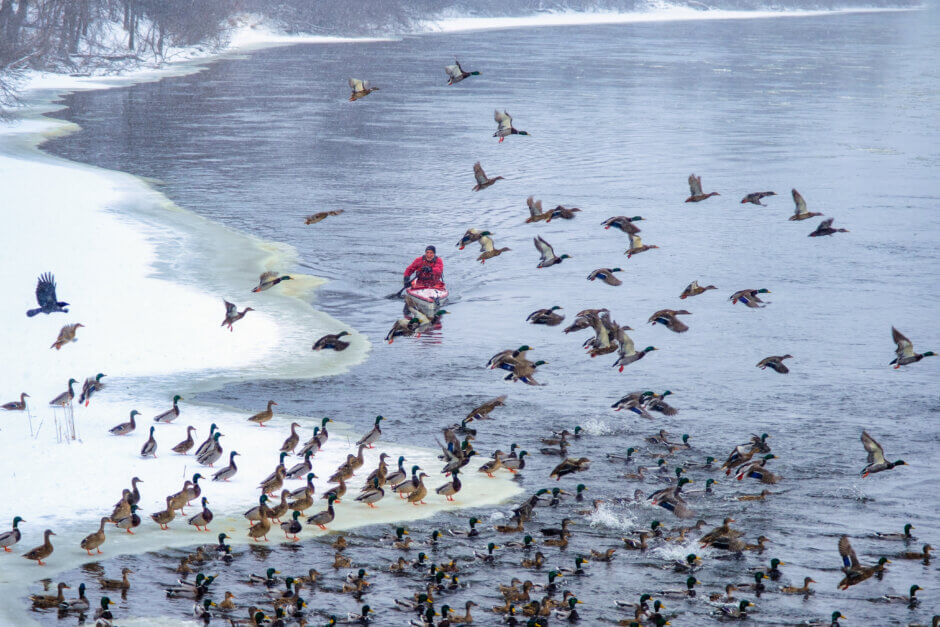
A new record, to my knowledge, was set on January 12, 2023. Instead of walking across the Rideau River its frozen surface, I paddled on water still in its liquid state. As far as I know, this is the latest the Rideau has been open since records have been kept.
These images were taken on Jan 12, 2023, on the Rideau River at the foot of Belmont Avenue. I paddled all the way upstream to the O-Train bridge at Carleton U, and downstream to the Transitway, where the slush ice was beginning to coagulate.
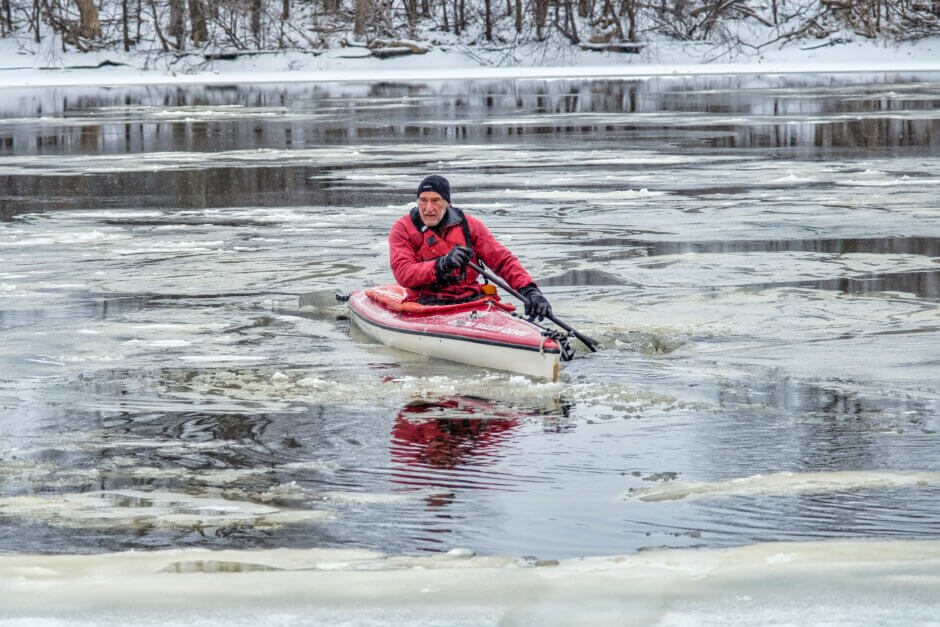
It was a lovely paddle. Blobs of slush ice drifted down the river. The canoe glides through these slush blobs, just like paddling through cumulus clouds. The surface of the water is covered in wrinkles, just like boiling fruit jelly when it reaches the jelling stage. In truth, the water was at the ‘jelling’ stage.
This was likely the last paddle of January, but who knows? Since the onset of winter on December 21, I have been doing much more paddling than skiing. It takes some knowledge and experience to paddle under such conditions. I use a steel-tipped paddle to move the canoe across ice that is too thick to paddle through but too thin to stand on.
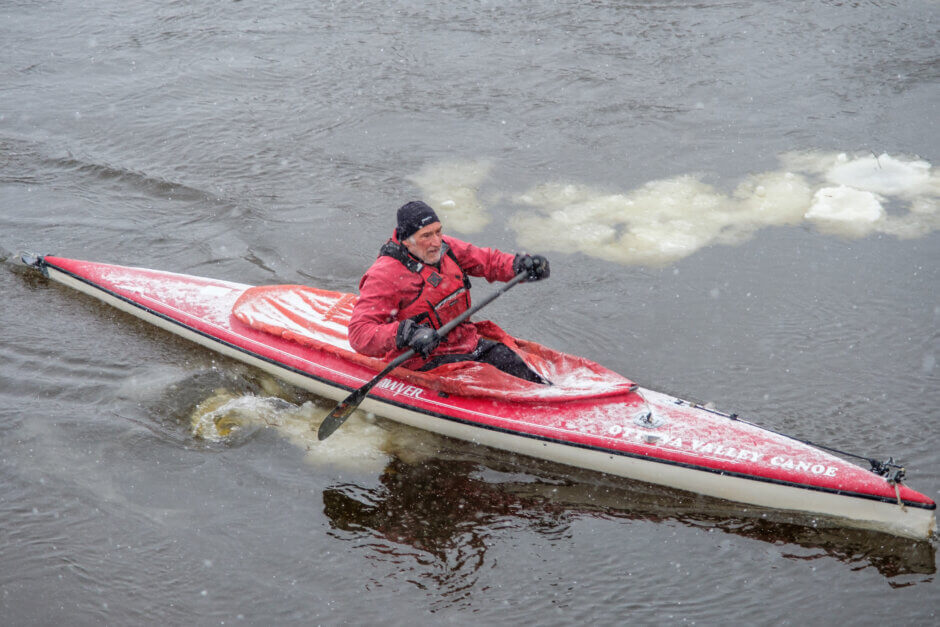
There is a whole new beautiful world of ice waiting to be discovered. But please be careful and always wear a life jacket (and a dry suit if you have one). And remember, the line between having fun and having the worst day of your life (or the last) is as thin as the ice you are standing on. And if someone asks you: “Is the ice safe?” The answer always is: “The ice is never safe”. But neither is driving down the highway, or even hanging out in your bathroom.
I’d much rather be paddling in a blizzard than driving down the highway in one, that’s for sure, but the ecological consequences of these increasingly unpredictable ice conditions are concerning.
Big thanks to Murray McComb for these wonderful images! A version of this blog is also published in the Ottawa Field Naturalist Club’s Spring newsletter Trail & Landscape.
Thanks for sharing this Max, we definitely noticed a lot less ‘permanent’ ice on the Ottawa river and its tributaries this winter. We took advantage by getting our canoes into the water when it was safe (with the right safety gear) and will be out there a LOT sooner this spring if this is any indication. My son and I made some noise on Meech Lake for our last paddle of 2022: https://www.youtube.com/watch?v=dBgkZQ0-d-8
However you do it, enjoy the waters, be safe & warm and leave no trace!