
Posted: November 7, 2023
Building a Wìgwàs Chìman with Indigenous youth
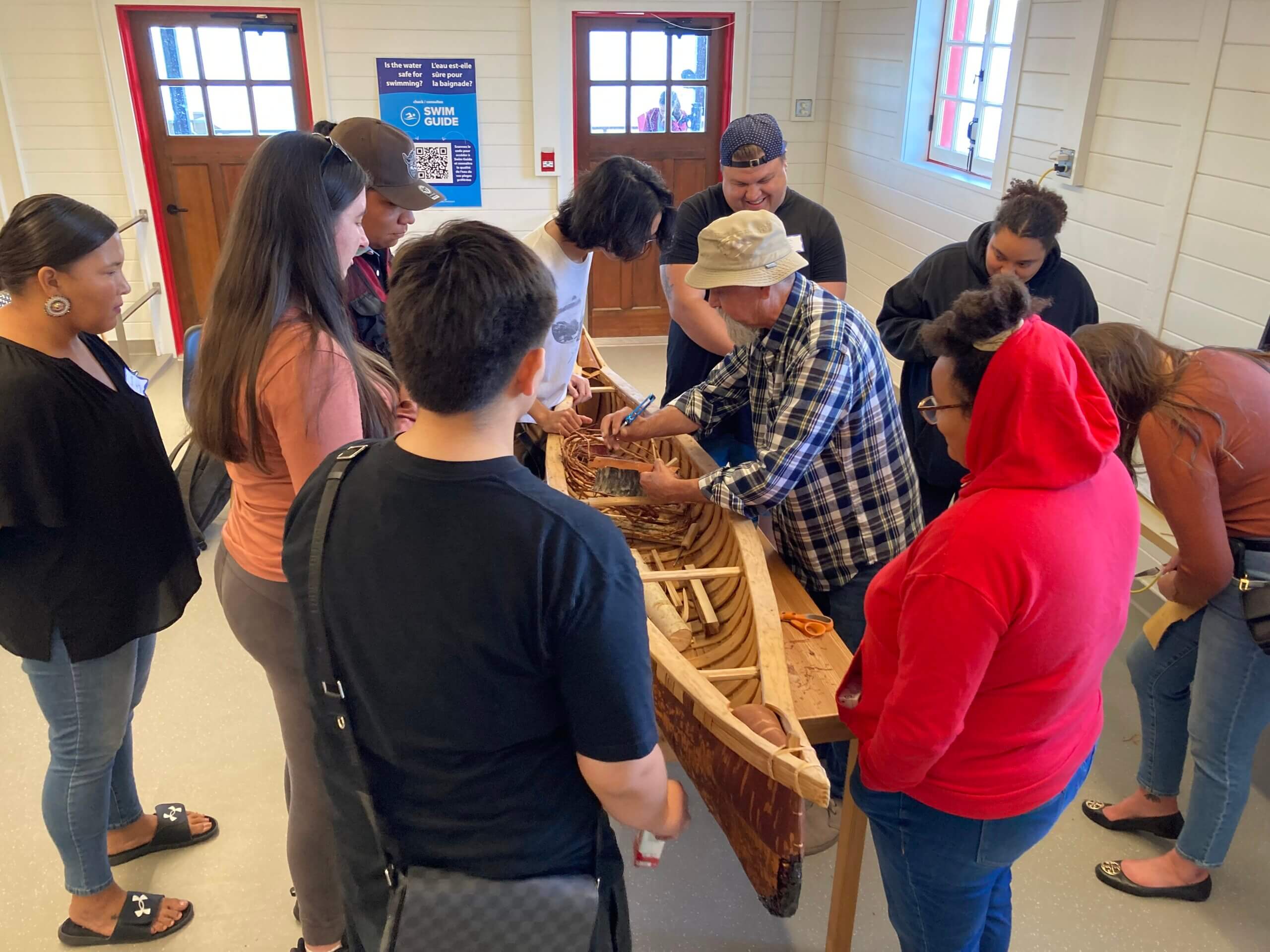
This fall, Ottawa Riverkeeper hosted a series of workshops that invited Indigenous youth to learn about traditional canoe-building from Pinock Smith, an Algonquin craftsperson, as part of our Canoeing Together project.
A birch bark canoe is truly an expression of watershed health. That is what we have learned thanks to being part of an incredible project to build a wìgwàs chìman (a traditional Algonquin birch bark canoe) at River House this fall.
The workshops
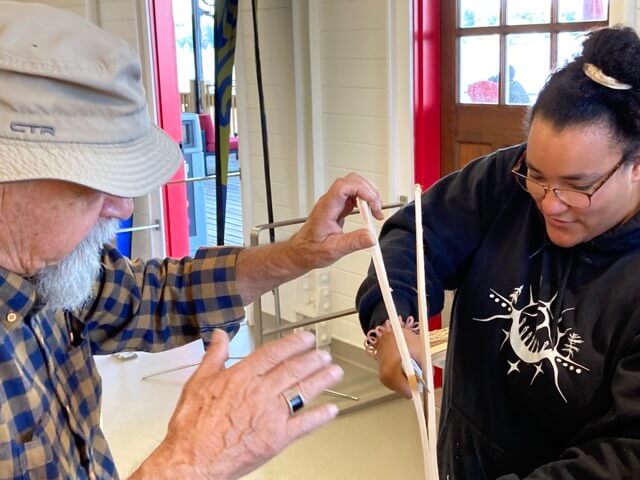
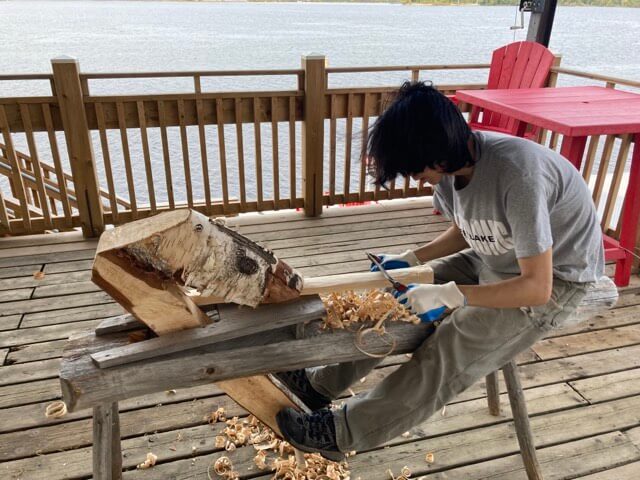
Throughout September, Indigenous youth gathered regularly at Ottawa Riverkeeper’s Learning Lab to build a birch bark canoe with Pinock Smith, an Algonquin Anishinaabeg knowledge holder from Kitigan Zibi. Participants spent six workshops preparing materials (cleaning spruce roots and splitting cedar for sheathing and ribs) and went on one field trip to learn about harvesting from the forest in Kitigan Zibi. Together these youth – many participating in partnership with the Assembly of Seven Generations (A7G) – have contributed nearly 300 hours to the project and have been hard at work learning and building.
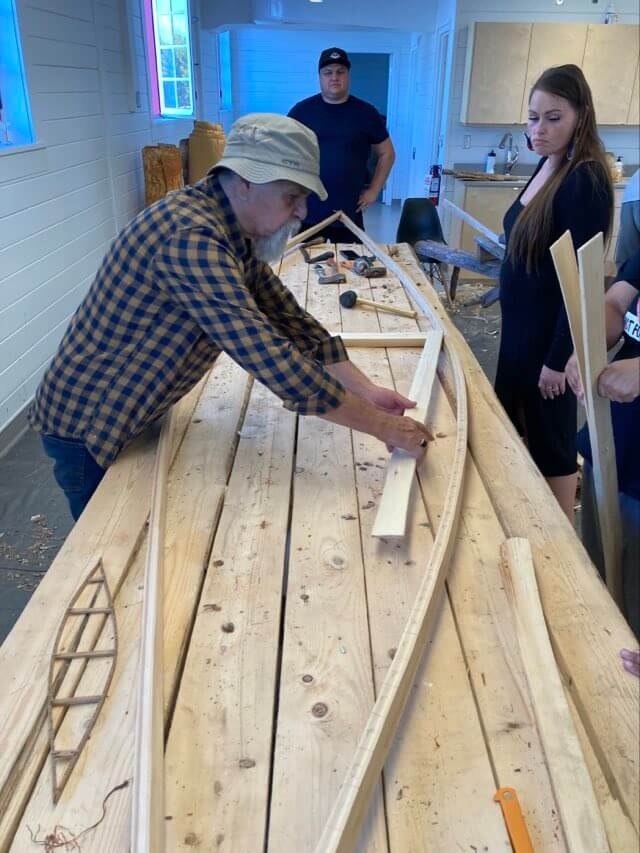


With cold weather approaching, and our Learning Lab closed for the winter, participants are looking forward to the spring, when the workshops will continue with the warmer weather.
Land and water
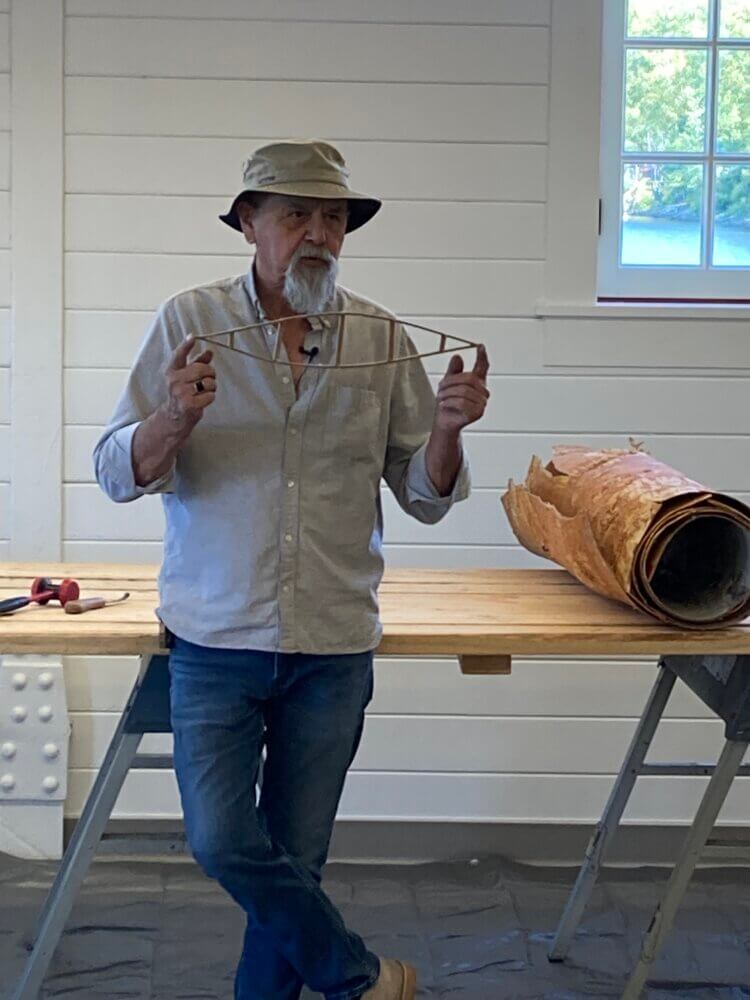
Pinock is a generous teacher, keen to share the knowledge of his Algonquin Anishinaabeg ancestors with youth participants. A particularly poignant teaching is the ways that threats to biodiversity and watershed health are endangering the craft of canoe-building itself. Based on his longstanding relationship with the forests of the watershed, Pinock is progressively more aware that the forests where he gathers the birch bark, spruce roots, and cedar to build a canoe are increasingly unhealthy.
This spring, Pinock was unable to gather materials due to the impacts of the forest fires and smoke, which prohibited him from going into the bush. He has talked about it being harder to find healthy birch trees for large enough pieces of bark. This canoe therefore stands as another sign of the impacts of climate change on our ecosystems and Indigenous communities in particular, and the importance of Indigenous guardians and knowledge keepers in protecting these lands and waters.


Throughout the workshops, we are creating a video that will share Pinock’s knowledge of the relationship between healthy forests and a healthy watershed; a powerful lesson in understanding the interconnections within an ecosystem and the importance of Indigenous knowledge in sustaining these healthy ecosystems.
We are incredibly grateful to Pinock and the committed youth builders for making this project possible – miigwech! See you in the spring when we continue building the canoe!
The Canoeing Together Project is made possible thanks to funding from the Ottawa Community Foundation.
