
Posted: November 23, 2023
Celebrating 10 Years of Community-based Monitoring!
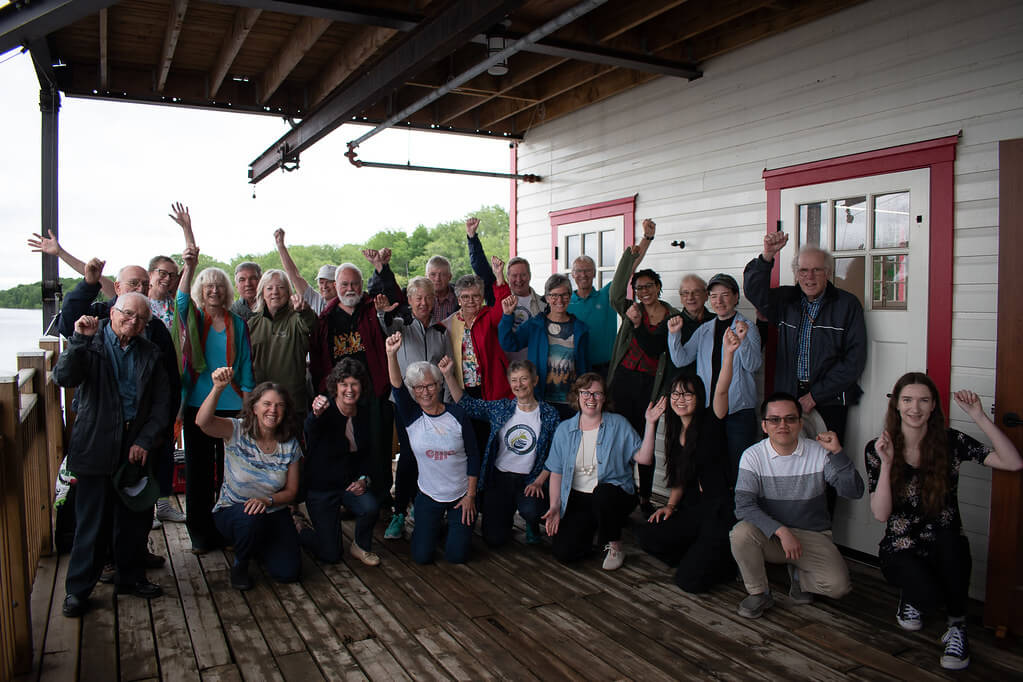
Ten years ago, Ottawa Riverkeeper first launched community-based monitoring programs. Today, we look back on the incredible projects and volunteers that have helped to deepen our collective understanding of the Ottawa River watershed!
How do you understand a watershed as vast as that of the Ottawa River? With a river 1,271 km in length, and a drainage basin area of 146,300 km2 (that’s twice the size of New Brunswick!) it is no easy feat.
At least it seems so until you realize that all along the length of the river, and throughout this vast region, are people who care deeply and passionately about nature, water, and protecting and understanding the world around them. These community scientists can work together to take up this challenge – and they have!
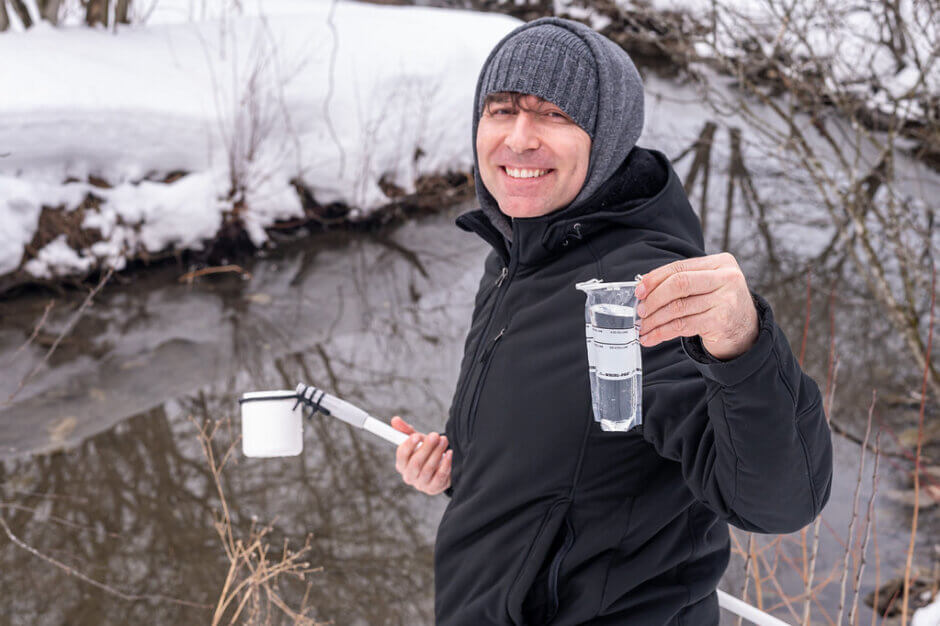
What is community-based monitoring?
You may be wondering what exactly community-based monitoring is. Quite simply, it is when people of all backgrounds and interests get involved in scientific projects.
This can involve a broad range of activities, from participating in a long-term study and collecting data or water samples regularly, to submitting an observational report when you spot something of interest to the study. Participation in these activities includes receiving guidance and training on how to collect various types of data. People taking part in these activities are known as community scientists, or citizen scientists.
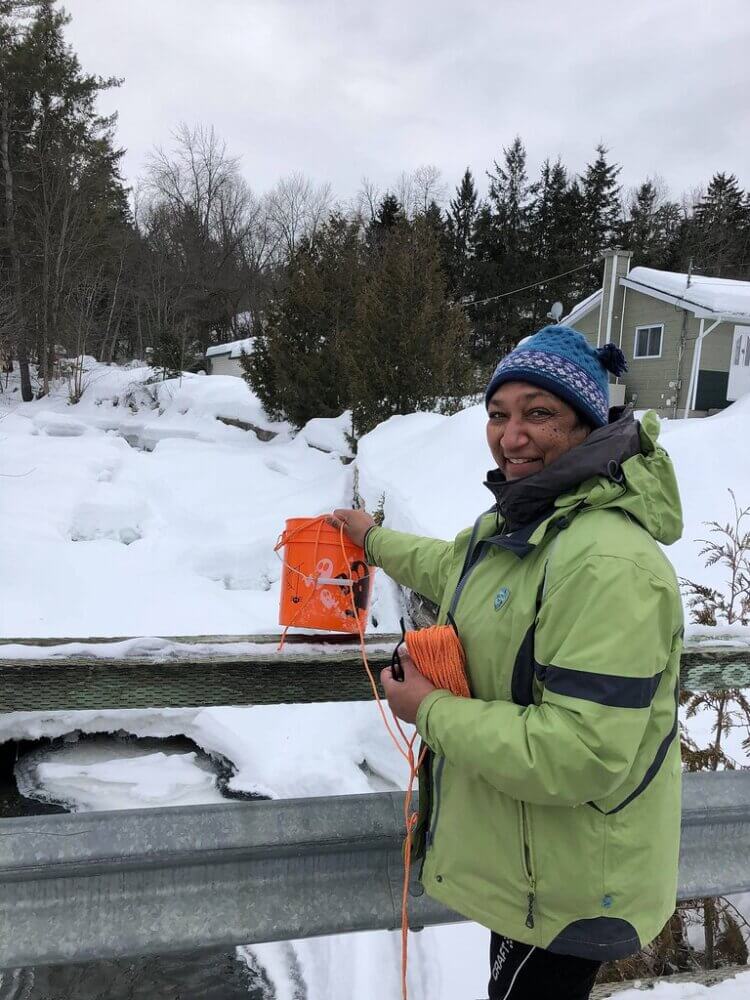
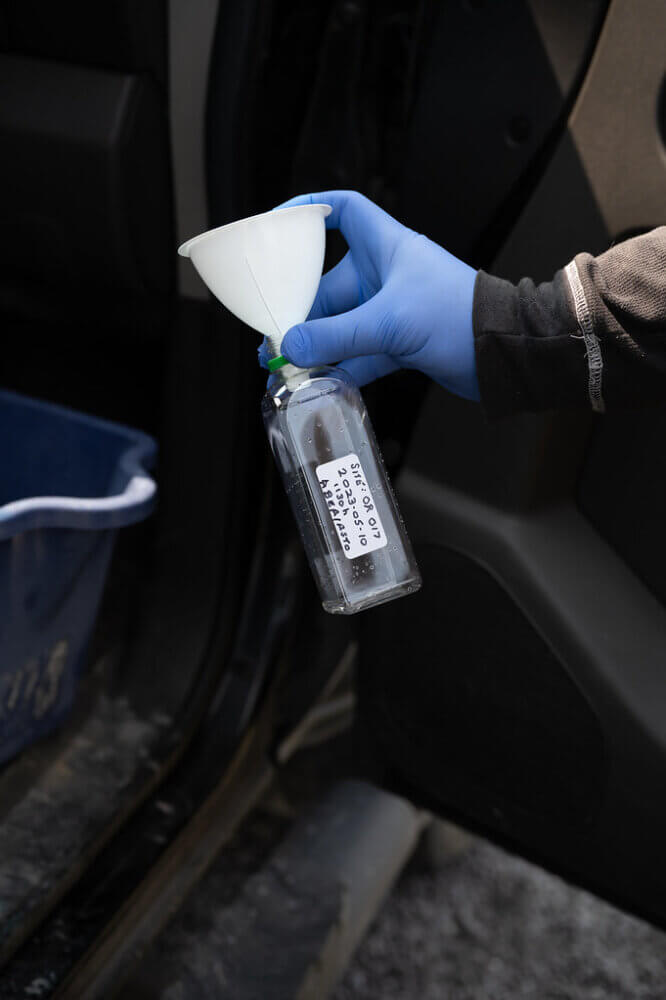
Ottawa Riverkeeper strongly believes that public participation in science is vital to our approach to maintaining a healthy watershed. On one side, it enables groups like ours to learn about the river and its ecosystems at a scale that smaller teams and individual researchers would simply not be able to achieve.
On the other end, community scientists get to engage much more deeply with the river, coming to understand it and the challenges it faces much more thoroughly. People who become involved in community-based monitoring projects often become strong advocates and ambassadors for the river in their communities, as they come to love and understand the river they have studied so closely.
Timeline of community-based monitoring projects
Back in 2013, Ottawa Riverkeeper launched our first community-based monitoring initiatives to collect surface water data to better understand the Ottawa River and its tributaries. Initially built on the foundation of the Riverwatch network of volunteers, over the last decade these programs have expanded to involve more community members, study more issues and health indicators within the watershed, and teach us even more about the wondrous rivers that run through this region.
Below, explore some of the programs that community scientists have participated in over the last 10 years! Click on a program in the timeline to find out even more.
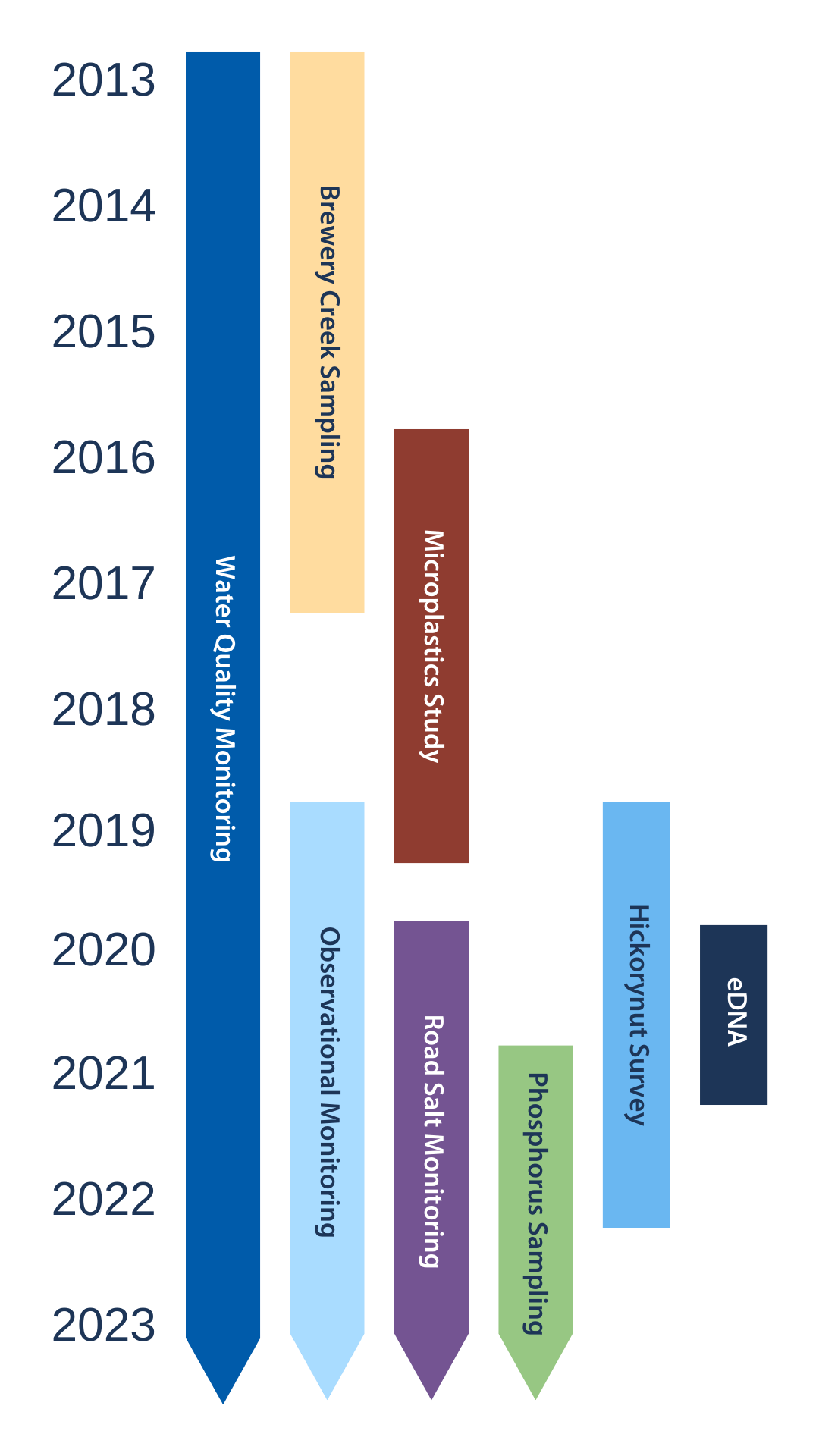
Brewery Creek Sampling: 2013-2017
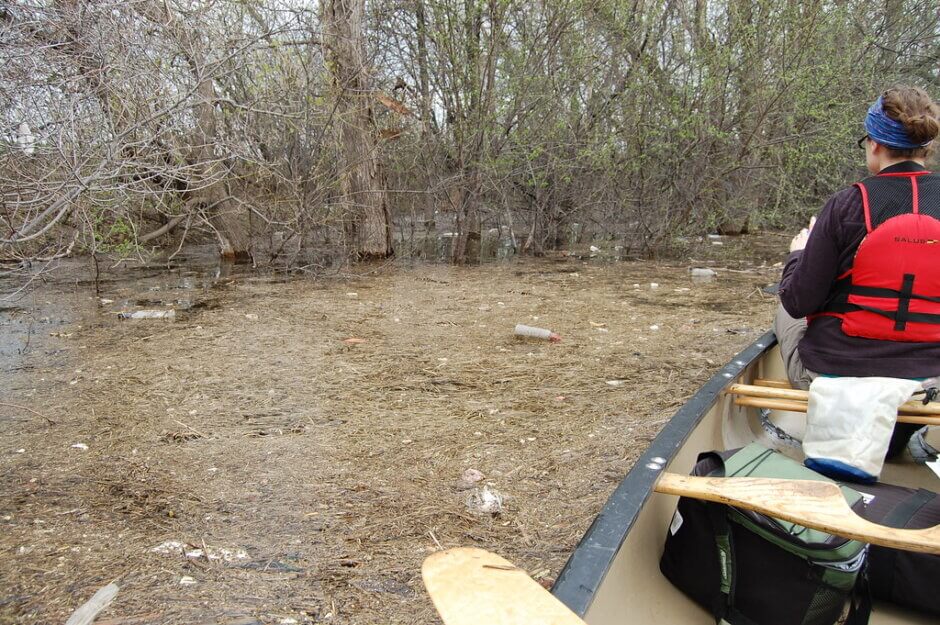
One of the first examples of community science work in action was the study of water quality sampling in Brewery Creek. The sampling program began in 2013 and ran until 2017. Community scientists involved took samples from the creek and measured the E. coli levels in much the same way as water quality is evaluated at public beaches.
After five years of regular monitoring, the data collected by volunteers was assembled in our Brewery Creek and Beyond report, detailing the analysis of the data and showing that Combined Sewer Overflows were having a detrimental effect on the creek. The results showed that the creek was more often than not unsafe for recreational use. This is a fantastic example of the kind of research that community scientists can take on and equip the public with information that allows them to make informed decisions.
Microplastics Study: 2016-2019
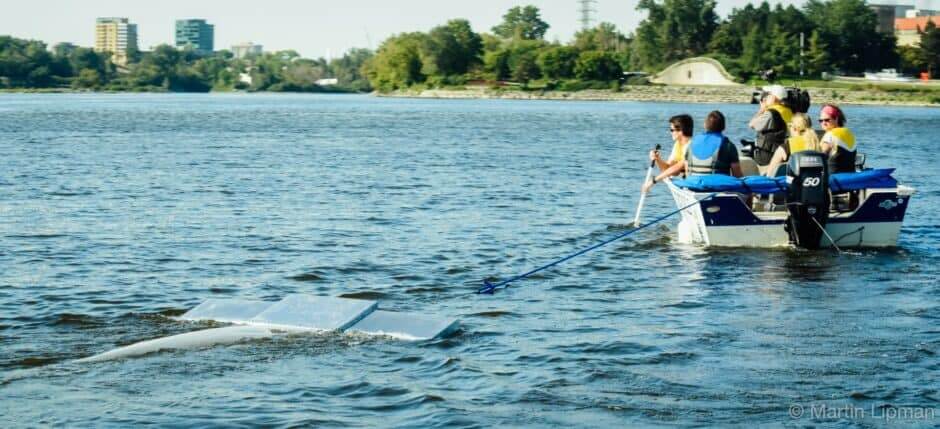
Beyond what can be accomplished by community groups alone, there is much that community-based monitoring can do to support traditional research. One memorable example is the studies that the Riverwatch network did in partnership with the lab of Jesse Vermire at Carleton University.
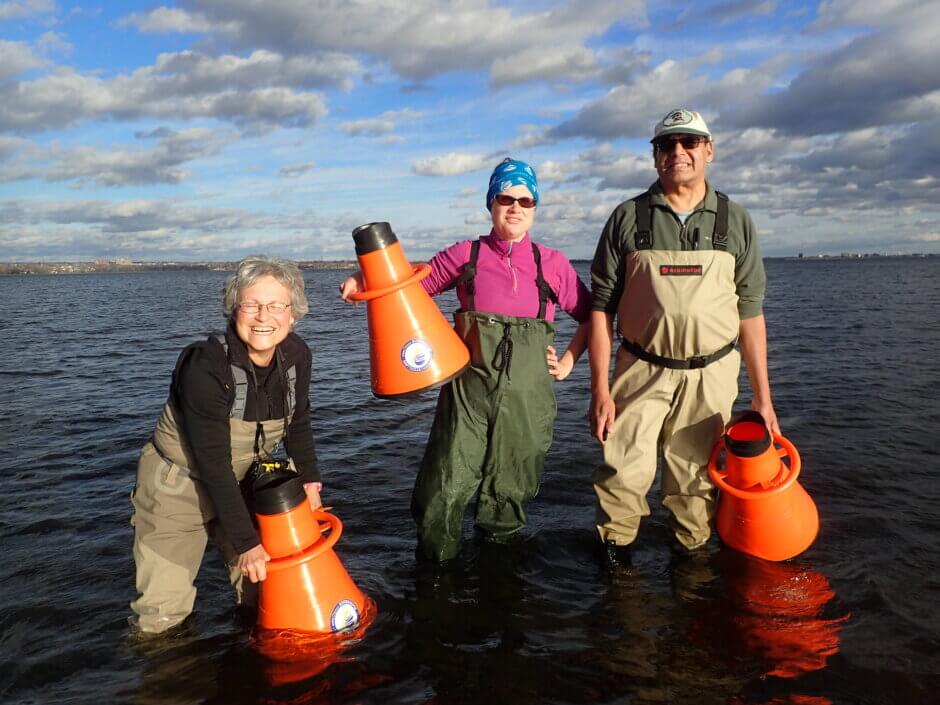
The first study sought to measure the presence of microplastics in the Ottawa River. This was implausible to do at the scale of the watershed for a small team of scientists. However, with the help of the Riverwatchers who live all along the river, they were able to sample all along this huge area. Community scientists were invaluable to the success of this research!
This study, and subsequent ones led by Shawn Forest, led to the publishing of papers demonstrating the spread of microplastics in the Ottawa River. The sampling done by Riverwatchers uncovered that microplastics, especially microfibres from synthetic fabrics, were ubiquitous in the Ottawa River. Although a concerning result, we never would have known how common this pollutant was without this partnership with volunteers. This was a triumph for the potential of community-based monitoring!
Hickorynut Survey: 2019-2022
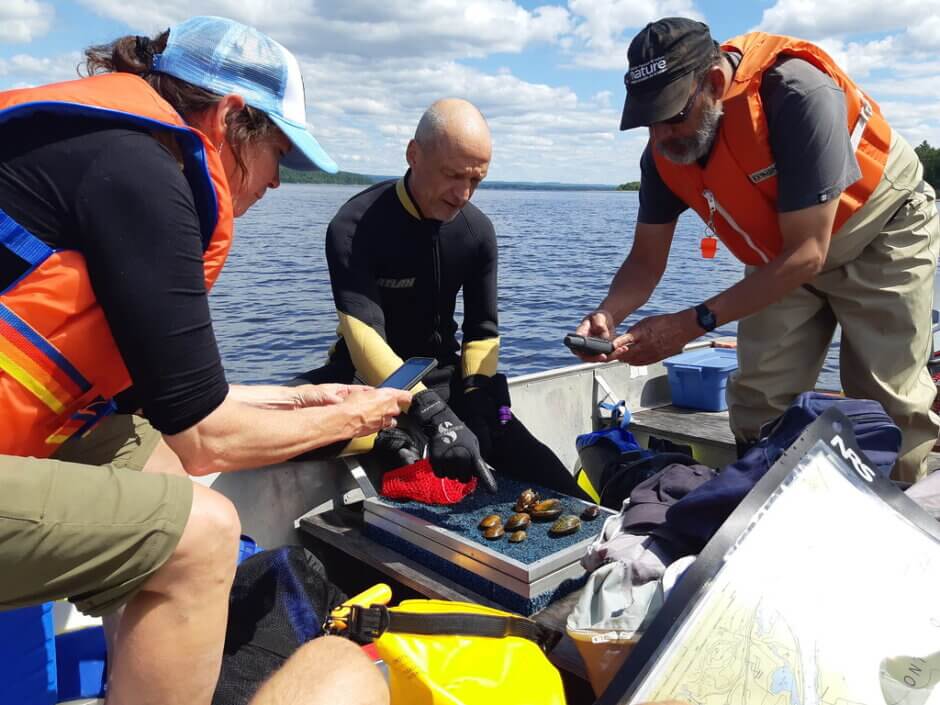
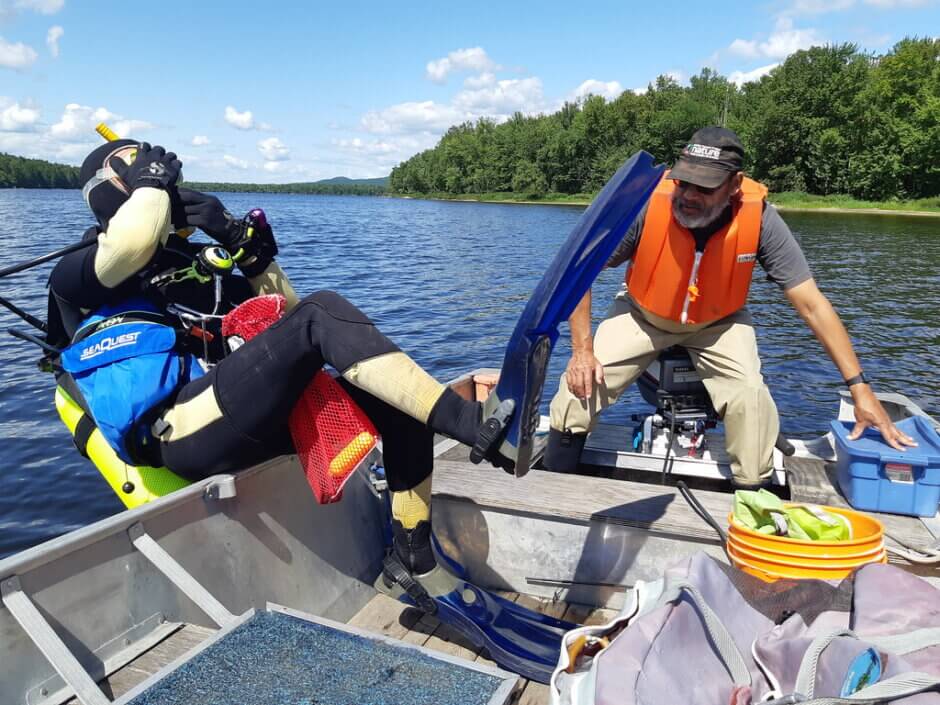
Community scientists and Ottawa Riverkeeper staff teamed up with André Martel and the Museum of Nature to investigate the endangered Hickorynut in the Ottawa River! This project was a bit different from other community-based monitoring projects, as the surveying was undertaken by trained researchers who could conduct the dives necessary to study this species. However, volunteers played crucial roles in helping support the expeditions.
Survey dives were conducted for several years, as the Hickorynut, which is an endangered species of mussel, is remarkably abundant in some regions of the Ottawa River. Surveying these spots, where the Hickorynut can thrive thanks to its reliance on the local sturgeon population, is important to safeguard this imperilled species.
Observational Monitoring of Watershed Health Indicators: 2019-Present

While other programs involve dedicated volunteer participants and often significant time investments, some community-based monitoring programs can be done by anyone at any time. Ottawa Riverkeeper has run several of these since the launch of our Watershed Health Assessment and Monitoring initiative, which tracks 14 indicators of watershed health.
As part of the initiative, we have asked anyone and everyone in the watershed to keep an eye out for certain easily observed phenomena along the river and in the watershed. These include tracking algal blooms, invasive species, and ice on/off. All are low-commitment programs that enable community members to simply submit observations with the necessary accompanying information, and yet it can lead to a much deeper understanding of how our watershed is changing. Through these programs, we can track changes in ice patterns in the watershed that are being influenced by climate change, see which areas are experiencing more frequent and severe algal blooms due to increased nutrients in the water, and we can track the spread of invasive species that are outcompeting native species. All of this information is invaluable to understanding trends in watershed health.
eDNA Research: 2020-2021
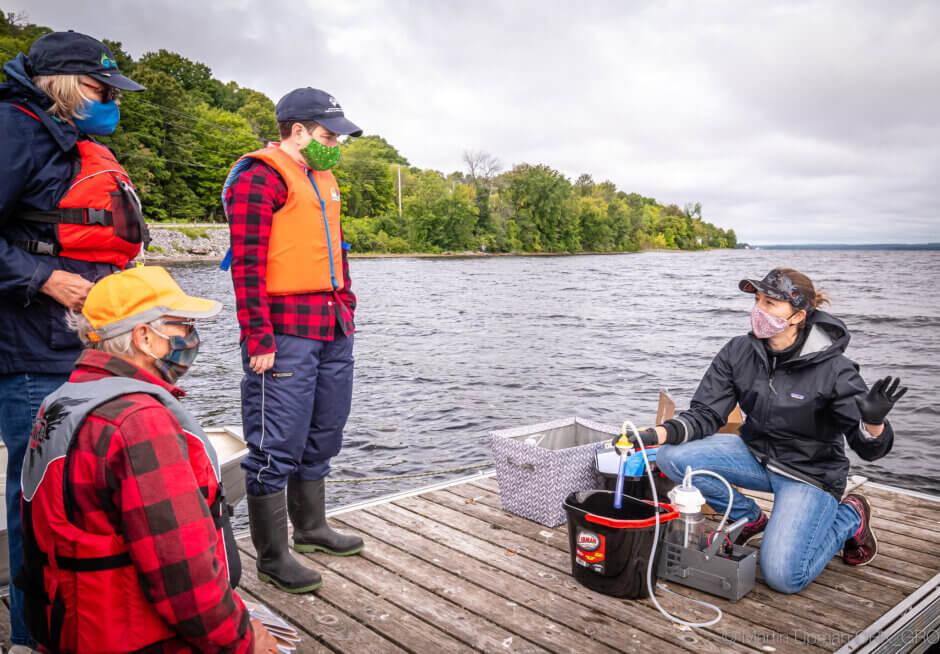
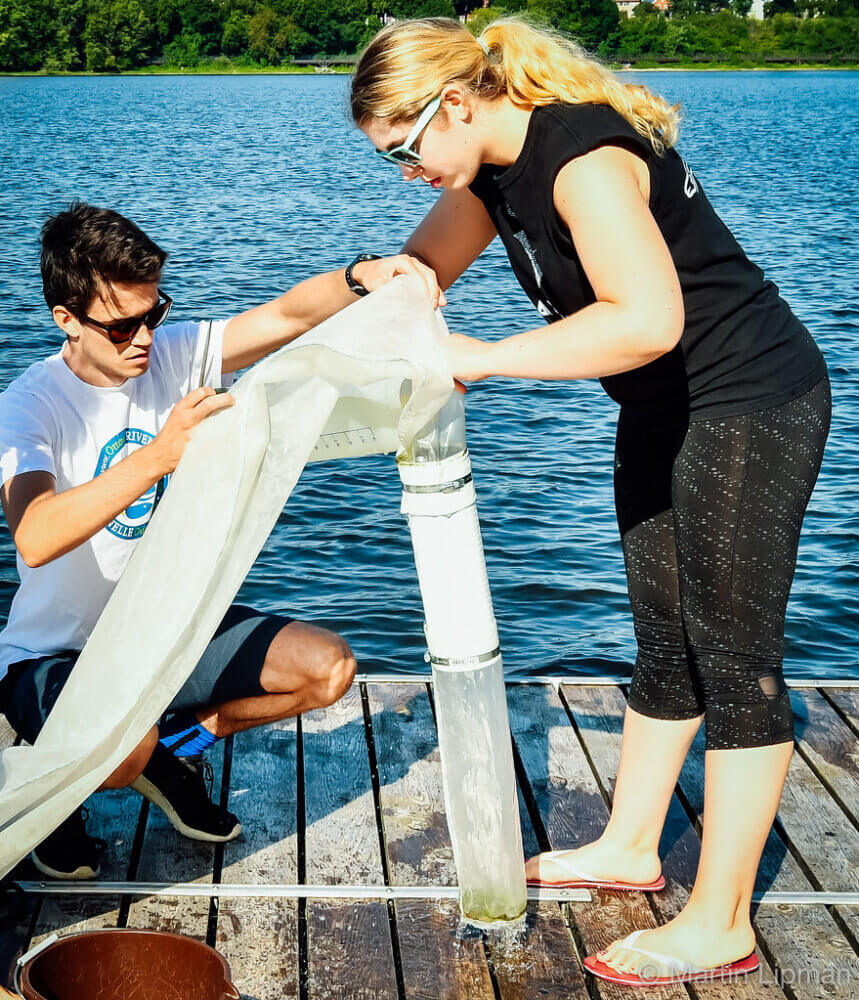
Sometimes community scientists get to be at the forefront of new ways to research and collect data on the health of the watershed. In 2020 and 2021, Riverwatchers and Ottawa Riverkeeper staff assisted researchers in collecting water samples from the river to track fish populations.
This research is part of a relatively new technique involving “environmental DNA” (eDNA). This is traces of DNA left in the environment by the various species that live within it. Current methodologies for surveying what fish species are present in the Ottawa River are often not robust enough to give the full picture. Using eDNA, the hope is to better understand the status of fish populations in the river.
The data from this project is still being processed and analyzed as part of a larger research study. We are excited to share what the results reveal once they are ready!
Road Salt Monitoring: 2020-Present
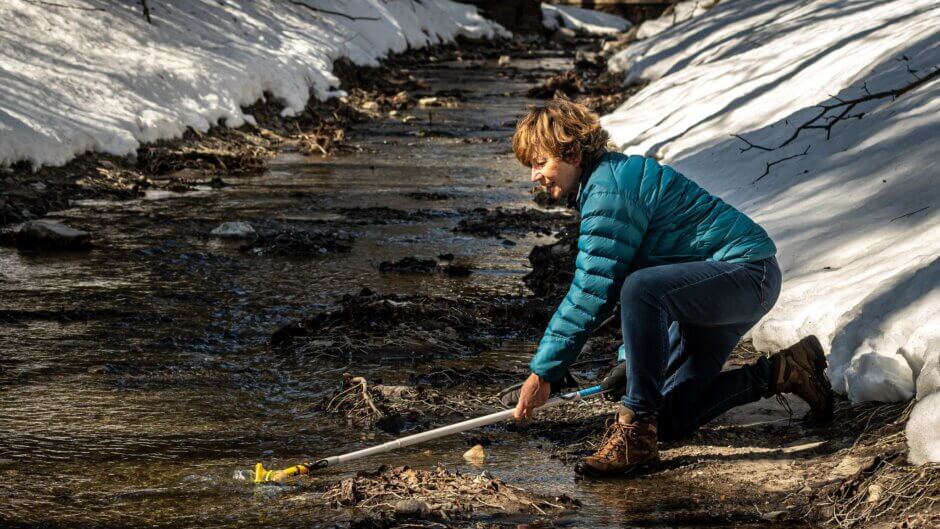
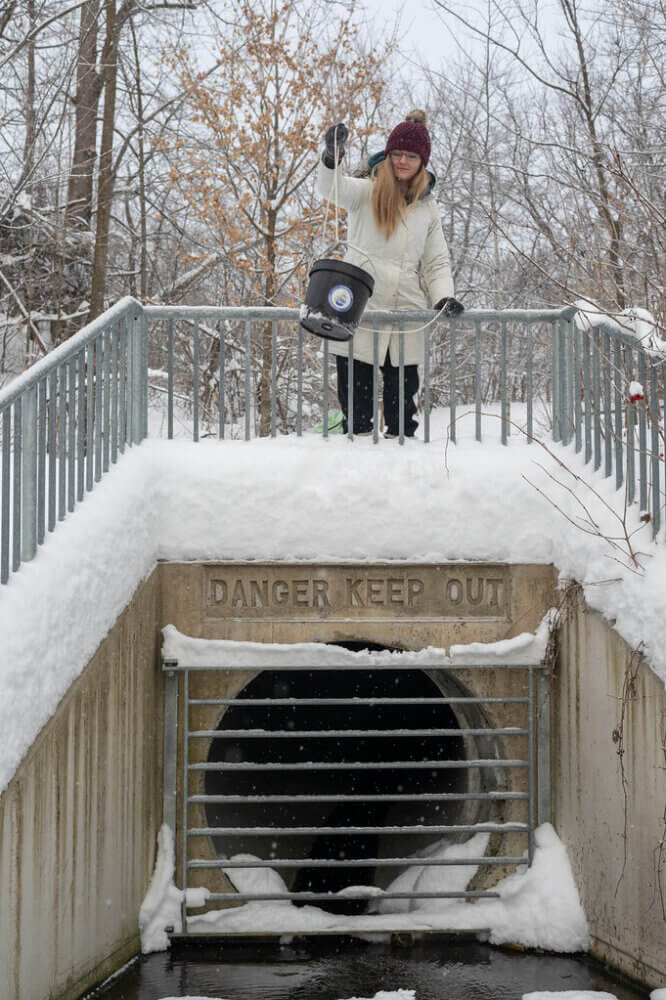
In 2020, Ottawa Riverkeeper recruited a small group of five community scientists to launch a pilot study into the impacts of road salt on urban creeks in the National Capital Region. The results from that first pilot were shocking, showing levels of Chloride from road salt that are extremely concerning for the health of urban ecosystems.
In subsequent years, more volunteers have joined, and the monitoring has expanded to new locations and shown that these results are not an anomaly – Chloride levels are high enough to damage ecosystems every winter we have studied.
Over time, community scientists have added aspects to this study in order to further our understanding of this winter threat to watershed health. Rural creeks were sampled to compare results to those surrounded by more roads. Levels in these rural creeks were found to be lower than those in urban areas.
Just this year in 2023, volunteers sampled their creeks during the summer months as well, to see if chloride levels decrease once road salt is no longer being applied. Results show that dangerously high levels of Chloride persist even during the warmer weather when no road salt is being spread, giving no respite to the vulnerable species in these ecosystems.
Total Phosphorus Sampling: 2021-Present
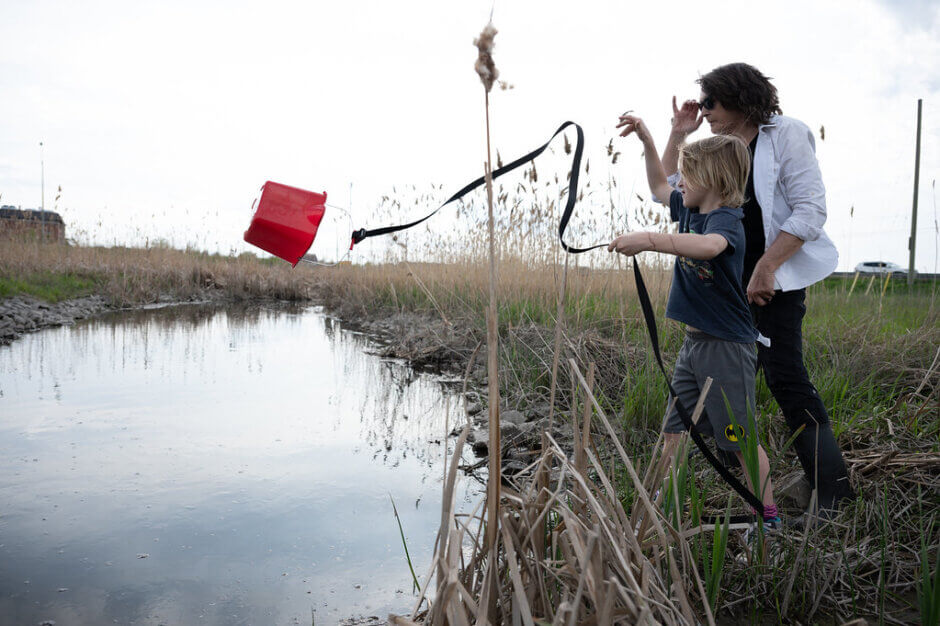
As part of the Watershed Health Assessment and Monitoring initiative, community scientists are helping to investigate the levels of various nutrients in the Ottawa River and the watershed. One of the most important is Total Phosphorus, which is a key nutrient for the production of plants and cyanobacteria in freshwater.
Community scientists involved in this work spent their summers collecting samples from their local waterways in order to track this nutrient. Once samples were collected, they were sent to Ottawa Riverkeeper for analysis. Combined with observational analysis of algal blooms and data being collected on land use in the watershed, these volunteers are helping to paint a fuller picture of how our ecosystems are being influenced by influxes of phosphorus from agriculture, forestry, sewer overflows, and other activities.
Water Quality Monitoring: 2013-Present
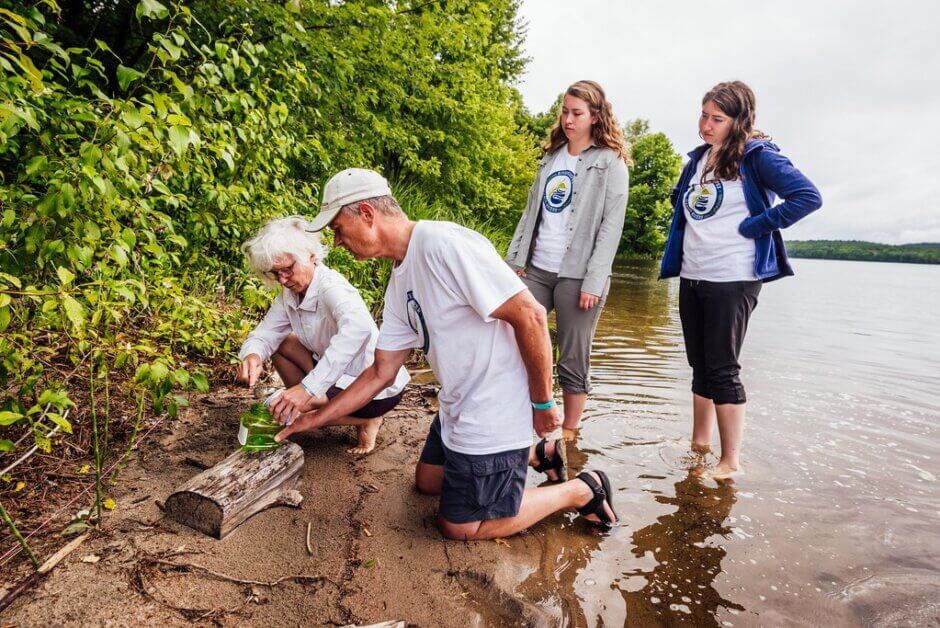
The first of our community-based monitoring programs, and one that continues to this day, is the general water quality monitoring performed by members of the Riverwatch network of volunteers. These are dedicated community scientists who typically live along the Ottawa River or near another tributary or body of water in the watershed.
As part of this long-running monitoring program, they keep track of various measures of water quality, from E. coli counts to water temperature and pH levels. This helps us keep an eye out for any drastic or unexpected changes in the state of the river, as well as track long-term trends.
Looking ahead!
Community-based monitoring is a pillar of Ottawa Riverkeeper’s science programs, and we couldn’t be more grateful to the many community scientists who have given their time and energy to these projects over the years. This is just a taste of what is possible when we work together to understand the world around us!
The bulk of the data collected through these initiatives is available through Ottawa Riverkeeper’s Open Data Portal. This information was collected by members of the public, and it is our strong belief that it should belong to the public.
Beyond making the data publicly available, Ottawa Riverkeeper strives to provide the public with analysis to accompany the data, so that residents of the watershed can accurately understand what is happening to their local river systems. Through publications such as our Brewery Creek report, Microplastics Paper, and Road Salt Pilot Study, we are taking what this community has learned and sharing it back with you. We are currently working on a broader look at overall watershed health using data from many of the initiatives listed above, and we can’t wait to share that with you in early 2024!
We couldn’t do this work without you, so thank you for your support over the last 10 years! Here’s to the next 10 years of science, collaboration, and love for the river!
Thank-you all for the important monitoring work you folks do, and for such an important watershed.
L.D. <3
Thank you for this amazing co-ordination – I knew nothing about it till now.
Is there a similar organization to monitor radiation pollution in the air?
Hi Lyn! Ottawa Riverkeeper does not monitor for radionuclides. However, there is some air quality data available through the Independent Environmental Monitoring Program that the Canadian Nuclear Safety Commission oversees: https://nuclearsafety.gc.ca/eng/resources/maps-of-nuclear-facilities/iemp/ch-river.cfm
Other monitoring protocols that collect this type data may exist, but this provides some accessible data to the public. Should CNSC ever review their IEMP, it would be beneficial for them to hear from the public to understand what questions people have about these facilities and the type of data people are interested in having access to.