
Posted: October 6, 2023
AANTC Support for an Eel Ladder at the Carillon Generating Station
On August 31st, 2023, the Algonquin Anishinabeg Nation Tribal Council sent a letter to the CEO of Hydro-Québec to request an eel ladder be installed at the Carillon Dam. The letter echoes and supports Ottawa Riverkeeper’s own open letter, but also acts as a call for reparations to the damage done to Anishinabe Algonquin culture through the loss of this iconic species.
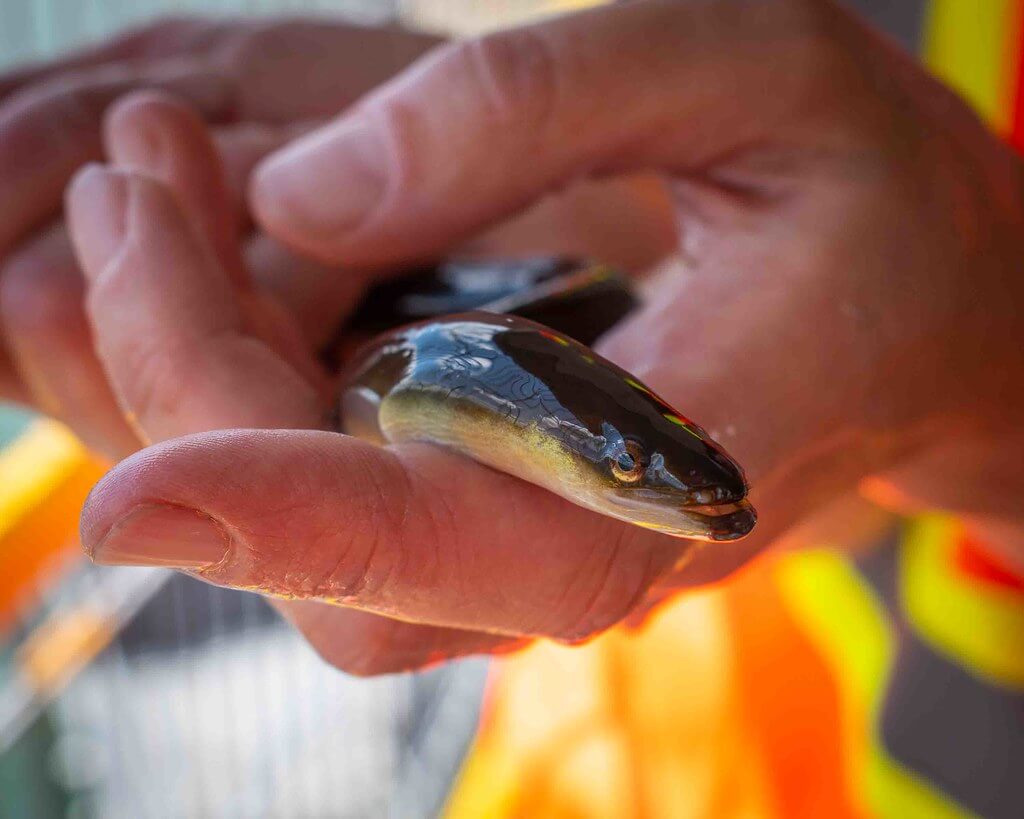
The American eel was once the most abundant fish species in the Ottawa River. As such, it is deeply ingrained in the culture of the Anishinābeg Algonquin Nation who are the traditional and ongoing caretakers of this watershed. As this species has seen a dramatic 99% decline in the Ottawa River watershed, the Anishinābeg Algonquin Nation has been calling for more to be done to support and restore this species.
Before we sent our open letter to Hydro-Québec, which was released on August 15th, we invited collaboration from Anishinābeg Algonquin Chiefs and communities. On August 31st, the Algonquin Anishinabeg Nation Tribal Council (AANTC) sent a letter of their own, addressed to the CEO of Hydro-Québec. Read the full letter here.
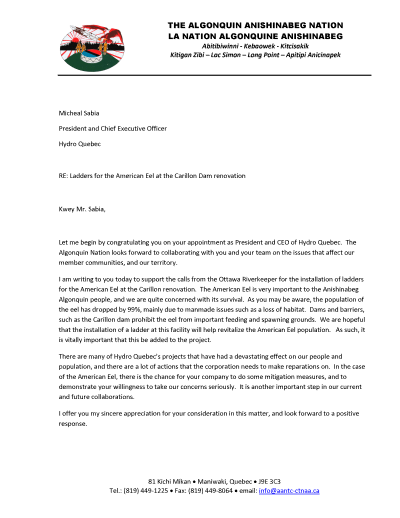
“There are many of Hydro Quebec’s projects that have had a devastating effect on our people and population, and there are a lot of actions that the corporation needs to make reparations on. In the case of the American Eel, there is the chance for your company to do some mitigation measures, and to demonstrate your willingness to take our concerns seriously. It is another important step in our current and future collaborations.”
As the quote above highlights, the AANTC letter requests an eel ladder be constructed at the Carillon Generating Station as part of reparations to the Anishinābeg Algonquin Nation in the watershed. This is a powerful call and should be taken seriously by Hydro-Québec.
Response from Hydro-Québec
Hydro-Québec has replied to the AANTC’s letter, as well as sent a response to Ottawa Riverkeeper’s open letter. The two responses are similar, hitting many of the same points in each, such as highlighting their ongoing research on eel migration and that these specific renovations did not consider an eel ladder as part of the plans. These factors need not stand in the way of installing an eel ladder at Carillon.
Hydro-Québec also extended an invitation in each response to meet to discuss the future of this species further. We welcome this invitation and encourage Hydro-Québec to work with the Anishinābeg Algonquin Nation and Ottawa Riverkeeper to further the study and protection of this iconic and culturally significant species. We hope for a future where barriers can be surmounted through collaboration such that eels can easily access the Ottawa River watershed once again.
< Previous post Next post >