
Posted: July 18, 2023
High school students dive deep on the issue of microplastics
Hello! I'm Niko, a grade 11 student from Ashbury College. For River Day, I presented on the issue of microplastics in collaboration with my classmate Sara.
Sara and Niko are two students from Ashbury College who completed co-op placements with the Education Team this June. Both are passionate about science and the environment, and led an amazing workshop on microplastics for Ottawa Riverkeeper’s River Day pilot on June 24.
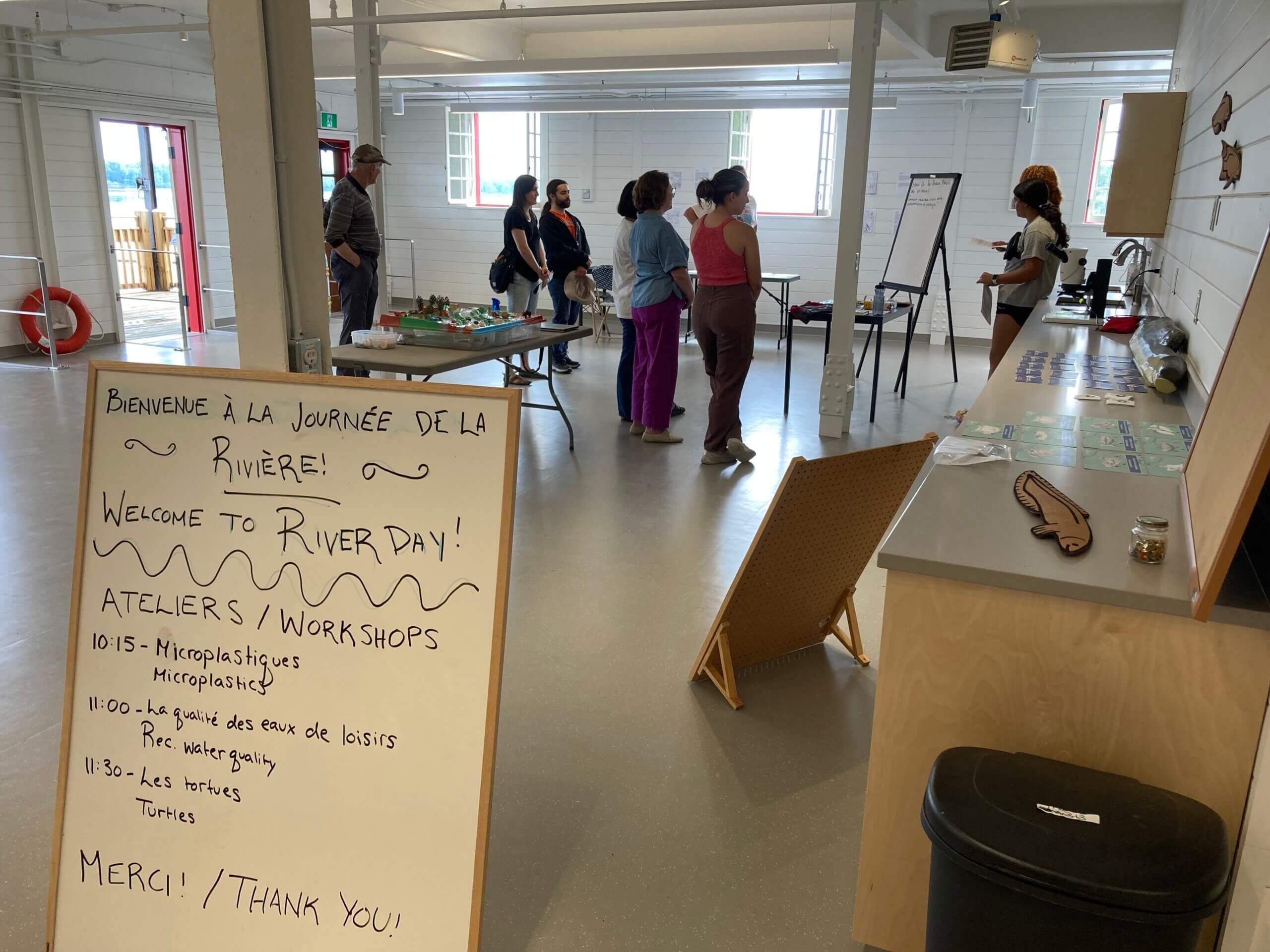
A handful of people in the Ottawa Riverkeeper community were invited to participate and give feedback on the River Day pilot, which featured family-friendly programming about the watershed and showcased our new education space at River House. We look forward to opening future River Days to the broader public!
Below is what Niko wrote about the experience of working on River Day.
Written by co-op student Niko Sigur
Sara and I are completing a two week co-op placement with Ottawa Riverkeeper, and our experience has been an overwhelmingly positive opportunity to get involved with the Ottawa River watershed.
Before choosing to present on the issue of microplastics for Ottawa Riverkeeper’s River Day pilot event, both Sara and I had a surface level understanding and interest in the issue. The more we researched this topic in preparation for our workshop, the more we realized the severity of the issue. This led us to decide that it was important to share our research alongside solutions.
We began our presentation by sharing some alarming statistics from the Canadian government. Did you know that Canadians throw away over three million tonnes of plastic each year? What’s more, only around nine percent of that waste is being recycled.
Plastics have become almost impossible to avoid, and many products contain plastic without us even realizing it, for example: clothing, chewing gum, hair gel, laundry detergent pods, and cosmetics.

Microplastics enter the environment through wastewater, littering, and even the air. Many airborne microplastics come from traction between tires and roads or the brake pads of cars and trucks.
Microplastics pose health risks for animals, such as damage to their digestive tracts and the potential disruption of their endocrine systems.
Sara wrapped up our presentation by offering some actions that we could all take to reduce plastic pollution, such as cutting down on plastic use and finding viable alternatives to single use plastics. We also opened the discussion up to the audience and allowed participants to leave their suggestions for cutting down on plastic pollution – there were some great ideas!
While microplastics are a big problem that need systemic solutions, we felt hopeful to see there are so many ways that we can all help to make a difference.
