
Posted: January 9, 2026
A $1.365M fine raises old questions about the 2019 fish kill events in the Lièvre River
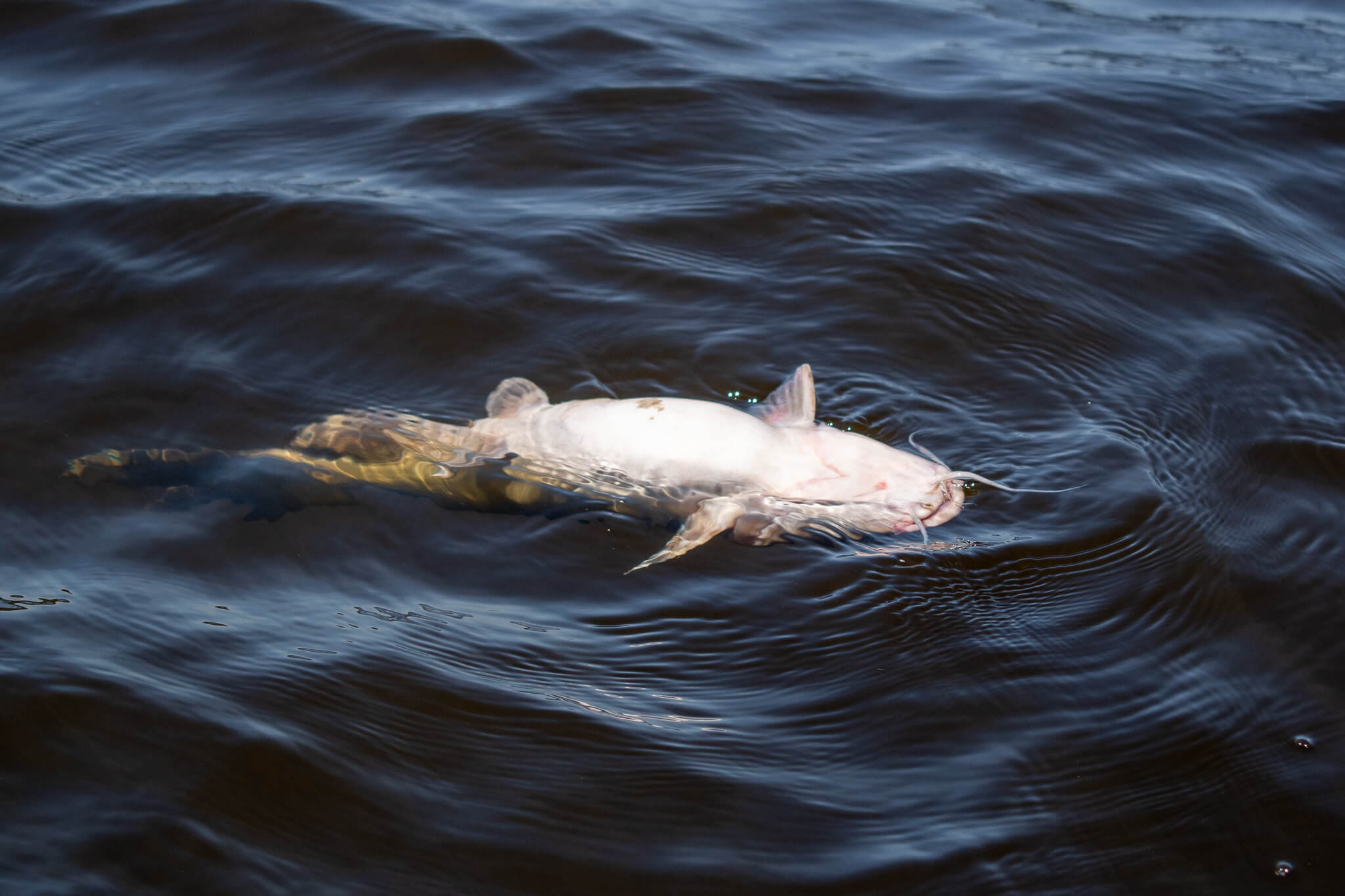
Environment and Climate Change Canada has announced a fine for the release of a deleterious substance into the Lièvre River, a tributary of the Ottawa River. The incident occurred in 2019, the same year as major fish kills in the Lièvre, when thousands of dead fish washed up along the shores of the Ottawa River. ECCC says it did not find a link between the discharge and the fish deaths. Will we ever know the full story?
Details of the fine and the incidents
On January 8th, 2026, Environment and Climate Change Canada (ECCC) announced that they are fining Superior General Partner Inc. and one individual $1,365,000 for violations of the Fisheries Act.
In this investigation, Environment and Climate Change Canada states that the cause of the fine was 12 releases of sodium chlorite (NaClO2) from a chemical manufacturing plant in Gatineau near Buckingham, resulting from equipment failure. These incidents, which occurred between June 27 and July 19, 2019, were not reported immediately, and now the company and one individual have pleaded guilty to violating the Fisheries Act.
The timing of the releases lines up with massive fish kills in the Lièvre and Ottawa Rivers that occurred in the summer of 2019, though in reporting by CTV news, ECCC clarified that they “did not find a link between the fish deaths and the sodium chlorite emitted by the company.”
Pollution Hotline and community observations in action
This is the latest chapter of a complex story. Ottawa Riverkeeper was alerted to a major fish kill event on the Ottawa River on July 8th, 2019, when a call to our Pollution Hotline reported dead fish washing up on shore. Those were followed by three more events on July 19th, July 29th, and July 31st. The number and variety of species killed highlighted that this event was likely due to a deleterious substance being introduced to the river, which caused a high rate of mortality in fish populations.
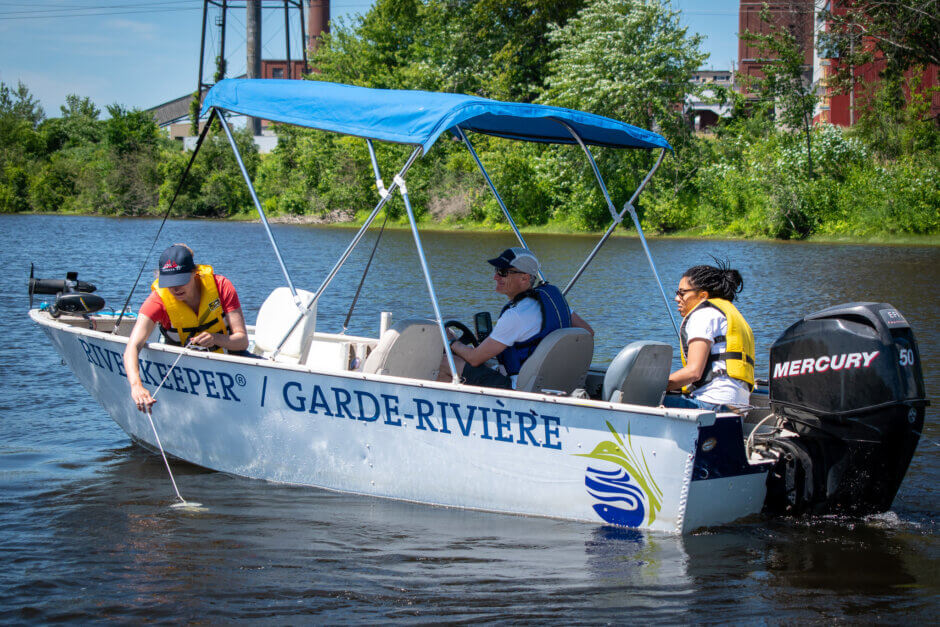
During that month, our team was out following up on leads, including taking our patrol boat and monitoring equipment out to the Lièvre River to document the fish kill and to run tests and take samples. This was in parallel to investigations by the Government of Quebec and ECCC, with whom we shared our information, particularly when we would receive reports of more dead fish. We also communicated our findings to the public and pushed for various authorities to work collaboratively to determine the cause of these troubling events.
Members of our community continued to send in reports of what they were seeing, spreading the word to others in the region to reach out to us, and helping us collect and catalogue information.
Riverwatch volunteers were particularly helpful, providing on-the-water observations and local expertise to help us document the incidents. These efforts enabled Ottawa Riverkeeper to optimize our capacity so that we could share observations and findings with the public and the authorities.
Yannick, a fish guide in the area, lists off different types of dead fish as he makes his way from the Rockland boat launch upstream towards the Lièvre River.
Interjurisdictional challenges
We applaud ECCC for its investigation of this event. They play an important role in investigating incidents when harmful substances are released into aquatic environments.
This latest fine now raises questions regarding the outcome of their investigation in the Lièvre River. They have not drawn a direct link between this fine and the fish kills, but given that this occurred within the time frame of this large fish kill event, we wonder what information is available to share from that investigation by ECCC.
To better understand what actions the federal government took regarding these episodic fish kill events, Ottawa Riverkeeper filed an Environmental Petition (No. 436) to the Commissioner of the Environment and Sustainable Development in the fall of 2019. From this, we learned that ‘’An Environment and Climate Change Canada enforcement officer had reasonable grounds to believe that an offence under the Fisheries Act had been committed. An investigation was initiated to gather the necessary evidence to recommend possible charges against the entity responsible for the offence. The decision whether or not to file charges rests with PPSC’s Crown Attorney on his/her assessment of the reasonable prospect of obtaining a finding of guilt if it is deemed in the public interest to do so.”
One of the major challenges in understanding what was occurring was due to the multijurisdictional nature of this incident. As we highlighted in our retrospective blog in 2020, one year after the incidents, these dynamics made it harder for anyone to investigate the incidents.
Ottawa Riverkeeper has long advocated for a coordinated approach to addressing issues affecting the Ottawa River system. This event highlights not only the different approaches of the two provinces but also the lack of coordination between federal and provincial authorities. Within weeks of the last fish kill incident in summer 2019, the Quebec government identified the cause as the Brookfield power station in the Lièvre, which seemed to close the case, while the Federal government investigation was still ongoing.
Conclusion
The fish kill incidents caused significant worry and alarm in 2019 and continued to resonate within our community. In the years since, the public has been unaware of the cause, the perpetrator, and any progress updates on the case. This latest fine reminds us of the doubt and uncertainty felt at that time. It raises new questions and leaves us, as well as many in the community, wondering if a repeat event were to occur, how it would be enforced?
We applaud the federal government for following their investigation into Superior General Partner Inc. through to a conclusion, and we look forward to seeing the fine reinvested in protecting the ecology and fish populations of the Ottawa River, as stated will be done through the federal Environmental Damages Fund.
This story is a great reminder of the power of community observations! If you see something amiss on the river, like dead fish or pollution, send your report to Ottawa Riverkeeper’s Pollution Hotline.
Were any of the dead fish collected for lab analysis that might indicate the cause of death?
Specifically, Sodium chlorite (\(NaClO_{2}\)) is a powerful oxidizing agent that, while used in specialized, controlled applications to treat parasites in freshwater fish, is generally considered very toxic to aquatic life. It is a strong oxidant that can cause rapid tissue damage, specifically targeting gills, and can be fatal to fish at high concentrations.
Hi Marc, thanks for the question. Ottawa Riverkeeper did not take any samples of the dead fish due to the costs of taking and analyzing these kinds of samples. Instead we focused on taking measurements of the water near the mouth of the Lièvre River.
However, we know that dead fish were collected by the Federal Government and the Quebec Government.
We followed up with 5 agencies who conducted investigations, including submitting Access to Information and Privacy (ATIP) Requests. Only MFFP’s results regarding the dead fish were made public. These results were deemed to be inconclusive.
Now that this new fine has been issued by ECCC, we plan to follow up some more to see what more can be learned.
Thanks to Riverkeeper for following up on this. Will you continue to follow up to resolve these unanswered questions?
Would also be helpful o see a map where the perpetrator’s location is shown, to help those who live/work/play nearby get a higher level of {comfort/discomfort}.
– a Member
Hi Mark, thanks for the comment. Yes, our plan is to follow up further with ECCC and other authorities to try and learn more about the incidents in 2019 now that the investigation has been completed and resulted in a fine.
We have almost 500′ of frontage on the Lievre. We are always very concerned with anything relating to the river ecology.
Please keep up the good work!
-Riverkeeper Member