Ice On / Off
Project main page || Data || Relationships || Further resources
Introduction:
As temperatures begin to drop in the winter, ice forms on the surface of the water, eventually coating the entire surface with a layer of ice if temperatures stay cold enough for long enough. This is referred to as ‘ice on’ conditions. This process is affected by water quantity and flow rate, with smaller, slower-moving areas like ponds and small lakes freezing over sooner than the main stem of the river.
As temperatures rise in the springtime, the ice begins to melt. When a river reach, bay, or lake is free from ice, this is referred to as ‘ice off’ conditions. That, combined with the melting snow, is typically associated with the spring freshet (peak flows in the spring). However, more variable winter temperatures in recent years have contributed to an increase in freeze-thaw cycles, resulting in less snow buildup and a disconnect between ice-off and peak flows. This shift in peak flow timing makes the ice on/off dates very important indicators of watershed ecological status in the context of climate change.
In short, ice on is the date when a body of water is fully covered by ice, and ice off is the date when that ice disappears. These measurements provide information about several environmental conditions, such as air temperature, water temperature, and flow.
Ice on/ice off cycles can also be important biological cues for some species, with ice on triggering behaviours like hibernation (or hibernation-like behaviours), and ice off signaling the beginning of spawning and/or major foraging seasons. Therefore, other important indicators of watershed health such as benthic invertebrate and fish diversity are strongly linked to ice on/off.
Data is scarce for ice on/ice off on the Ottawa River, likely in part due to the fact that it can vary significantly depending on the area of the watershed (some areas freeze as soon as temperatures drop, others never freeze, and some can even freeze and thaw multiple times in a single winter), so a comprehensive database could be difficult and/or expensive to collect. However, since the appearance and disappearance of ice on the surface of the water is a simple visual observation that does not require special equipment, and with a large number of dedicated river/water enthusiasts throughout the watershed, ice on/ice off has the potential to be very well-documented through citizen science.
What do we know about the timing of ice-off in the watershed?
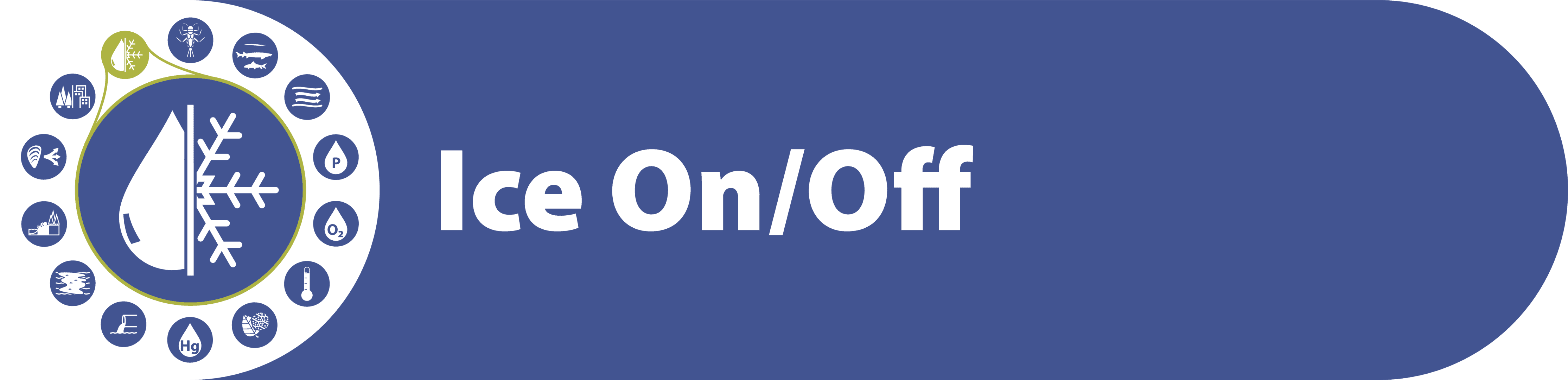
With limited data, it can be difficult to draw strong conclusions, but there are some very interesting observations that can be made from the timing of ice-off at these two locations in the watershed. For Lake Temiskaming, ice-off typically occurs between late-mid April and mid May, and there is no discernible change in this timing in over 100 years. That kind of stability gives us a very reliable baseline to compare current-year data to and an indication of whether or not current conditions are normal.
Another interesting takeaway is that when looking at the data for both Lake Temiskaming and Lake Allumette, the earliest ice-off date for both locations happened in the same year (2012), suggesting that year was an abnormally mild winter. Furthermore, the two locations show very similar patterns in their year-to-year variation for the 30+ years when data was available at both spots. All this despite being separated by around 300 km of river, suggesting that ice-off is not only a good indicator of ecosystem status for specific locations, but for the watershed as a whole.
Relationships to other indicators:
Ice On/Off
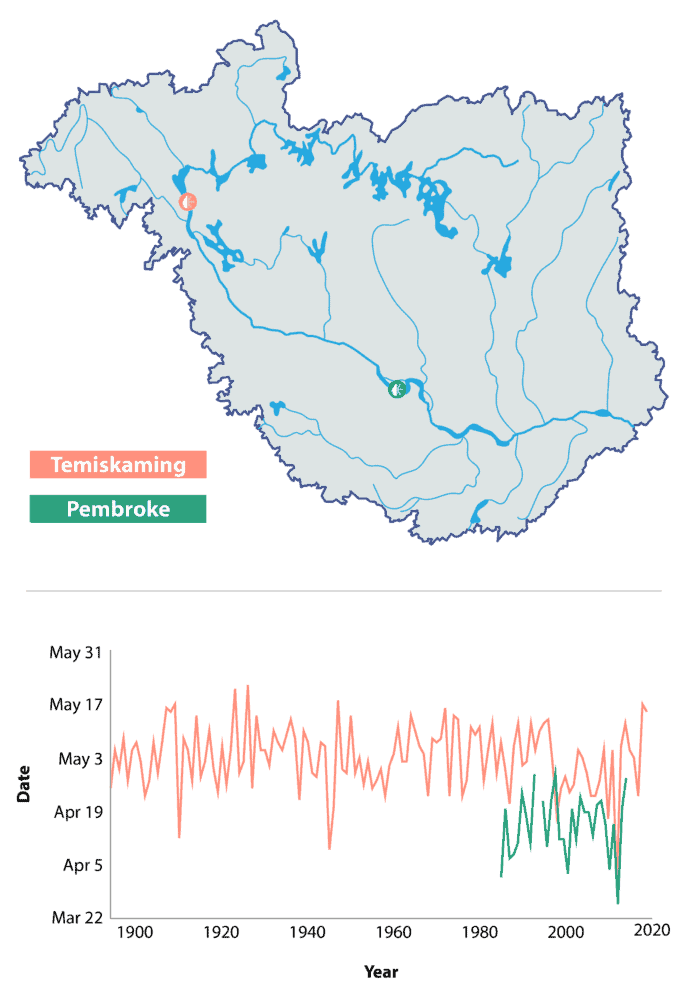
Ice on is the date when a body of water is fully covered by ice, and ice off is the date when the ice disappears from the water surface. These measurements provide information about several environmental conditions, such as air temperature, water temperature, and flow.
Algal Blooms
Algae are a group of single-celled and multicellular plant-like organisms. Algal growth contributes and supports the ecosystem in much the same way that plants do, through the production of oxygen and as a potential food source for smaller animals. However, when environmental conditions shift from their normal ranges, this can promote algal blooms, a rapid increase in population size of algae.
Water Temperature
With global temperatures on the rise, water temperature (particularly annual maximum temperatures) will be a crucially important indicator of watershed health moving forward. Water temperature is strongly correlated with a number of other important indicators of ecological status, and can often help to explain, give context to, or even predict changes in habitat quality.
Dissolved Oxygen
Dissolved oxygen (DO) is the concentration of free oxygen in the water column and comes from aquatic plants and algae through photosynthesis, and can also be transferred from the air at the surface of the water. DO is essential for all aquatic life and for the decomposition of organic waste. The amount of available oxygen in the water column is also affected by several abiotic factors including temperature, salinity, pressure and depth, wind, flow, and wave action.
Chlorophyll-a
Chlorophyll-a is used in oxygenic photosynthesis and is the predominant form of chlorophyll in green plants and algae. Measuring the presence of chlorophyll-a in an aquatic environment allows for a better understanding of the density and prevalence of algae which can have an impact on the concentration of dissolved oxygen or likeliness of algal blooms.
Total Phosphorus
Phosphorus is a fundamental building block of life. It has key structural roles in genetic material (eg. DNA) and cellular membranes, and is an active component of cellular energy production, storage, and transfer, meaning many necessary biochemical processes that all living organisms rely on (such as respiration, and nutrient absorption) can only happen if phosphorus is available.
Riparian Connectivity
Natural, vegetated riparian areas, the unique, transitional space between aquatic and terrestrial ecosystems, provide numerous benefits including nearshore habitat, filtering runoff, moderating local temperatures, and stabilizing shorelines. Measuring riparian connectivity can provide important information on the health of a watershed and a better understanding of the resilience to threats these areas have compared to shorelines that have been developed.
Combined Sewer Overflows
Everytime there is a Combined Sewer Overflow, sewage, along with stormwater is released into a waterbody introducing pollutants, pathogens and excess organic waste. Untreated or inadequately treated sewage poses health risks for people who use the water for recreational activities, such as swimming, paddling, etc. It also impacts aquatic ecosystems as the presence of organic matter, and its decomposition, decreases the amount of dissolved oxygen available.
Flow
How much water or volume of water present at a given time and how quickly it moves along the length of the river determines flow. Flow can provide context to a number of other indicators and as an important measure to factor when examining water chemistry or understanding impact of pollutants (for example, the same concentration of pollution will impact a river with low flow differently than one with high flow). Comparing flow within the same reach can help identify different trends and, when affected by barriers, can impact aquatic biota.
Change in Land Use
Land use is a classification for all the various ways an area of land be used and includes agriculture, urban, roads, natural and harvested forests, wetlands and protected areas. Changes in land use have implications for both the quantity and quality of water introduced to the river through runoff and can help analyse changes in other indicators in proximity to where land use changes have occurred.
Benthic Invertebrates
Benthic invertebrates are the organisms found in soils, rocks and organic materials that make up stream, river, and lake beds. Pollution tolerance varies greatly between different species, so the relative abundances of pollution-sensitive and pollution-tolerant benthic invertebrate species is a good indicator of water quality and ecosystem health.
Invasive Species
Invasive species are non-native species that have been introduced to a habitat and are able to outcompete native species. Invasive species disrupt the established ecosystem which can result in a decrease in habitat quality and health.
Fish Richness
Fish richness is a measure of how many different species of fish are present in an ecosystem or habitat. Generally speaking, higher species richness is better, but some confounding factors include habitat type and the presence of invasive species (which can increase richness while threatening ecosystem health).
Water Mercury
Mercury is highly toxic, but naturally occurring concentrations of it are bound by plants and sediment and removed from the water column. However, human activity introduces excess mercury, resulting in free mercury in the water column. Water mercury is therefore a useful indication of human impact on the watershed.
Further resources: