
Posted: February 9, 2022
An update on nuclear waste at Chalk River
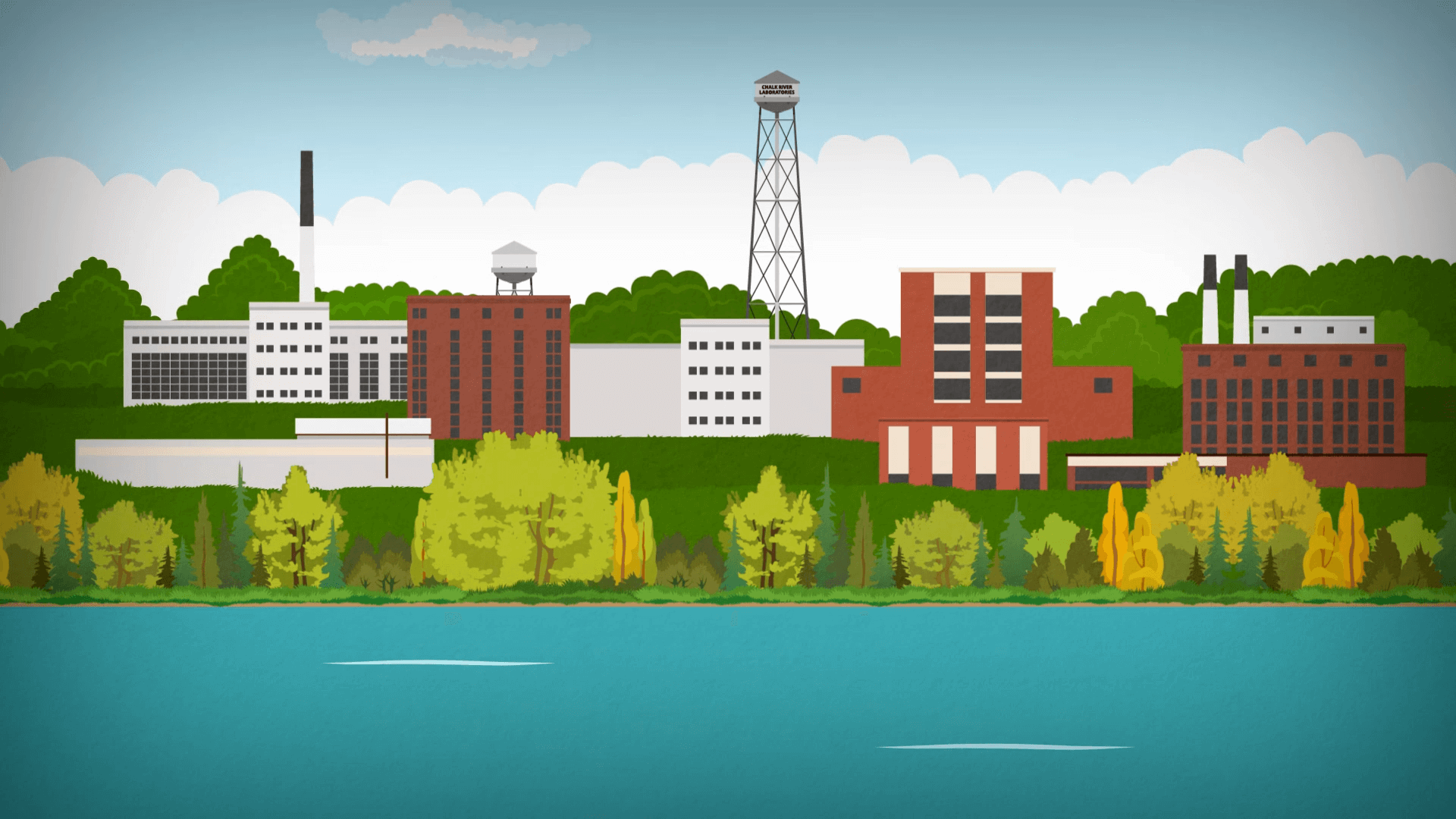
Ottawa Riverkeeper has been tackling the issue of nuclear waste in our watershed for many years. What have we been doing, and why will this year be important? In this update, we explore the history of the issue, how it is changing, and what we are doing about it.
Nuclear waste stored at the Chalk River site is currently one of our primary concerns, and it has been for much of Ottawa Riverkeeper’s history. We have continually pushed for responsible, sustainable, and environmentally focused action on this issue.
The journey to accomplish this, much like any on a river, has had twists and turns. Sometimes this journey is one of rapid changes, sudden shifts in direction, and unexpected challenges; other times it is a lazy drift along calm waters as we wait to hear what will come next.
However, the year to come is shaping up to be a potential gamechanger.
A brief history of nuclear waste in the watershed, and what we have done about it
The issue of nuclear waste in the Ottawa River watershed dates back at least to 1944, with the opening of Chalk River Laboratories on the banks of our capital river. The site is about 200 km upstream of the City of Ottawa, and the facility predates the establishment of the Nuclear Safety and Control Act and the Canadian Nuclear Safety Commision (CNSC).
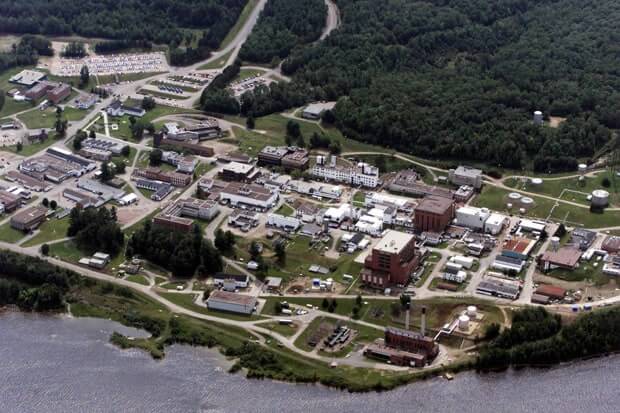
Aerial view of the Chalk River site
In the 1950’s there were major accidents at both the National Research Experimental Reactor and the National Research Universal Reactor at Chalk River, which took time and effort to mitigate. The result of those incidents, along with more recent ones, has been a number of persistent waste issues. There are several Waste Management Areas at the Chalk River site that have caused contamination of the groundwater, which continues to be released into the freshwater streams and lakes of the region to this day.
There is no question; there is a variety of waste currently stored at the site that poses a danger to the river and must be dealt with. The method of dealing with this waste, however, has been a contentious issue.
In 2016, Canadian Nuclear Laboratories submitted a project proposal to build a permanent disposal facility at the Chalk River site. The Near Surface Disposal Facility (NSDF), as it is named, would take 50 years to fill with nuclear waste from the Chalk River Laboratories site, and also be used to store waste from other facilities shipped to the site. After the initial hearings held on this proposal, Canadian Nuclear Laboratories had to make a number of adjustments, which have taken many years longer than anticipated. The result is a proposal that has adopted, in part, some of the concerns that were raised in the first round of hearings.
As an example, the project has switched away from the entire facility being open to the elements, which was a major concern in the initial proposal. Instead, smaller sections will be filled and then covered temporarily until the entire mound is filled and a permanent cover is installed. This should reduce the exposure to rain, snow and other environment elements which could come in contact with the material stored at the site.
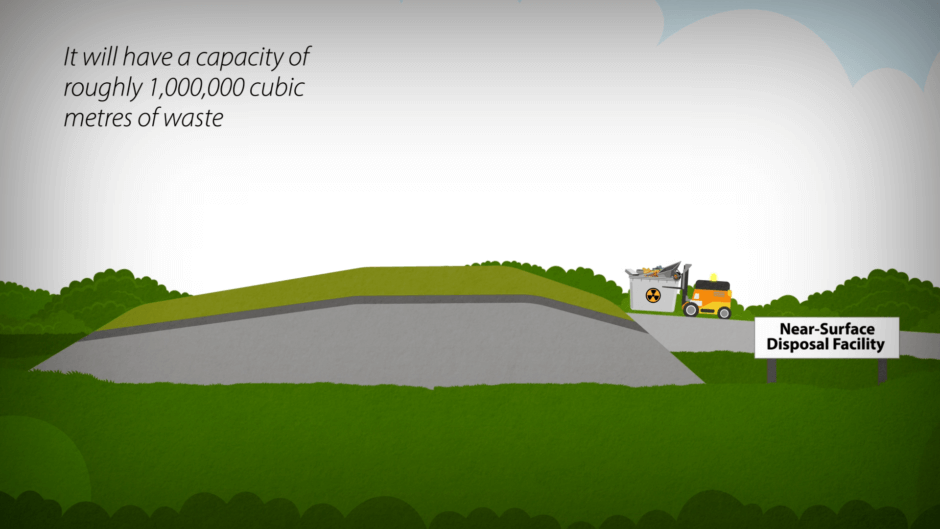
However, the location of the mound remains the same; only a few hundred metres from the banks of the river. A wastewater treatment plant is included in the proposal, and this facility will treat any runoff from the site. The effluent from the plant will be discharged into Perch Lake at the Chalk River site, which eventually drains into the Ottawa River. In response to concerns, the criteria for what waste is allowed at the site has been narrowed to only low level radioactive waste (as opposed to low and intermediate level waste in the initial proposal). Unfortunately, how this criteria is defined, and what other non-radioactive waste can also be included, remains vague.
Ottawa Riverkeeper has long had multiple concerns with the plans for the NSDF. As members of the Chalk River Nuclear Laboratories’ Environmental Stewardship Council, we have learned a great deal about the Chalk River site, its operation, and the waste that has accumulated there. We have also participated in multiple consultations about the project over the years. Some of our initial concerns have been taken into consideration in this most recent proposal, yet a number of questions remain.
In July of last year, Canadian Nuclear Laboratories’ Environmental Impact Statement for the proposed dump was finally accepted by the Canadian Nuclear Safety Commision (CNSC). This means that the long awaited Environmental Assessment and regulatory hearings can now move forward.
What is Ottawa Riverkeeper doing in 2022?
We have been anticipating the release of the Environmental Assessment for several years. The Environmental Assessment licensing proposal was finally released on January 25th, 2022. Using participant funding from the CNSC, we will be working with experts to contribute to our analysis of the proposal, how well it addresses our concerns for this facility at Chalk River Laboratories and the potential impact on the Ottawa River. This information and perspective will be incorporated into the presentation we will be making at the regulatory licensing hearings.
CNSC’s regulatory licensing hearings for the NSDF were initially planned for 2018, but have been delayed multiple times. They are now slated to begin soon. There will be 2-part hearings, with the first scheduled for February 22, 2022 and the second part, which we will participate in, are scheduled for late May 2022.
Given the changes to this proposal, there are still many questions that need to be answered about what this final project looks like and how it will be licensed. We want to be sure that our concerns have been sufficiently addressed, and even if they have, is this the best solution for the waste issues present at the site? Ottawa Riverkeeper will be taking the next couple of months to review all available documents and information, with the help of our experts, before making a final decision on what to present at the hearings.
A changing landscape
However, even as the hearings for the NSDF are finally scheduled to take place, the context at Chalk River is changing.
There are new projects that are exploring the feasibility of Small Modular Reactors (SMRs). This includes the licensing proposals for a Micro Modular Reactor (an even smaller SMR) at the Chalk River site, a development that we are following closely. Small and Micro modular reactors are still nuclear reactors, and though they have a smaller footprint than traditional reactors, they are still significant, multi-story facilities. A far cry from the small mobile generator many may picture based on the name. These modular reactors are designed to be assembled easily and produce less energy (at most 300MW). They contain fuel for approximately 20 years of operation, after which they must be decommissioned.
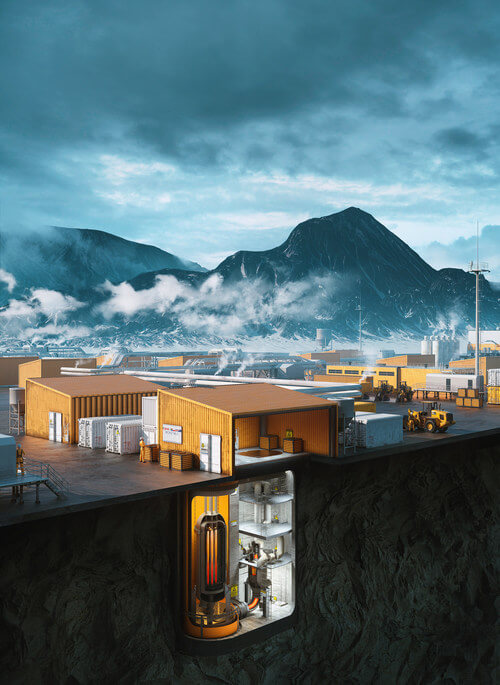
Concept art of a Micro Modular Reactor from the Ultra Safe Nuclear Corporation
The Chalk River site has been among those proposed for testing this new technology, and these plans are moving very quickly (a draft of the Environmental Impact Statement for this project is expected later this year). SMRs are being positioned as a clean technology to address climate change. The current Canadian Government is increasingly pushing these reactors as a cornerstone of their emissions reductions plans.
Regardless of the intentions behind this technology, the problem of nuclear waste remains. SMRs produce waste, and thus we inevitably circle back to the problem of where to store it, and how this affects our water systems. And though the government maintains that SMRs produce minimal waste, we will need clear guidelines for the waste that is produced if this new technology is to be employed.
Beyond our watershed: an issue for all Canadians
What is the best way to tackle the issue of nuclear waste in our watershed? While we have been discussing the local issues present at the Chalk River site, the truth is that these issues are exacerbated by weak regulation of nuclear waste at the national level in Canada. Canada currently has stringent regulations in place for dealing with waste related to nuclear fuel, however our opinion is that non-fuel generated waste, such as that planned to be stored at the NSDF, should also be properly regulated.
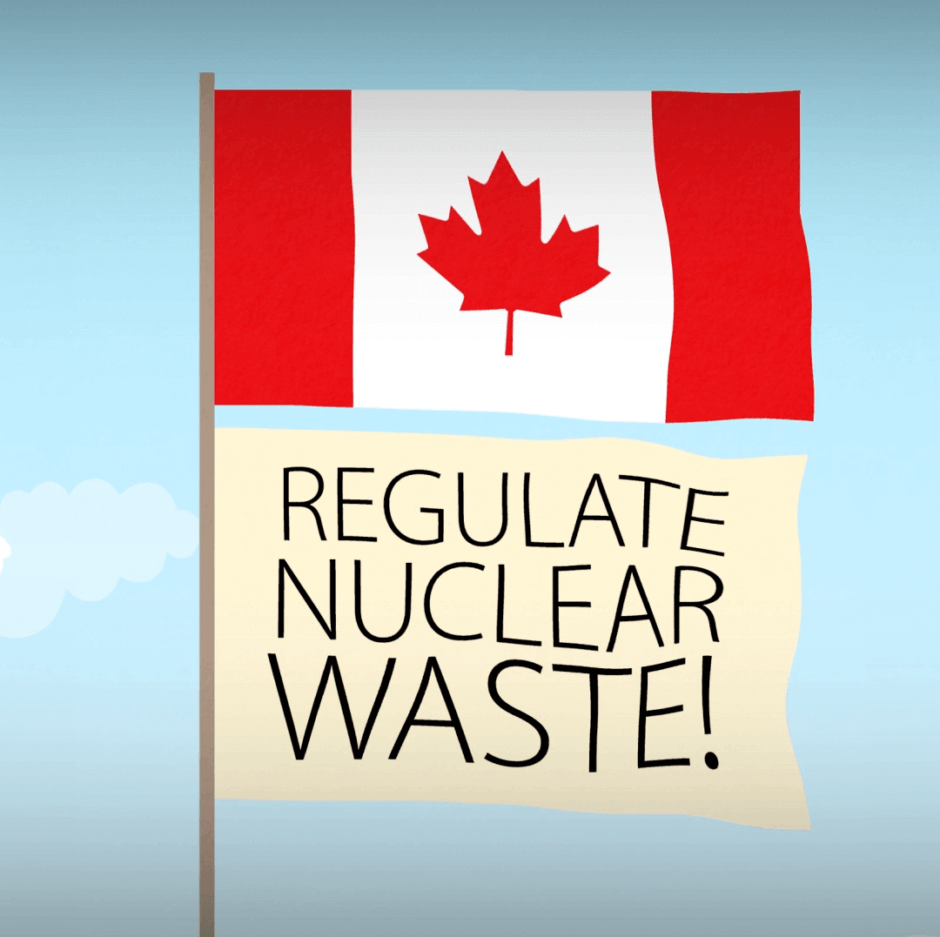
Ottawa Riverkeeper, along with other concerned groups, are therefore advocating for federal-level policy changes. In early 2020 we launched a petition and letter writing campaign which generated 2350 signatures. Late that year, on November 16th, Canada’s Minister of Natural Resources announced that the government was launching a review and public engagement on Canada’s Radioactive Waste Policy.
In March of 2021 we formally submitted 15 recommendations for new nuclear waste policy in Canada to NRCan’s review process. These recommendations would go a long way to ensuring that Canada’s nuclear waste management policies are stronger, clearer, and more in line with international norms, to position Canada as a world leader in nuclear waste policy.
Adopting stronger regulations, such as the ones we propose, would also ensure that new developments such as the NSDF are better scrutinised, reviewed more often, and have better defined mandates.
Conclusion
In summary, the issue of nuclear waste in our watershed is coming to a head in 2022. Timelines for the development of the NSDF finally seem to be moving forward. We are preparing to offer our comments, with the help of experts, on the Environmental Assessment for the project, and to highlight our concerns at the CNSC regulatory hearings this winter and spring.
Meanwhile, we continue to pressure the Federal Government to strengthen nuclear waste regulations in Canada, such that the landscape of nuclear waste management, both within the watershed and across the country, is clearer, standardised, and robust enough to keep our rivers and lakes safe for generations to come.
I appreciate this clear summary of the issue which concerns me deeply.
I would add that the CNSC is a captured regulator that I don’t trust.
Keep up the good work!
So good to get clear info on a subject I suspect most Canadians are unaware of. Ex. The media talks about drinking water contamination, especially in Aboriginal communities without ever explaining the causes. Gov’t and media do a poor job of educating our population on the real threats to our future. Thank you for your involvement in this important environmental concern.
I too appreciate this summary, and the work that Ottawa Riverkeeper has already done to oppose this plan, but also to propose constructive policy for nuclear waste management in Canada.
This disposal site was chosen by the Conservative government in 2015, and as a caretaker government it improperly signed the contract one month before the election.
I would like to hear the views of our MP Pontiac, Sophie Chatel.
Ms. Miller raises a concern that is rarely addressed: the trustworthiness of CNSC to protect Canadians’ rivers, soil and groundwater from nuclear waste contamination, while under intense pressure from foreign interests and international consortiums which have much to gain from expedient solutions. Let us never underestimate the challenges that face us. The world is watching. We must stand our ground.
The issue of what to do with nuclear waste is one that has been swept under the rug for more than 50 years and is no closer to a safe, regulated solution.
Putting a waste site so close to a river that provides drinking water to more than a million Canadians seems like sheer lunacy. Nuclear waste can have a half-life of hundreds or thousands of years before it is no longer toxic.
Shouldn’t every plan for nuclear power contain a detailed investigation into the identification of externalities (in this case, nuclear waste) and unambiguous commitment to their management and handling? Identification of low-medium-high grades of waste is a good start to reprocessing the low and medium grades as fuel for even more reactors, as France has done.
Given recent events in Ukraine, shouldn’t we be worried not only about seepage/accidental entry of nuclear waste into drinking water, but also about the threat such waste accumulation poses to our nation’s capital in terms of being a strategic target in the event of conflict?
Hi Andrea, great question! As an environmental organization, we are focused on the environmental impacts of proposals such as the NSDF, which is why we are engaged in the consultation process. Questions such as yours might be better directed at your governmental representative, as they may be in a position to take a look at the implications of the NSDF proposal with a broader geopolitical perspective than we will.
The CNSC hearings will be held at the end of this month. This is a crucial time for the Ottawa River and for all life forms in its vast watershed.
The legacy of deadly on-site wastes at Chalk River – and other radioactive materials and toxins that have been shipped from other locations despite advice from many stakeholders – is about to be determined.
The proposed mega dump is above ground. Climate change is wreaking havoc in ways that can never be foreseen by nuclear scientists. The Ottawa River is on a fault line prone to earthquakes. The war in Ukraine clearly highlights (Chernobyl) that nefarious minds do not need atomic bombs, just conventional explosives at a nuclear installation where the spread of radioactive materials would be just as deadly as an atomic bomb.
The development of more nuclear waste, as others have pointed out in this discussion, when the industry has no internationally acceptable or fail-safe idea of how to dispose of the current amassment of deadly waste in Canada, much less globally, is ensuring that we are on the brink of creating the closing chapters of the Anthropocene age.
Quick and dirty solutions to dump deadly radioactive waste and toxins that make foreign companies rich (including one with questionable track records) is a huge price that the Ottawa River and its inhabitants may well pay for the negligence of our governments and the nuclear industry in Canada. Shame on us. MAD (Mutual Assured Destruction) indeed.
We are currently fighting the disposal of high level nuclear waste being buried in a proposed DGR near Ignace, Ontario about 150 km west of Thunder Bay. It would mean the transport of it over 1,600 km by truck, rail and Great Lakes shipping from the source. Effected would be the Great Lakes and the watersheds in Northwestern Ontario. This is one of the two possible sites for burial to be chosen late in 2023.