
Posted: August 22, 2024
Radioactive Waste in Canada: Looking Back and Looking Ahead
With the approval of the NSDF project at Chalk River in January, this blog explores the ongoing issue of radioactive waste in the Ottawa River watershed. We reflect on a decade of our work on this critical issue and explain why robust policies and regulations are more crucial than ever to safeguard our waterways for the future.
Radioactive Waste in Canada
Canada has committed to reducing greenhouse gas emissions by 40-45% by 2030 and achieving net-zero emissions by 2050, and in the last few years, nuclear energy has emerged as a key component of the Federal Government’s strategy. This energy source is low in carbon emissions but brings with it significant challenges of its own, particularly concerning the management of radioactive waste.
The nuclear energy process — from uranium mining to plant operations to waste disposal — produces various pollutants, including radioactive waste, that require careful long-term management. Radioactive waste can be categorized as high-level, intermediate-level, and low-level waste, which is determined by the radionuclides present and the type of shielding required. The management and long-term storage of existing radioactive waste continue to be a topic of concern for many due to the potentially grave environmental impacts this waste can pose.
Chalk River Laboratories and the NSDF
Chalk River Laboratories is located along the Ottawa River and within the traditional, unceded territory of the Anishinābeg Algonquin Nation. This site was originally established in the 1950s as Canada’s first laboratory for nuclear research and has an ongoing legacy of radioactive waste.
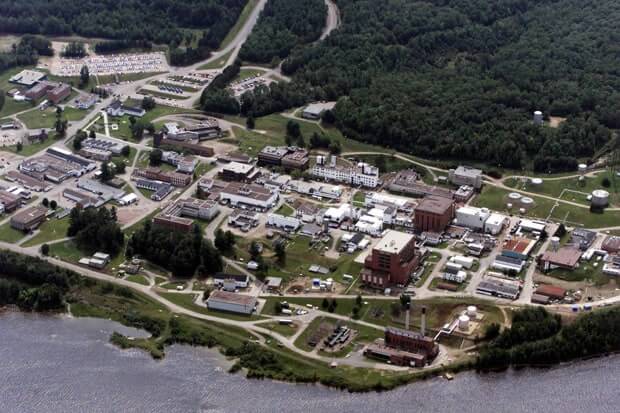
Aerial view of the Chalk River site
In January 2024, the Canadian Nuclear Safety Commission (CNSC) approved the construction of the Near Surface Disposal Facility (NSDF) at the Chalk River site, an engineered containment mound which is intended to permanently store 1 000 000 m3 of low-level waste. The NSDF is primarily intended for waste already located on the Chalk River site, though it may also include waste from other locations which meet the waste acceptance criteria.
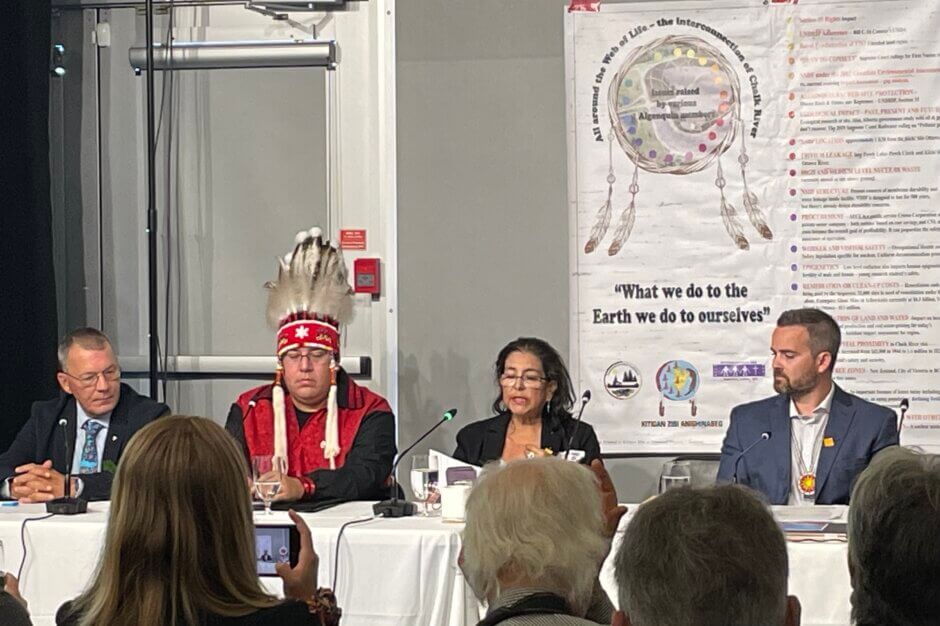
(L-R): Chief Lance Haymond, Chief Dylan Whiteduck, Elder Verna McGregor, and Councillor Justin Roy at the final hearing on the Near Surface Disposal Facility (NSDF) project in August 2023
The project has been the source of significant questions and concerns since it was first proposed in 2016, including a lack of proper consultation with Indigenous communities. Kebaowek First Nation has launched a judicial review of the decision, which remains ongoing.
Despite improvements to the project since the initial proposal, such as limiting the facility to low-level waste and adding a protective cap as the facility is filled to limit the exposure of the waste to rain, snow and wind as much as possible, a number of risks remain.
Ottawa Riverkeeper has outlined our concerns several times, particularly the specifications of the wastewater treatment plant. The site selection process itself also raised concerns based on the geology of the region and that the selection process was limited to the Chalk River Laboratory site alone, without considering other potential sites for waste storage. Additional concerns include how waste designated for the NSDF is being classified and packaged, and the need for stringent safety measures and transparent oversight.
Concerns Over SMRs and MMRs
As part of its embrace of a nuclear energy strategy for reducing emissions, Canada is exploring the potential of Small Modular Reactors (SMRs) and Micro Modular Reactors (MMRs).
These reactors use nuclear fission to generate heat and electricity and are touted as safer and more efficient than traditional reactors. They are smaller, potentially less costly, and more flexible than traditional nuclear power generating reactors, which allegedly makes them suitable for remote locations and specific industrial applications.
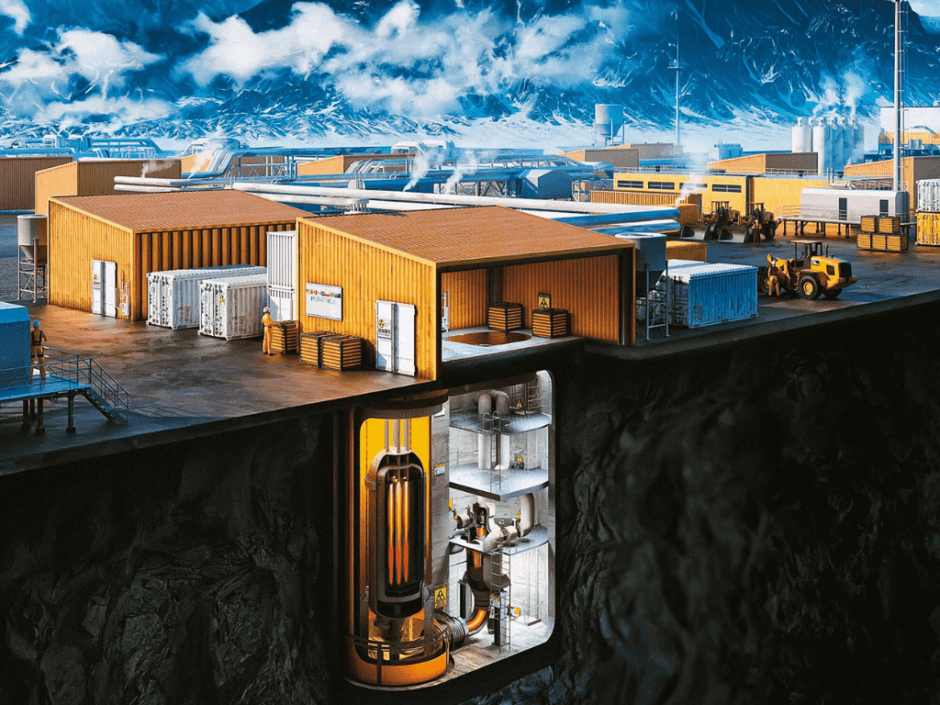
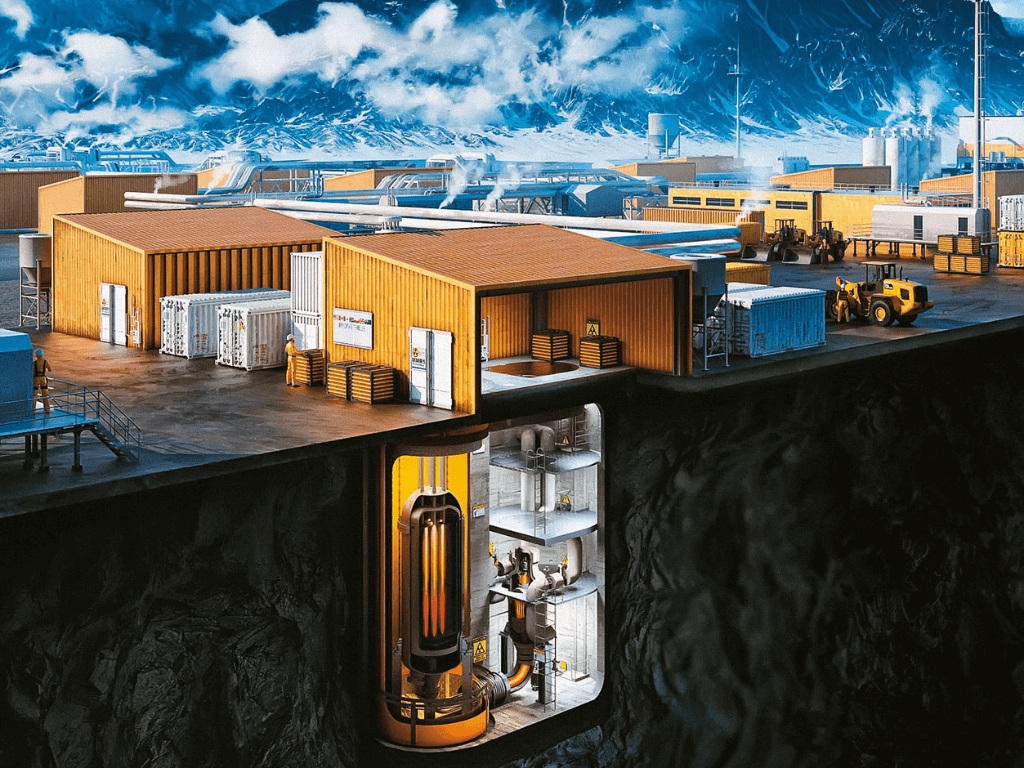
A rendering of an SMR from the US company Ultra Safe Nuclear Corporation
Notably, Chalk River Laboratories has been identified as a proposed site for an MMR, with a proposal being prepared to construct this reactor. Given that this is a new direction for Canada to take, it raises new concerns about waste management and environmental safety in the region and for the nuclear industry more generally.
The introduction of SMRs and MMRs would necessitate a robust and transparent framework for managing the radioactive waste they generate. While these reactors could produce less waste and reduce the risk of large-scale accidents, they still require comprehensive regulations to guarantee safe operation and waste storage and ensure that protections are in place for freshwater sources. Ottawa Riverkeeper has doubts that this new technology will be able to meet the immediate and urgent energy needs required to reduce our dependence on fossil fuels. However, our primary concern remains the lack of strong and consistent regulatory processes and public confidence in waste management.
The Need for Robust Policy and Transparency
Ottawa Riverkeeper has been actively advocating for a comprehensive and transparent nuclear waste policy in Canada. In 2020, we launched a campaign urging the government to update its outdated radioactive waste policies, aligning them with international standards.
Our recommendations focused on improving waste classification, ensuring the precautionary principle guides policy, and enhancing public and Indigenous consultation.
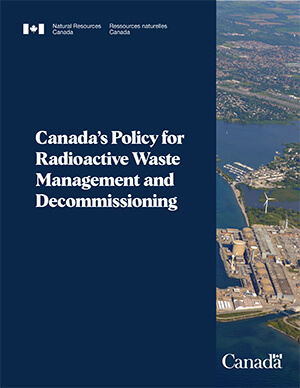
The updated draft policy was eventually released in 2023 and included some of our suggestions, but did not fully address critical issues such as policy clarity, enforceability, and transparency.
A robust policy must provide guidance on regulatory procedures and clearly define waste classifications, establish enforcement mechanisms, and ensure regular reviews and updates. Greater transparency in nuclear operations is essential to building public trust and ensuring everyone, especially Indigenous communities, has a strong voice in decision-making.
Looking Ahead
Ottawa Riverkeeper acknowledges the role that nuclear energy could play in reducing carbon emissions. However, we remain concerned about how quickly nuclear energy could be operational, what is needed to further develop this technology, and the potential risks involved. As Canada considers expanding its nuclear energy capacity, it is crucial to prioritize the development of stringent waste management policies that provide strong protection for freshwater resources and public safety.
For nuclear power to become a path forward for confronting climate change, these unresolved issues need to be addressed. Ottawa Riverkeeper remains committed to pushing for better regulatory frameworks and advocating for a responsible approach to energy development that prioritizes the health of our water and communities. We urge the government to ensure that any expansion of nuclear power is accompanied by the highest standards of safety, transparency, and environmental stewardship.
Renewables are much cheaper, safer and can be built much quicker. SMRs and MMRs are unproven, and extremely costly. Why are we even considering that route, except maybe because of extreme lobbying.