
Posted: May 22, 2024
Under Threat: New Report Card provides Ottawa River with a poor grade
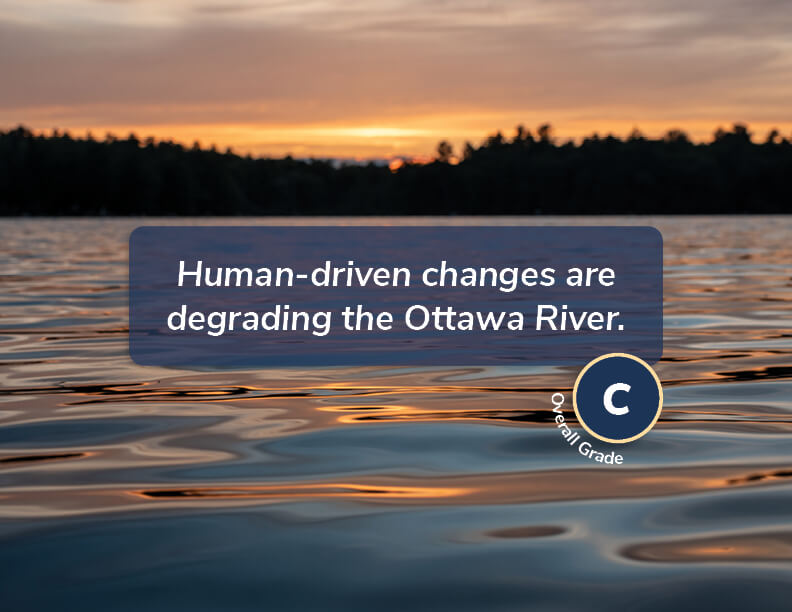
Ottawa Riverkeeper has released a new, comprehensive Watershed Report Card for the Ottawa River. The results tell a story of a watershed under threat from recent human activity. Development, land use, and climate change are reshaping Canada’s capital river system.
Ottawa – May 22nd, 2024. Ottawa Riverkeeper has released its highly anticipated Watershed Report Card, revealing concerning trends in the health of the Ottawa River watershed.

Assessing key indicators across four critical categories, the report underscores the need for collaborative action at the watershed level to address pressing environmental challenges.
The Ottawa River is a vital natural resource and cultural landmark, supporting vibrant biodiversity and serving as a source of drinking water for 2 million people. Despite its significance to the region’s ecosystems and communities, including the wider St. Lawrence watershed, the Ottawa River has often been ignored, leaving many issues with watershed health only now coming to light. The report shines a light on the complex interplay of factors affecting the health of a watershed twice the size of New Brunswick, emphasizing the importance of proactive measures to safeguard its ecological integrity for future generations.
Human development and climate change are reshaping the Ottawa River. This is the stark takeaway from the results showcased in the Watershed Report Card. Key findings from the report include:
- Climate change trends: Ottawa Riverkeeper has found that climate changes are altering seasonal cycles, including disrupting typical flow patterns with an earlier spring freshet and increasing peak flows, as well as shifts to the timing of ice formation and breakup.
- Threats from excess nutrients: The report identifies how shifts in land use patterns and development activities such as agriculture, sewers, and other sources are introducing excess nutrients to the watershed, destabilizing the base of the food web by accelerating the growth of primary producers, such as the algae which can contribute to harmful algal blooms.
- Contaminants of Emerging Concern: The presence of contaminants, such as microplastics, PFAS, and road salt, poses serious risks to our ecosystems, in ways which may not be properly monitored.
- Consistent data gaps: The Report Card also highlights areas where potentially concerning trends are being understudied, such as the surprisingly high levels of mercury in fish found in the Ottawa River compared to other watersheds such as Lake Ontario and Lake Saint Pierre.
In response to these findings, Ottawa Riverkeeper calls for coordinated action at a watershed scale from government agencies, Indigenous communities, non-governmental organizations, and the public to address these challenges. The organization emphasizes the importance of collaborative approaches, science-based decision-making, and sustainable practices to protect and restore the health of the Ottawa River.
“Now that we know where the river needs our help, it’s time to take action. We cannot afford to ignore the concerning trends highlighted in this report card,” said Laura Reinsborough, Riverkeeper and CEO. “The leading causes that are degrading the river are all human-driven. This means we, as humans, can turn those trends around. Though the current grade is a C, the report card provides insight on how we can preserve this invaluable resource for all species and all generations. I’m confident we can put ourselves back on a pathway to A+”
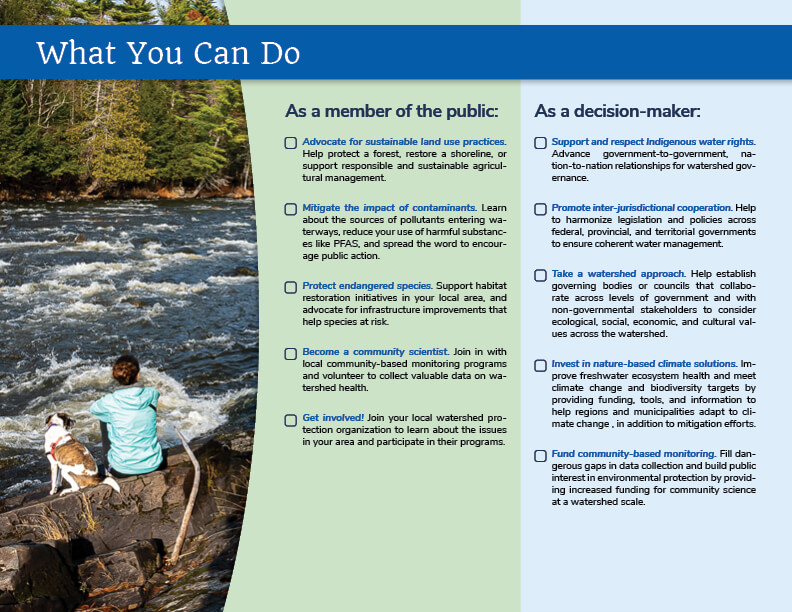
Ottawa Riverkeeper remains committed to leading efforts to advocate for policy reforms, promote community engagement, and drive positive change for the benefit of the environment and all those who depend on the Ottawa River. The report card underscores the importance of ongoing research and monitoring to fully understand the complex dynamics at play in the Ottawa River watershed. With human development and climate change degrading the Ottawa River, more research is needed to study it fully and inform evidence-based solutions to safeguard the river for future generations.
– 30 –
About Ottawa Riverkeeper
Ottawa Riverkeeper, a charitable organization, is a champion and collective voice for the Ottawa River watershed, providing leadership and inspiration to protect, promote and improve its ecological health and future. Expert and independent, our organization advocates for responsible and participatory decision-making, public education, access to information, and compliance with protective regulations. Guided by a science-based approach, we provide clear information with the aim to engage the public and empower citizens and decision-makers to ensure clean, healthy, and accessible water for all people and species.
For more information:
Matthew Brocklehurst, Communications Manager
media@ottawariverkeeper.ca
Mercury has always been a problem in the Ottawa river since the Pulp and Paper industry has always released Mercury into the River and some mills have buried it on their properties which likely leaches into the water table when the containers rust out. Most if not all of these sites are contaminated.
It’s time to clean up this watershed. It is far too important to ignore.
Mercury in the fish in our watershed is a telling tale of something gone very wrong. Were these fish seeded by the either Ontario or Quebec as part of a program? We used to own a cottage in Quebec and the government would seed it every couple of years. It doesn’t always turn out well. If the fish were born in out watershed and not imported there we have to find out for sure what the problem is and put a stop to it. I am going to get on Mayor Sutcliffe about this. So should everyone else.