
Posted: May 9, 2024
A report of toxic sewage from Chalk River raises concerns over transparency
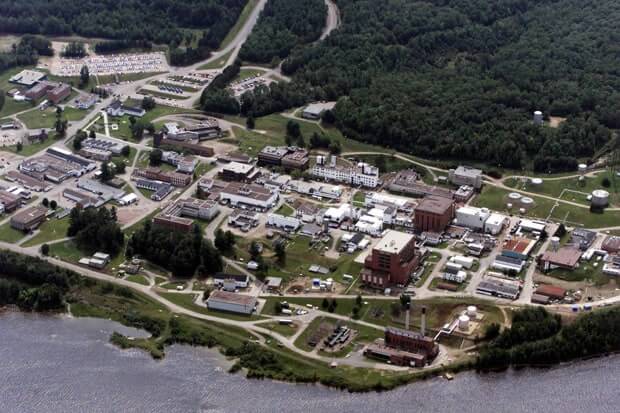
You may have been hearing the news of toxic sewage being released from facilities at Chalk River in recent days. What happened? We cover what we know so far, and why the episode speaks volumes about the lack of transparency surrounding the Chalk River site.
Ottawa Riverkeeper has been following the story of Chalk River’s wastewater treatment plant having failed an acute toxicity test since it first came to our attention on March 21st. This news, which was made public in a CBC Indigenous article released on May 2nd, has caused concern from the public due to the nature of the work at Chalk River and speaks to Canadian Nuclear Laboratories (CNL) ongoing legacy of lack of transparency and failure to build trust with the public, including Indigenous communities.
What happened?
Ottawa Riverkeeper became aware of this issue as part of our participation in Chalk River Nuclear Laboratories’ Environmental Stewardship Council (ESC). At the meeting of the ESC on March 21st, our team requested additional information about the wastewater treatment facility non-compliance report. The fundamental facts we know at this time are that, back in February 2024, the effluent from Chalk River’s sanitary plant failed an acute toxicity test.
Wastewater treatment facilities that are medium-sized or larger, including very small and small facilities with industrial input, use both acute and chronic toxicity tests on an ongoing basis. An acute toxicity test involves exposing rainbow trout to effluent from the wastewater treatment facility for 96 hours in either single concentration or multiple concentration. If half the trout die during that period, for whatever reason, that is considered a failure. This poor outcome could be the result of unbalanced pH levels, oxygen levels, or the presence of unexpected chemicals or toxins.
The failure of this toxicity test prompted regulatory action from Environment and Climate Change Canada (ECCC), which looked into the failure.
Concerns with transparency
What is perhaps most concerning is the lack of transparency demonstrated during this entire episode. One of Ottawa Riverkeeper’s primary concerns with operations at the Chalk River site has been the ongoing difficulty of getting information about operations at Chalk River. This includes important information that would help build trust with communities and environmental organizations.
As reported in the article from CBC Indigenous, ECCC is “confident that the non-compliant discharge from the sewage treatment facility does not pose a threat to the environment or the public.” but there are not many specific details to point to why this conclusion was reached. CNL released a follow-up communication on May 3rd, which clarified a few important points, such as confirmation ”that this non-compliance is not related to radiological contaminants”. However, neither CNL nor ECCC have released information about the reasons for the failure, and many questions still remain.
From our perspective at Ottawa Riverkeeper, the media attention and public concern were the result of CNL’s communication not providing adequate information. The nature of the activities at Chalk River Laboratories is concerning for many communities that rely on the Ottawa River. Indigenous communities in the region remain vocal about the lack of proper consultations and meaningful communications with CNL. It would be beneficial to many to have clear, timely and adequate information about activities taking place at the Chalk River Site especially given the future plans for the site such as the Near Surface Disposal Facility and the proposed installation of Small Nuclear Reactors.
CNL has a responsibility to the people and communities that rely on and care for the Ottawa River. We hope that this incident will impel CNL to report failures more quickly and more transparently.
CNL can report all the failures it wants but must be forced to say exactly what the cause was. There is an answer to the failure we all know that and by keeping it a secret it just leads people to expect the very worst scenerio. No transparency once again. Doesn’t this drive everyone crazy?
I agree with you, Frances 100%. I am particularly concerned that the company selected to help run the CNL, and to deal with the toxic wastes has a very long and disturbing past. SNC-Lavalin (now, AtkinsRéalis) should not be involved at any level with another contract in Canada, especially one involving the safety of all living things, including us riparians, along the Ottawa River. So YES, it probably does drive everyone crazy. And, not only that, we should all be scared.