
Posted: August 30, 2024
A Proposal for a Land-Based Salmon Farm in the Pontiac
Ottawa Riverkeeper has met and engaged with Samonix regarding their proposed land-based salmon farm project in the Pontiac region. We appreciate the proactive approach by Samonix in reaching out to ensure the project aligns with environmental standards and safeguards our rivers and wildlife.
A new project proposal in the Pontiac region is getting some attention due to its somewhat unusual nature: a land-based fish farm to raise salmon for consumers in the watershed and beyond. But what will the impacts be on the river? The Samonix team proactively contacted Ottawa Riverkeeper to open up a dialogue with us about the project and the implications for the river and watershed.
Project Overview
The Samonix project aims to establish a land-based salmon farm in a brownfield site in the Pontiac region. This project intends to:
- Utilize water from the Ottawa River for operations
- Release treated wastewater back into the river
- Employ advanced biosecurity and treatment technologies to minimize environmental impact

Aerial view of the Samonix brownfield site, photo from Samonix.
While the project holds promise, it raises important questions about its regulatory framework and environmental implications.
Regulatory Concerns and Effluent Standards
Land-based fish farms have been gaining traction in Europe, but are relatively new to North America. Consequently, clear guidelines for wastewater treatment are lacking.
The Department of Fisheries and Oceans (DFO) regulates aquaculture in Canada, including land-based operations like Samonix. Under the Fisheries Act, these facilities must comply with the Aquaculture Activities Regulations (AAR). However, most licensing and regulations for fish farms fall to the provinces. The Quebec government is therefore developing new effluent standards for this project, potentially setting a precedent for future initiatives.
Ottawa Riverkeeper’s primary concern is the level of salt entering the freshwater system. Salmon, being anadromous, require saltwater during part of their lifecycle. The challenge lies in ensuring that the salt concentrations from the fish farm’s effluent are sufficiently reduced before entering the Ottawa River.
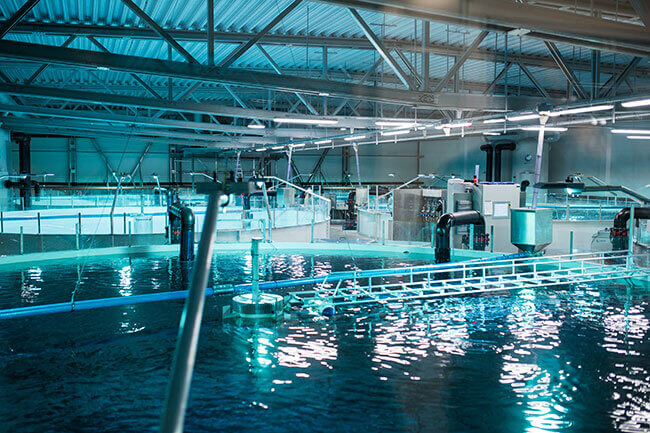
An illustrative example of an interior of a land-based fish farm.
The Council of Canadian Ministers of the Environment (CCME) Scientific Criteria Document on the Chloride Ion, a component of road salt, states that:
- Salt concentrations of 640 mg/L or higher are acutely harmful to species.
- Concentrations of 120 mg/L or higher are chronically dangerous with prolonged exposure.
Salt Levels and Environmental Impact
Ottawa Riverkeeper has been concerned about the issue of excess salt in waterways for many years due to the extensive use of road salt in the National Capital Region. High salt concentrations are toxic to freshwater species, which have not adapted to a high-salt environment.
Road salt is more likely to threaten smaller waterways, like streams and creeks. This is due to the resulting snow melt or winter rain events introducing high concentrations of road salt into waterways with lower water volumes, and Ottawa Riverkeeper’s focus has been raising awareness regarding road salt’s impact on urban streams.
However, salt can still be toxic when introduced to large water bodies like the Ottawa River if it is released in sufficient quantities or at high concentrations. Ottawa Riverkeeper therefore advocates that the Samonix project should strive for an effluent release target of less than 120 mg/L of salt. Achieving this level is crucial to protect the local biodiversity and ensure the sustainability of the ecosystem.
Looking Ahead
We were pleased that Samonix reached out to us, and are impressed with their commitment to climate-friendly practices and biosecurity measures. Ottawa Riverkeeper is eager to continue our dialogue with Samonix to ensure that, should their project proceed, it does so in a manner that respects and preserves the Ottawa River watershed.
Thank you for keeping the Ottawa river safe and engaging with Samonix about serious concerns.
Why 120 mg/l of salt, why not 0 mg/l of salt. Surely there is a way to neutralize(or nearly) salt.
Hi Bob, great question! Currently Samonix has shared that they can reduce the amount of salt in the effluent, but not necessarily eliminate it entirely. One reason is that the chloride from dissolved salts does persist in the environment. However, at a concentration of 120mg/L or below, the salt would be below the threshold for chronic toxicity, so that is the target we proposed. Should they be able to completely remove salt as part of treatment, that would be even better!