
Posted: December 8, 2025
Even more nuclear waste is being shipped to Chalk River
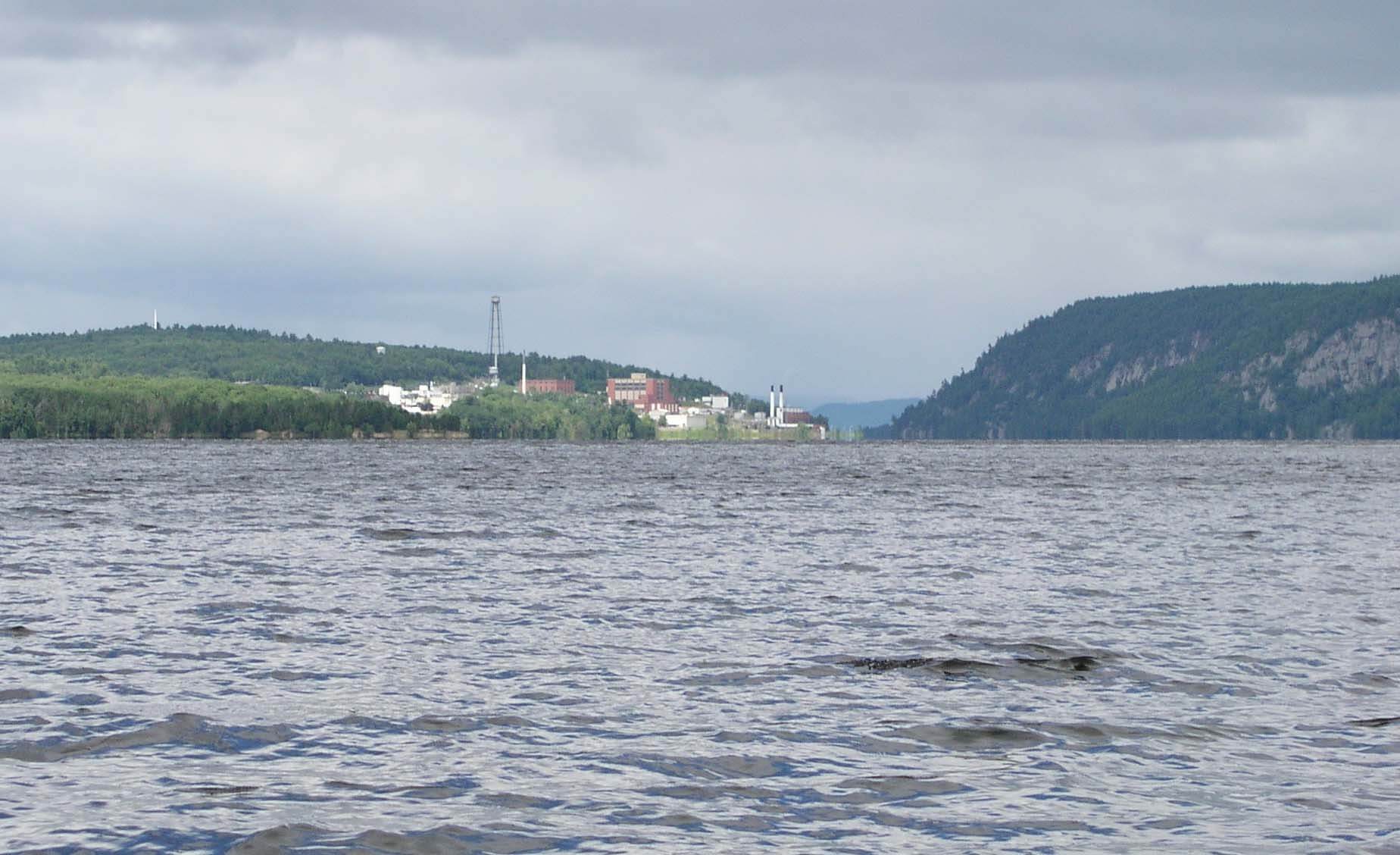
Canadian Nuclear Laboratories has been moving more, and more dangerous, waste to the Chalk River Laboratories site, despite storage for this waste being up in the air. We have significant concerns around the transportation of this dangerous waste, and how long it will spend at Chalk River Laboratories before being moved to a permanent storage location.
Built in 1944, Chalk River Laboratories experienced two major incidents in the 1950s, resulting in the site being contaminated with radioactive materials. This contamination continues to impact the groundwater and surface water by leaching into the waterbodies around the different waste management areas.
For years, Ottawa Riverkeeper and many other community groups have voiced concern over the storage of radioactive waste at Chalk River Laboratories. This included being deeply involved in the proposed Near Surface Disposal Facility (NSDF) at the site, an artificial mound meant to host waste for thousands of years. Over the years, the proposition was improved, though significant concerns remain. One of the improvements included the reduction in the level of waste planned for the NSDF from intermediate-level waste down to only low-level waste.
There are multiple levels of radioactive waste. Low-level waste is usually not nuclear material itself, but equipment and other items that have been contaminated. It could also include medical isotopes.
Intermediate-level and high-level waste are more dangerous classifications, that require stronger protections and storage methodology.
Now, Canadian Nuclear Laboratories (CNL), which operates the site, is bringing in even more waste for temporary storage. Other facilities operated by CNL are shipping radioactive waste to be temporarily stored at Chalk River Laboratories. This waste includes intermediate-level waste from facilities across the country, and most concerningly, high-level waste in the form of used fuel. This past summer, all the used nuclear fuel from the Gentilly Nuclear Generating Station in Bécancour, Quebec, was moved to Chalk River Laboratories. The used nuclear fuel from Whiteshell Laboratories in Pinawa, Manitoba, will also be moved to the Chalk River Laboratories site. None of this waste will be permanently stored at this location; however, consolidating it there is confusing and concerning.
Start with the prospect of transporting the waste. Radioactive waste is risky to move; any accident or spill can be devastating. Waste is transported along public roads without the need for explicit authorization. Transporting this waste once is risky enough. However, since the waste will not be permanently stored at Chalk River, we know it will need to be moved again, creating needless risk for the public and the environment.
Secondly, Chalk River Laboratories itself is in close proximity to the Ottawa River. Storing intermediate and high-level waste temporarily is imprudent, especially since timelines are unknown. There are no firm plans for permanent storage for much of this waste; the deep geological repository (DGR) will not be operational for many years, as it has not been sited and is nowhere near construction. We currently don’t know how long this growing quantity of radioactive waste will spend at Chalk River Laboratories in temporary storage.
CNL’s plans need to be re-evaluated. The transportation of radioactive waste to the Chalk River Laboratories must also stop until a clear, long-term plan for the waste is available. The transportation of radioactive waste is a needless risk, not only for the Ottawa River and the millions of people who depend on it, but also for all of the communities along the transportation routes.
What can we do about this? How can we stop it? Or stop it from happening again?
Moving nuclear waste to Chalk River without plan approval to secure the waste is an outrage! This is highly irresponsible.
The cavalier manner with which the industry ships material from place to place without public input and permission is obscene. Stop it!
I can see only one reason for this needless moving: So they can bill the government (on a for-profit basis)!
Thank you for following this awful story! Indeed, more people need to know about it. The handling of nuclear waste in Canada is utterly irresponsible.
Since the “temporary” inadequate storage mound is very dangerously close to the banks of the Ottawa River, how long does it take for the continuing nuclear waste leach to travel via the Ottawa River to the city of Ottawa and ultimately to the doors of Parliament?
It is highly concerning that the temporary solution posed is having waste that can leach into such a vital river in the capital region. I am for nuclear energy but without a deep geological repository in place, investing more money in it seems especially foolish. At the very least, a site with little chance of radioactive runoff contaminating a water shed should be scouted until a DGR is completed.
Jim Duff here, multimedia journalist and concerned Ottawa River resident. I’ve gone through the 2020 panel review report (https://www.aecl.ca/wp-content/uploads/2020/05/Final-ENG-International-Panel-Review-Report-3-23-2020.pdf#page9) and have re-read Riverkeeper’s excellent blogs but remain confused on whether a decision on an NSDF site has been reached. Before I contact CNL, what is known about siting and who can I contact? Verify/reach me online: http://www.thousandlashes.ca
Hi Jim, thanks for the question. Right now, the NSDF decision has been made, and the project has been approved.
However, it is held up in court by two challenges from Kebaowek First Nation. The first is regarding their rights to be consulted on the project. The second is about protections for endangered species at the site. Both appeal hearings occurred this fall and we are currently awaiting the decisions.
Thanks, Matthew.
have there been any “accidental” leaching yet that could potentially get into the river water purification which is not equipped to eliminate the glow from the citizens who use their tap or well waters further downstream?
Hi Henry, great question.
Shortly after the Chalk River Laboratories began to operate there were a couple of major incidents in the 1950s which resulted in radioactive contamination. Since that time there has been extensive monitoring of the different Waste Management Areas, including in ground water.
There are different plumes of contaminants from the Waste Management Areas, some of which are being mitigated on site. However, contaminants do reach surface water at different locations and can reach the Ottawa River. While radionuclides within the Ottawa River remain low, occasionally an incident does occur resulting in higher levels of contamination. In such cases, communication to downstream municipalities has occurred.
There has been one notable incident involving an elevated release of tritium (a radioactive form of hydrogen). Downstream municipalities were promptly notified, and the plume took approximately 30 days to reach the City of Ottawa. Tritium levels upon arrival were still below Health Canada’s safe drinking water guidelines, but affected municipalities were able to store sufficient water to temporarily stop drawing from the Ottawa River as a precaution until this plume of contamination passed the area.
In addition, the city of Ottawa’s water purification plants complete weekly tests for radioactive contamination and this information is available on the city’s open data portal.
Hope this helps provide a bit more insight on this issue!