
Posted: October 11, 2024
Flows in Flux: Making sense of flow changes in the Ottawa River watershed
We recently released a detailed report on the changing flow patterns we’ve uncovered in the Ottawa River watershed. From earlier spring freshets to low summer water levels, these changes are indicative of how climate change will influence watershed health in the coming years.
In our recent Watershed Report Card, Ottawa Riverkeeper unveiled notable changes in river flow trends within the Ottawa River watershed. These changes are closely tied to variations in annual and seasonal flow patterns, which play a crucial role in maintaining the ecological health of our river system. With the release of our comprehensive report on these findings, this blog aims to summarize key insights and their implications for the future of the watershed.
Why flow matters
River flow is more than just the movement of water; it influences aquatic habitats, temperature, sediment transport, and watershed connectivity. Although often summarized as the quantity and speed of water, flow is a complex indicator of watershed health, revealing insights into the health of our ecosystems and river systems. Monitoring changes in flow helps us understand our river’s health and the broader impacts of climate change.
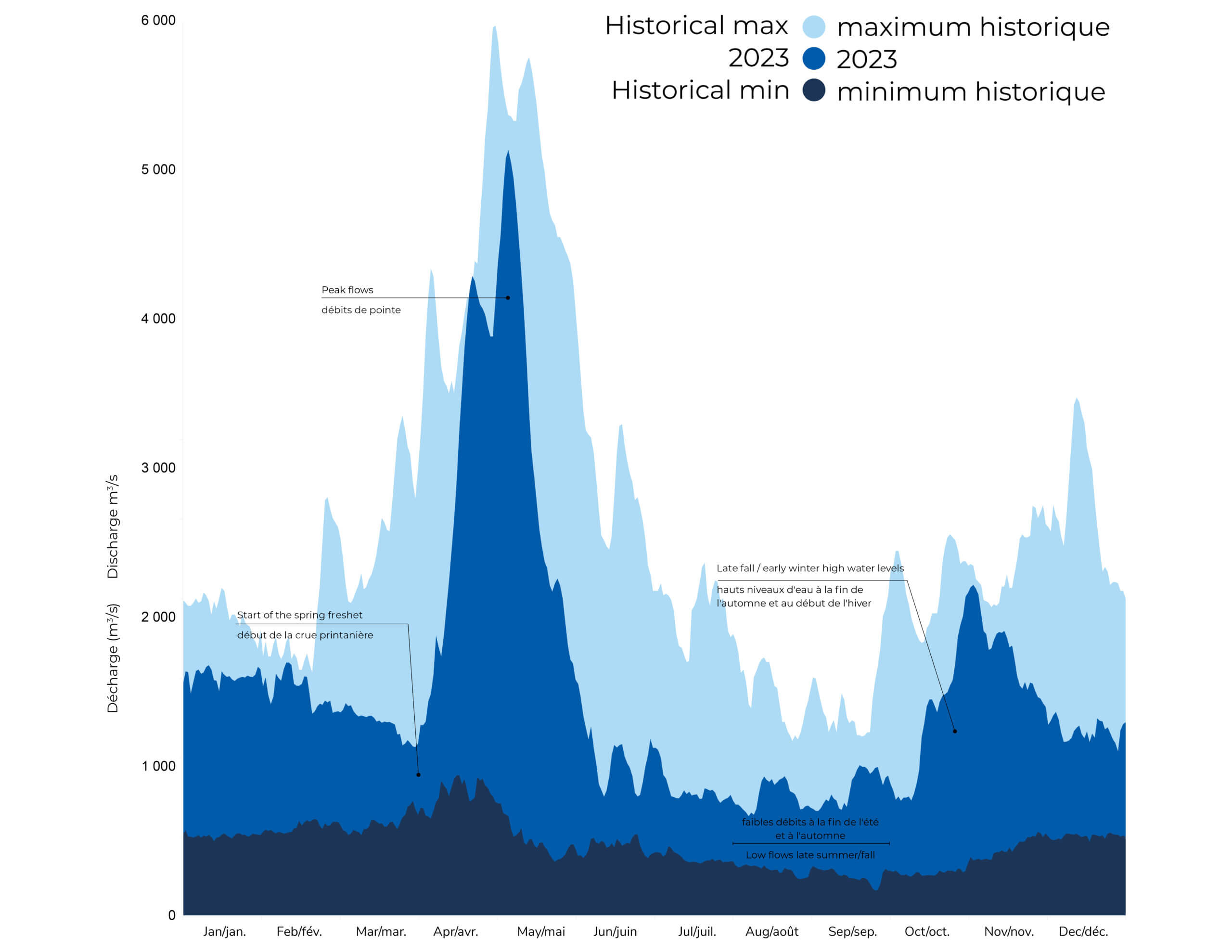
High variance in flow levels at the Britannia location. This is a useful reference when considering flow pattern changes in the watershed. Click the image to expand.
The Ottawa River experiences significant flow variations throughout the year. Spring flows peak in April and May, driven by snowmelt and rainfall, often resulting in flows double or triple those of late summer when drought conditions may set in. These seasonal shifts make the region susceptible to spring flooding and late-summer droughts, posing risks to water quality, supply, and ecosystems.
Flow conditions shape what happens on the water’s surface. In areas of rapid flow, ice is less likely to form in winter, impacting habitat conditions during cold months. In contrast, algal blooms are more likely to appear in stagnant areas, where conditions permit algae to accumulate undisturbed. Flow disruptions from human activities, particularly dam construction and hydroelectric facilities, also alter natural dynamics. Dams can create large reservoirs and alter local flow rates, disrupting habitat connectivity, fragmenting ecosystems, and impacting species adapted to specific flow conditions.
For those interested in exploring human-driven changes to flow across the watershed, we’ve also developed an interactive map showcasing the dams, hydroelectric facilities, and reservoirs. This map offers a detailed look at the infrastructure that impacts flow dynamics throughout the Ottawa River watershed.
What we found
Ottawa Riverkeeper’s study examined flow data from 17 long-term hydrometric stations, each with over 50 years of data and a minimum of 10 m³/s of annual flow. These stations, primarily located in the lower part of the watershed, provided a broad look at both annual and seasonal flow patterns using a 30-year baseline, as recommended by the World Meteorological Organization.
Our analysis of long-term flow data revealed several notable trends:
- Spring freshet, or the initial snowmelt and runoff, occurs about 0.8 days earlier each decade. This earlier thaw aligns with observations of ice melting sooner on lakes and rivers across the watershed, which could be indicative of climate warming.
- In August and September, there’s an increasing trend of low flow days where levels fall below the 5th and 10th percentile. This reduction in water flow can reduce aquatic habitats and increase stress on the species that rely on these environments.
- Most stations also reported a rise in annual flow, likely occurring outside of the summer months, and possibly due to increased rainfall and runoff during the winter and spring. While summer flows are decreasing, annual flows appear to be increasing, potentially due to more frequent winter rain events.
What does this mean?
While our findings highlight changing flow trends, more research is needed to understand their full ecological impacts. Rising temperatures, shifting precipitation, and altered ice dynamics all influence flow. Expanding our knowledge of these factors will help us manage risks like flooding and low-flow periods better.
In addition to our report, Ottawa Riverkeeper has hosted a webinar to discuss these findings and the broader question of how flow impacts watershed health. Watch the webinar recording to gain insights from our team and guest expert Dr. Pascale Biron, and learn more about the complexities of river flow in a changing climate.
Conclusion
As our climate changes, so do the rivers flowing through our ecosystems and communities. Increased monitoring and understanding of river flow trends will be critical for ensuring the long-term health of the Ottawa River watershed. By staying informed and engaged, we can advocate for proactive measures that protect the river and its ecosystems.
For more in-depth information, please refer to our full report, available on Ottawa Riverkeeper’s Open Data Portal.
< Previous post Next post >