
Posted: September 18, 2024
Tiny Turtle Takeover: 2024 Turtle Incubation Project
Discover the story of how over 350 baby turtles became tiny ambassadors for the river, through the second year of a collaborative conservation effort that gives these vulnerable species a better chance at survival.
In collaboration with the Petrie Island Turtle Project, Friends of Petrie Island, and the Canadian Wildlife Federation, Ottawa Riverkeeper’s science lab successfully incubated and hatched over 350 baby turtles for the second consecutive year. This conservation project helps protect and support vulnerable local turtle populations by giving their eggs a better chance of survival.
Why do we incubate turtle eggs?
Turtles face numerous natural and human-made challenges that drastically reduce their chances of survival. In fact, all species of freshwater turtles in the watershed are either listed as special concern, at risk or endangered.
One of the most significant threats is nest predation, with hatch rates on Petrie Island only being about 5%, largely due to raccoons, skunks, and other predators consuming the eggs. Without intervention, most turtle eggs would never get the chance to hatch.
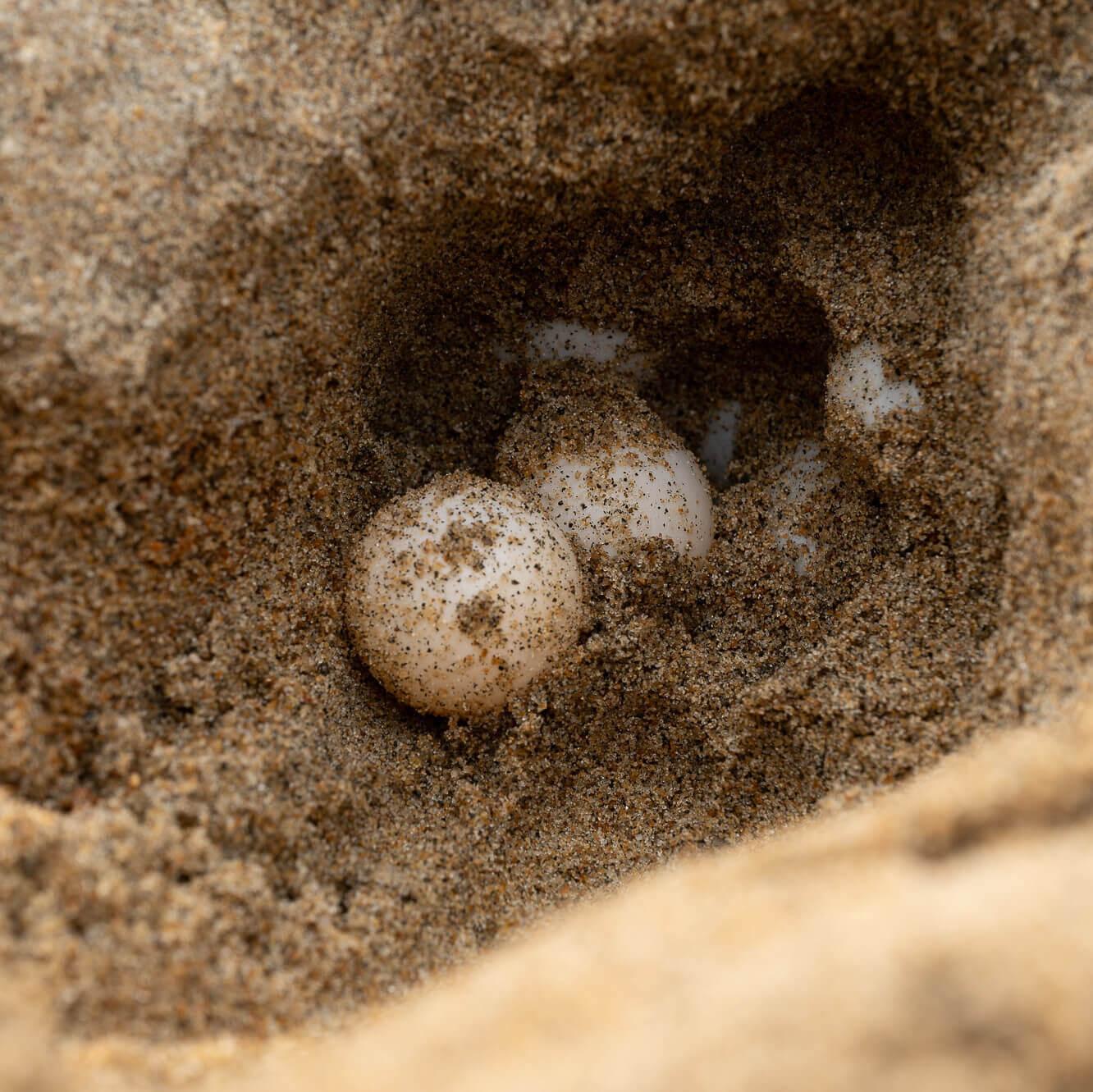
Weather conditions are another major factor in determining the success of turtle nests. Cooler, rainy summers can delay hatching, sometimes preventing eggs from fully developing before fall arrives. Temperature also plays a crucial role in determining the sex of turtle hatchlings, with extreme heat or cold skewing the balance between male and female offspring. This means turtle populations are especially vulnerable to the impacts of climate change. By incubating the eggs, we create a controlled environment that maximizes their chances of hatching, regardless of the weather or changes in climate.
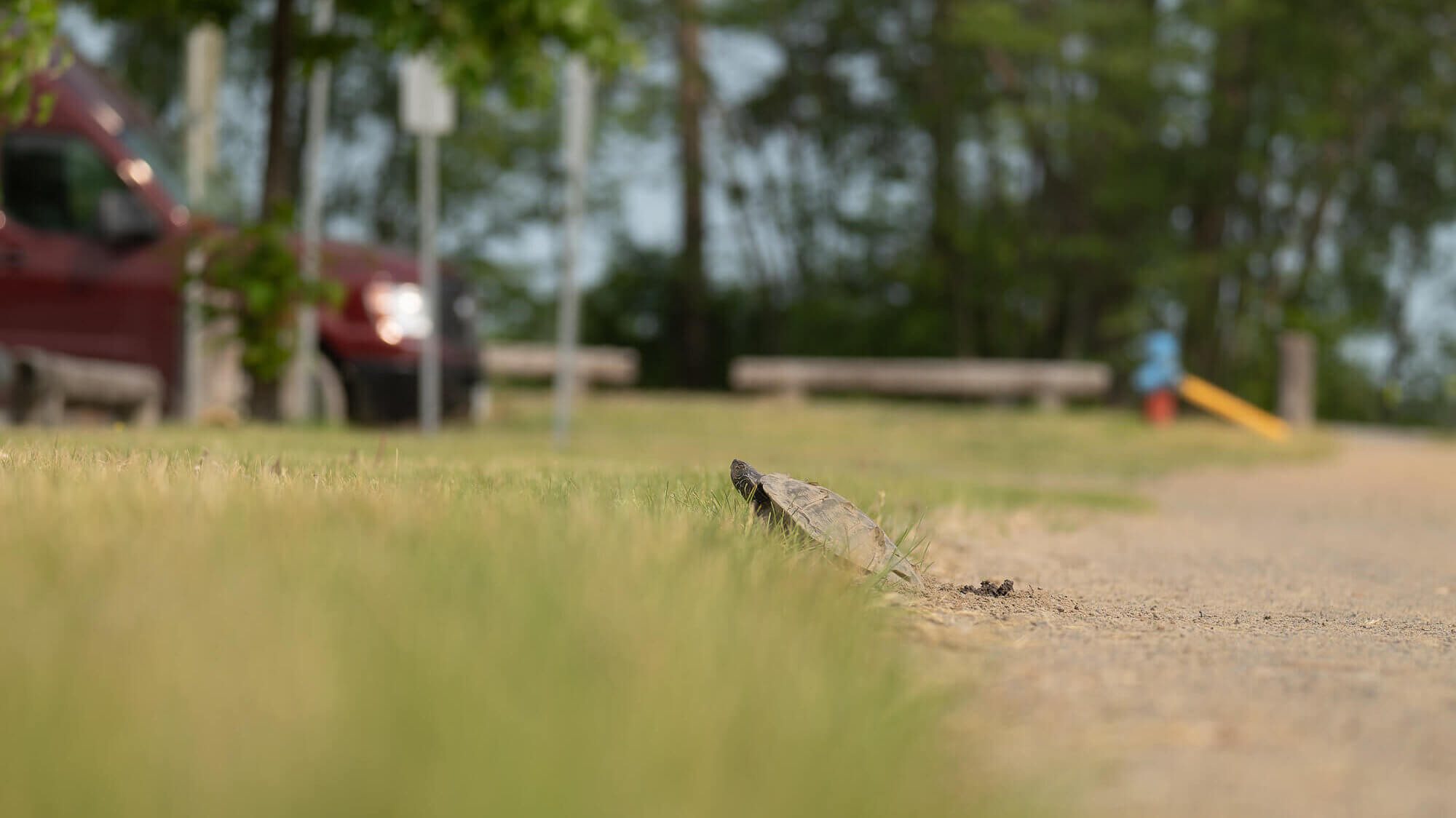
Turtles also have a habit of nesting in risky areas, such as the gravel shoulders along roadways and parking lots, where both hatchlings and adult turtles are at high risk of being hit by vehicles. Once hatched, the journey to the water can be perilous, especially for nests far from the shoreline. By collecting the eggs and releasing the hatchlings directly into the water, we significantly reduce the threat of mortality caused by human activity, ensuring these young turtles have a much safer start to life.
Once a mother turtle lays her eggs, she never returns to the nest. Intervention through the collection and incubation process protects these eggs and hatchlings during the most vulnerable stage of their lives. In short, by incubating turtle eggs, we mitigate several threats, from predators and weather to road mortality and unsafe nesting sites, giving these species a better chance at survival.
The 2024 turtle incubation project by the numbers
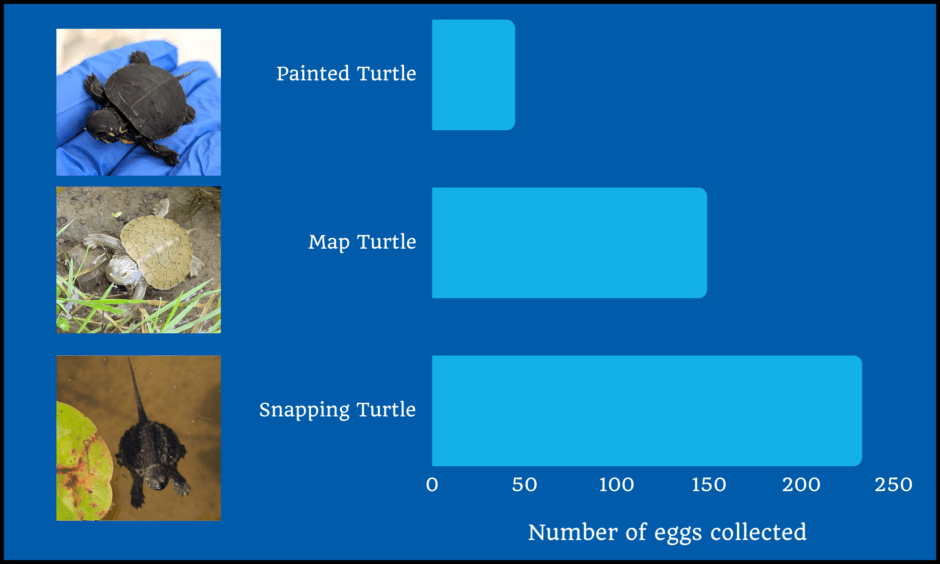
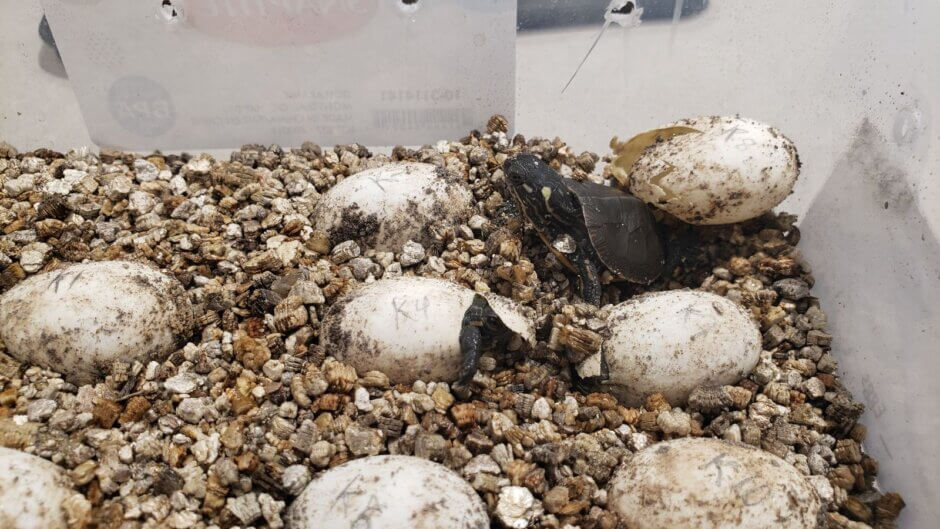
This year, the project collected and incubated a total of 427 turtle eggs:
- 45 Painted Turtles
- 149 Northern Map Turtles
- 233 Snapping Turtles
By the end of the project, Friends of Petrie Island successfully released 354 baby turtles into the wild. With an impressive hatch rate of 83%, this stands in stark contrast to the mere 5% survival rate of unprotected eggs at Petrie Island.
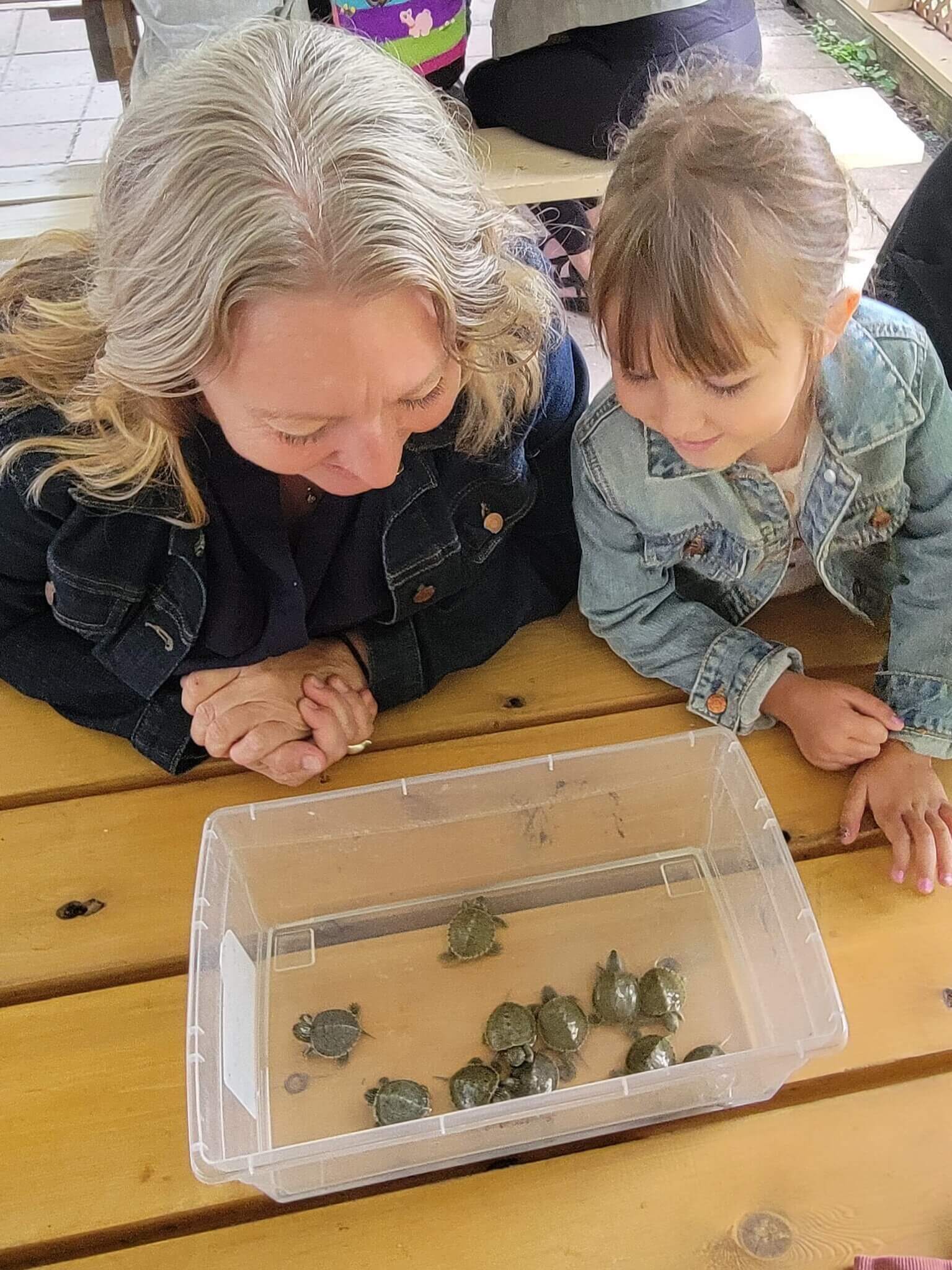
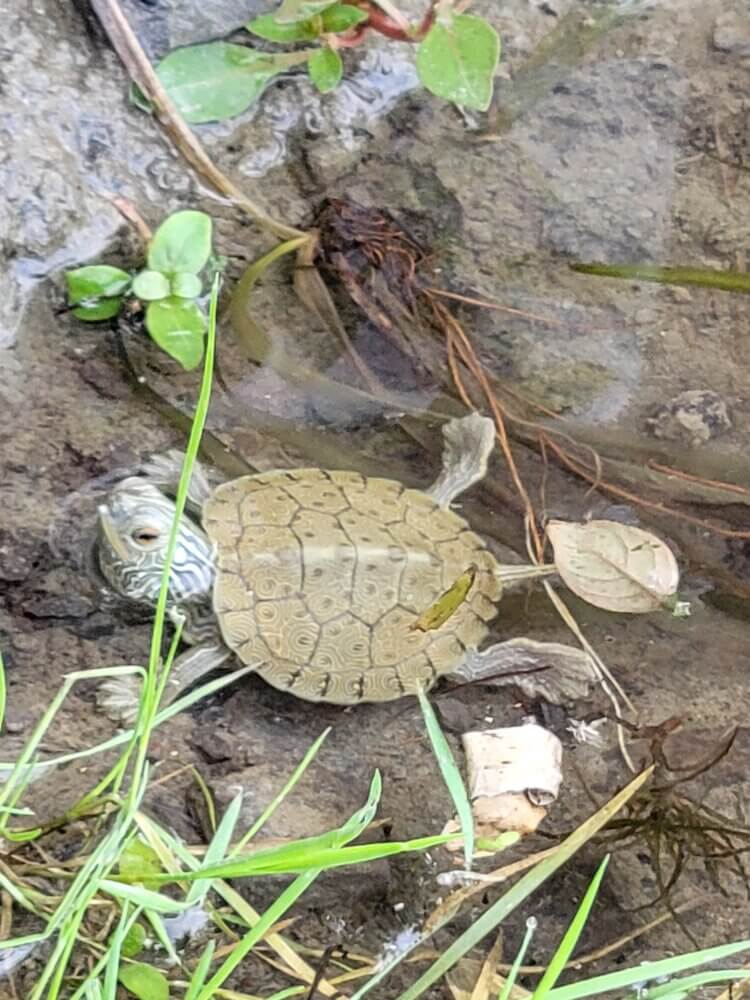
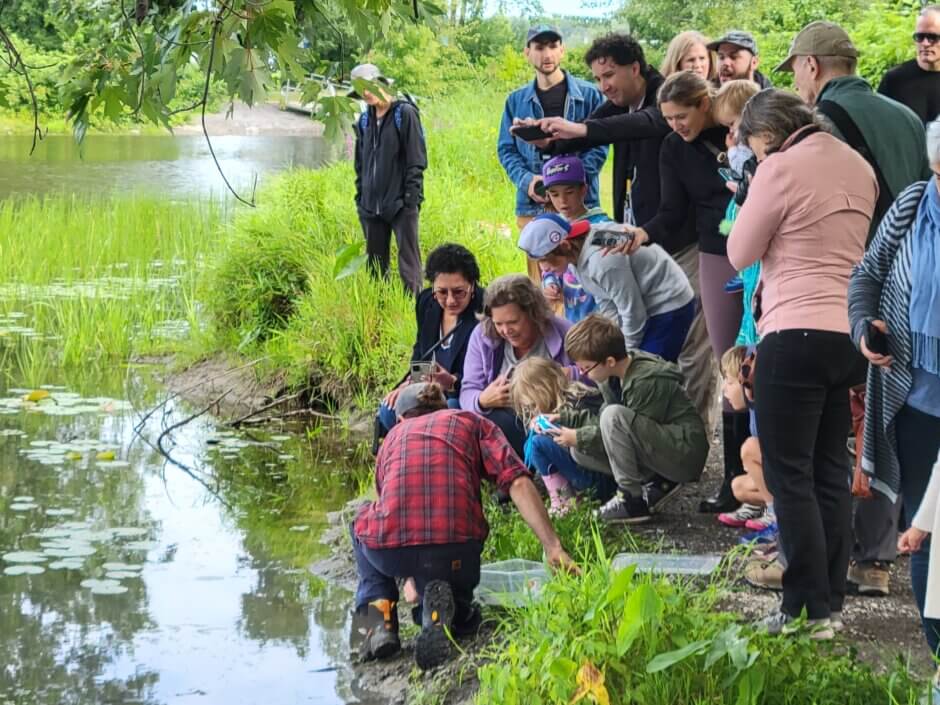
The hatchlings were released over the course of 15 public turtle releases on Petrie Island, which attracted more than 600 participants! These events were an excellent way to involve the community in conservation efforts and raise awareness about local turtle species.
The success of the project wouldn’t have been possible without the dedication of 40 volunteers from Friends of Petrie Island, who were involved in collecting turtle eggs and caring for and ultimately releasing the hatchlings into the wild.
Turtle days at the Learning Lab
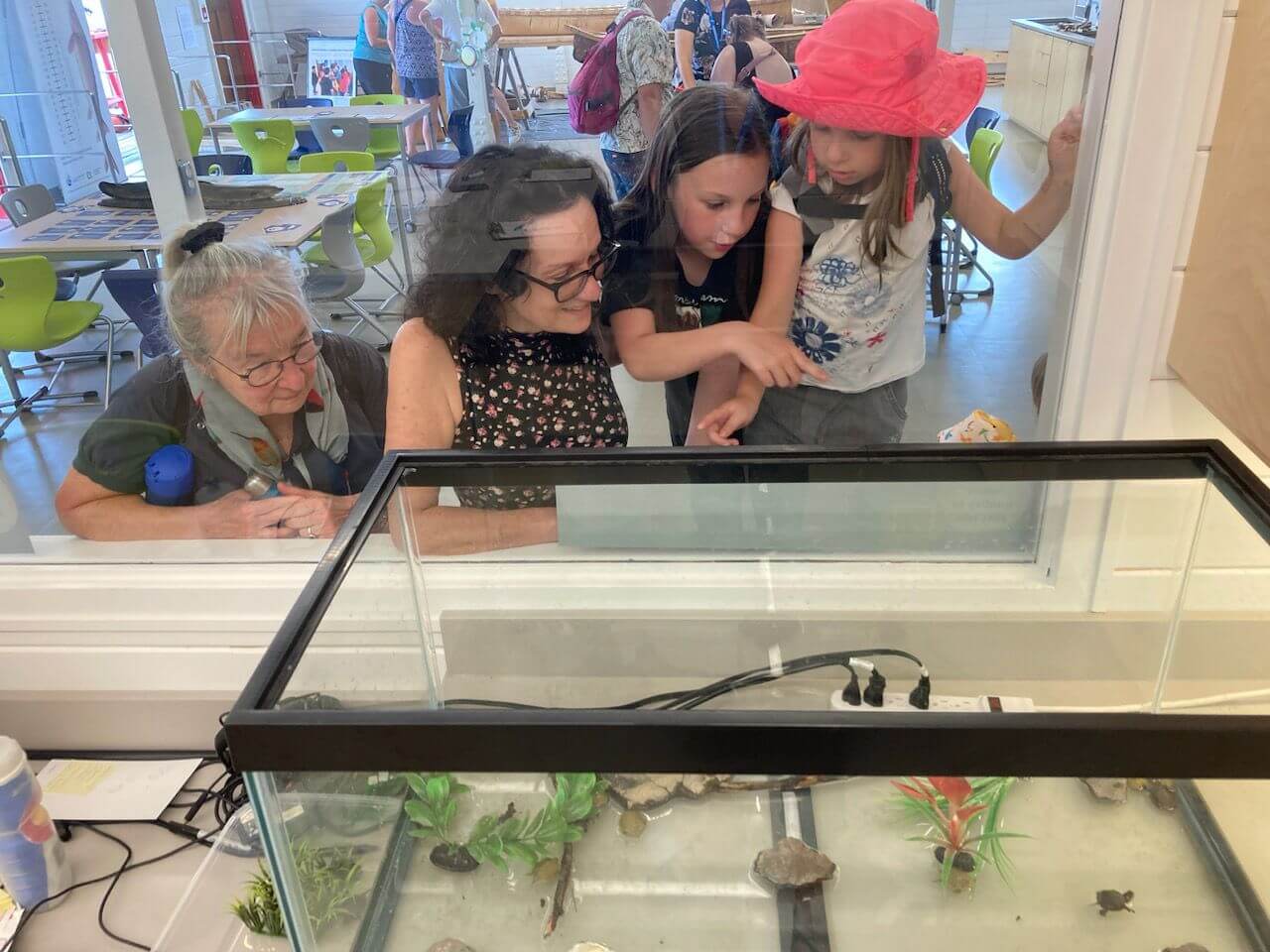
This year, Ottawa Riverkeeper hosted two Turtle Days at the Learning Lab in the NCC River House. These special events, on August 10th and 17th, offered the public the unique opportunity to meet the hatchlings before they were released at Petrie Island.
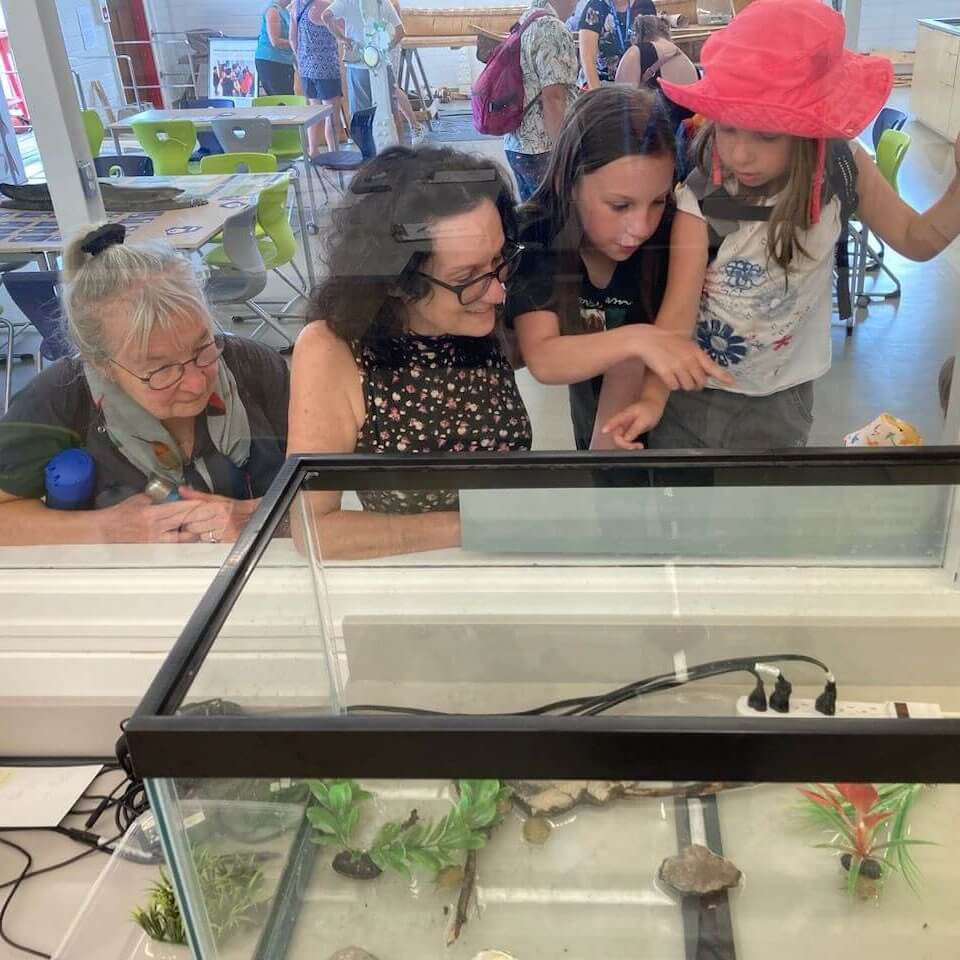
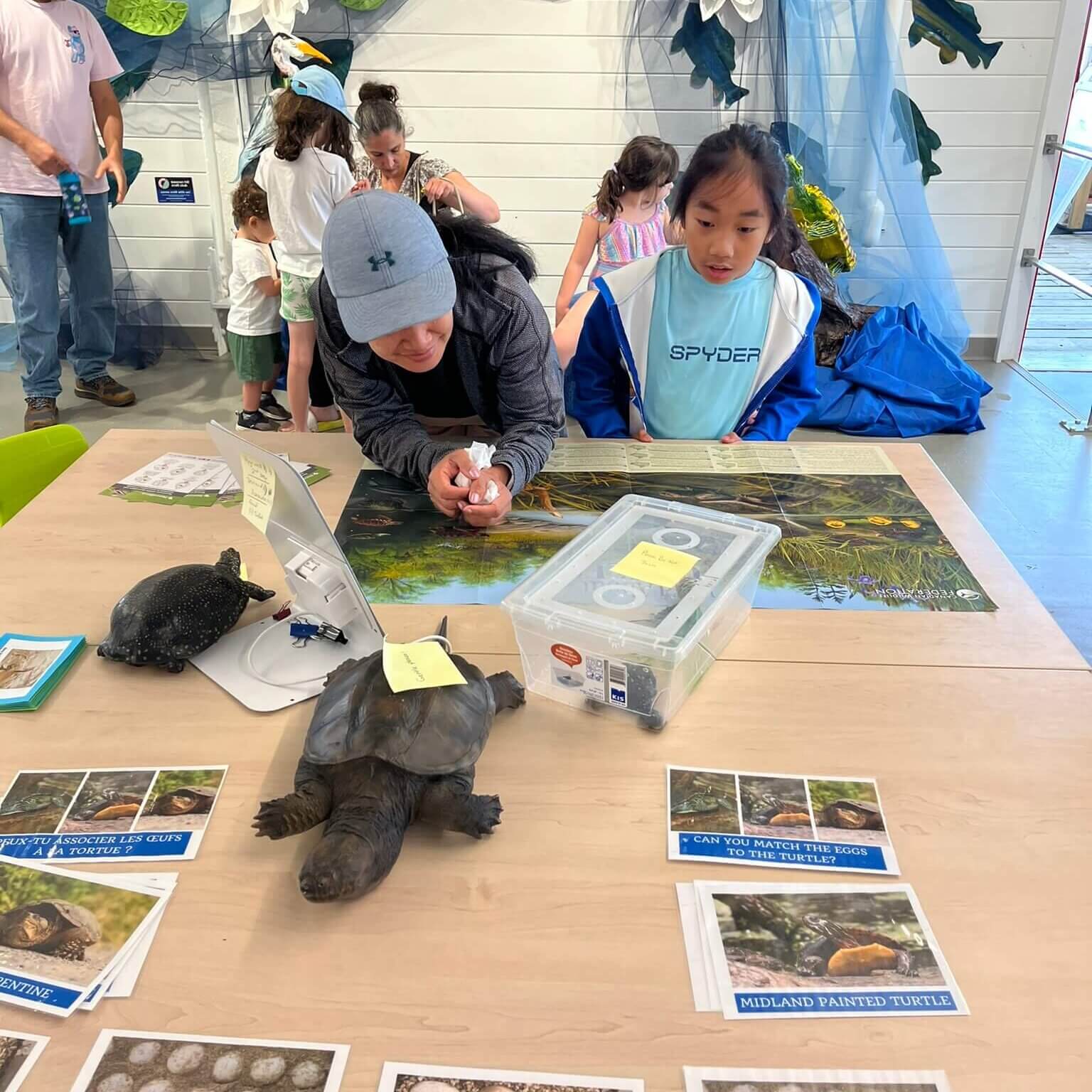
Over 580 people stopped by over the course of the two Turtle Days, and attendees were able to learn about the importance of turtle conservation and the entire incubation process, from egg collection to release. Special guest Malcolm Fenech, the lead Biologist with the Petrie Island Turtle Project, and Friends of Petrie Island Staff guided attendees through the details of how turtle eggs are collected and incubated, explaining the steps taken to ensure the survival of these at-risk species.
Highlighting our three incubated turtle species
Snapping Turtle (Chelydra serpentina)
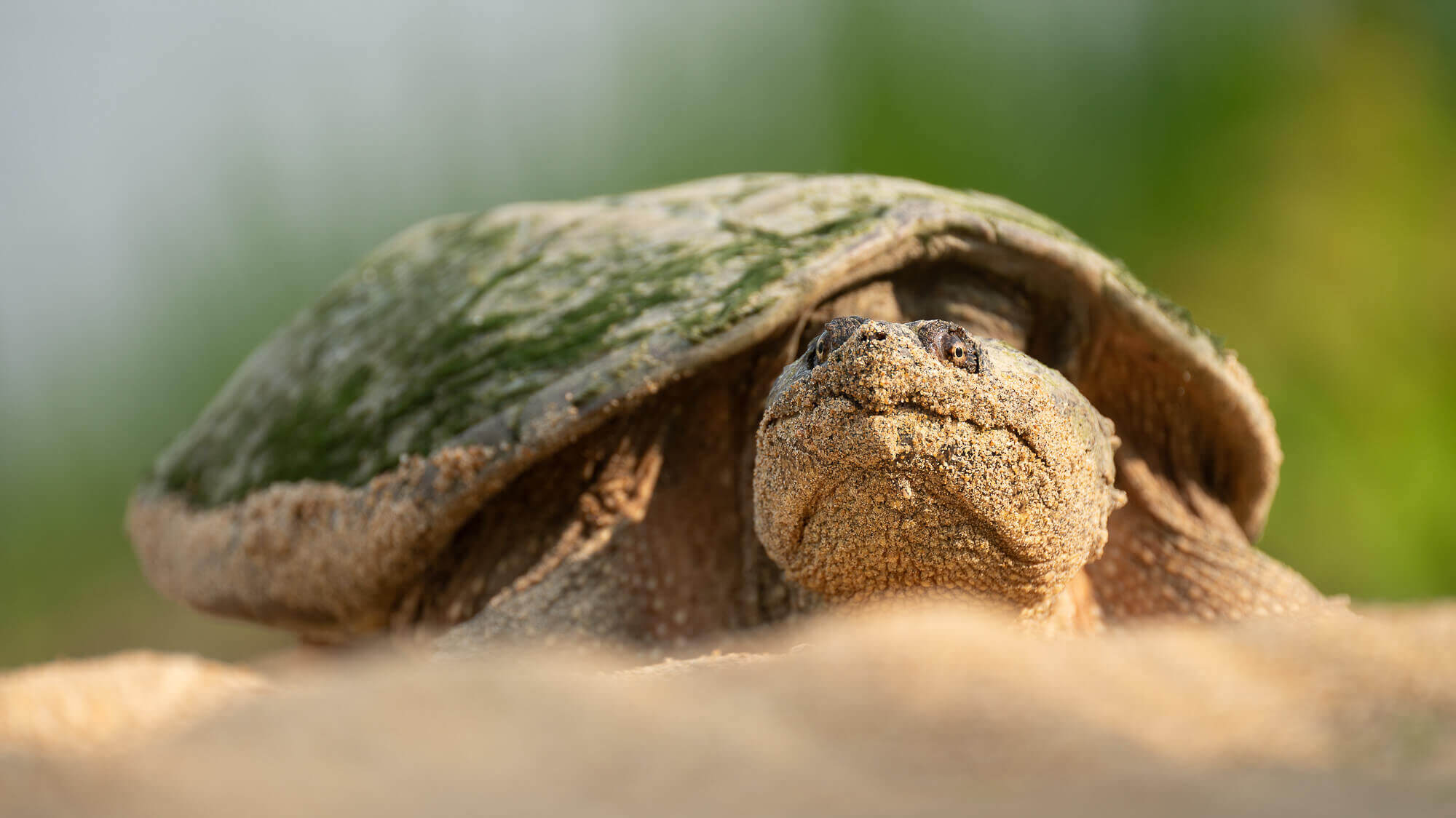
The snapping turtle is the largest species of turtle found at Petrie Island and plays a vital role in maintaining the health of local lakes and wetlands by eating decaying plants and animals. These turtles are slow to mature, not breeding until they are between 15 and 20 years old, and can live up to 100 years. They typically lay 25 to 45 eggs in a single clutch. While they spend most of their time in the water, snapping turtles are not strong swimmers and face numerous threats, including habitat loss, road mortality, nest predation, pollution, and climate change.
Painted Turtle (Chrysemys picta)
As the most common turtle on Petrie Island, painted turtles are easily recognizable by the vibrant colours along their necks and shells. They are often seen basking in groups on logs. Painted turtles hibernate underwater, surviving temperatures as low as -10°C thanks to a biological “antifreeze” in their bodies. Northern populations of painted turtles take a long time to reach sexual maturity, with males maturing in 7 to 10 years and females in 12 to 15 years. The biggest threats to painted turtles include habitat degradation, predation, and road mortality.
Northern Map Turtle (Graptemys geographica)
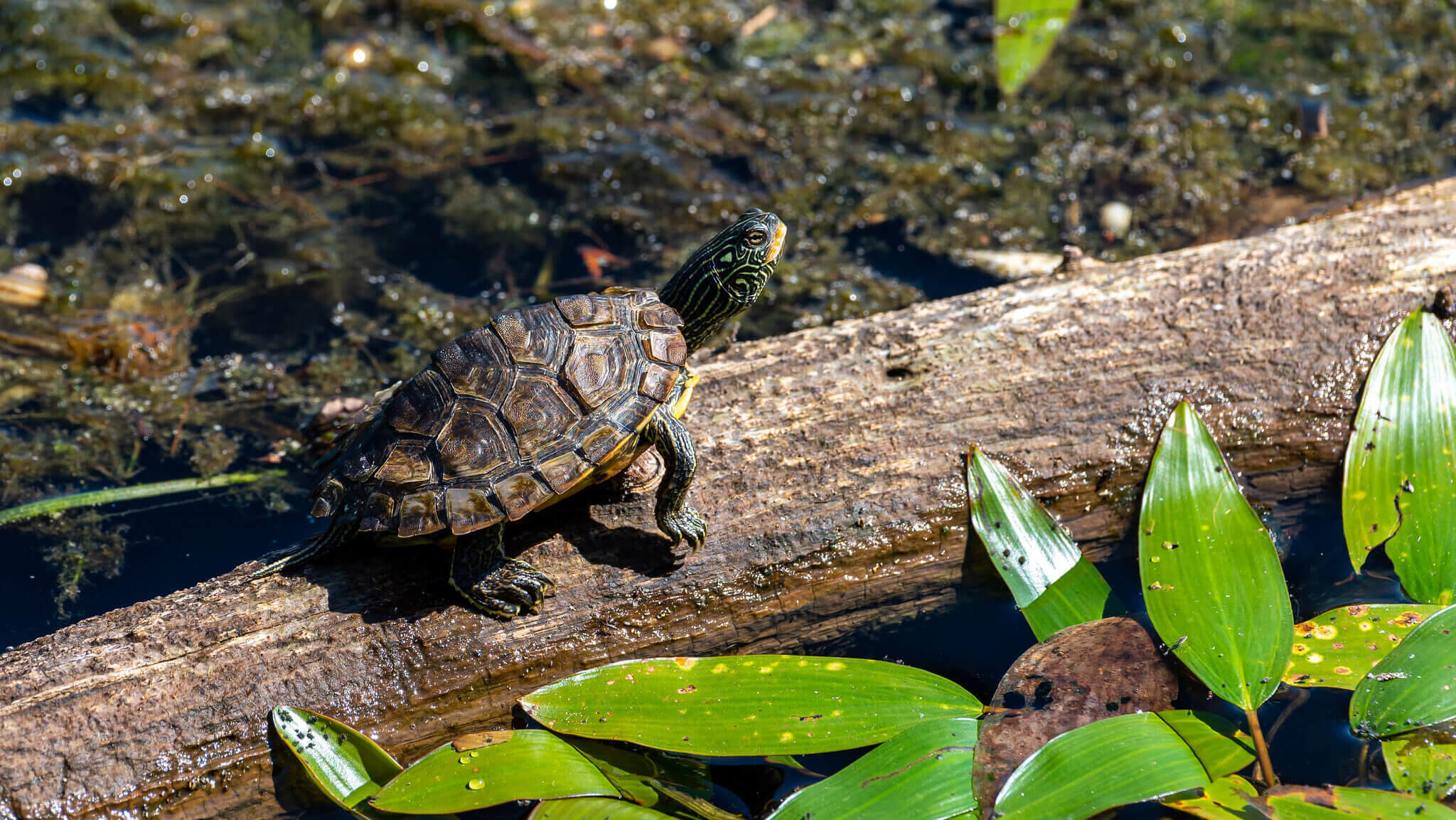
Named for the unique map-like patterns on their shells, Northern Map Turtles are commonly seen at Petrie Island, especially females, who are known for their strong swimming abilities. These turtles require high-quality water to thrive. Females take around 12 years to reach maturity, while males mature at around 5 years. Their major threat is poor water quality, along with road mortality and injuries from boat propellers.
How you can help freshwater turtles
Looking for ways to help protect freshwater turtles? There are plenty of ways to get involved! If you live near Petrie Island, consider volunteering with Friends of Petrie Island or look for local organizations focused on turtle protection. You can also join one of the turtle releases in 2025 — but be sure to sign up early, as spots fill up fast!
If you spot a turtle nest in your neighbourhood, consider building a nest protector to keep predators at bay while the eggs incubate in the wild. Although there is a specific way to build these protectors, they are fairly easy to assemble. You can find instructions on how to make one with this great resource from the Canadian Wildlife Federation.
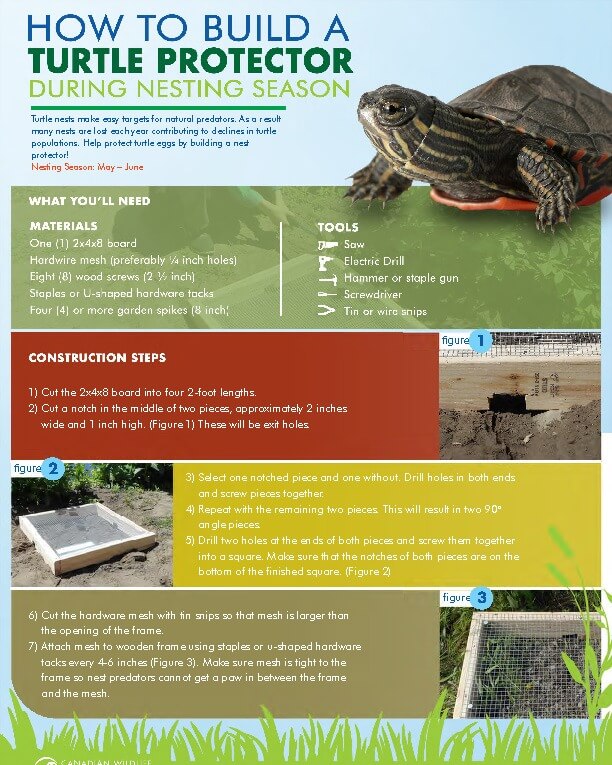
Important: Because all freshwater turtles in the watershed are classified as species of special concern, at-risk, or endangered, egg collection is only permitted for those with a proper license. The Petrie Island Turtle Project holds a permit to collect turtle eggs, so please avoid digging up or collecting eggs found on your property or in your area.
Finally, you can contribute to this vital conservation work by donating to Ottawa Riverkeeper or supporting any of the other organizations involved in this project.
Conclusion
This collaborative turtle incubation project highlights what can be achieved when community members, volunteers, and conservation organizations come together. Thank you so much to everyone who was involved with the project this year! With continued efforts, we can help protect these incredible reptiles and preserve their place in our local ecosystems.
Special thanks to the Ottawa Community Foundation for their support of this project and the Turtle Days.

Excellent initiative!
Such a great program! Would like to see this happen further east along the Ottawa River, in Hudson Quebec. Any licenced biologists available for 2025? Have covered a couple of nests with screen protectors after finding four others raided. Also sent 4 snapper remains ( 4-10 year olds) 6″- 12″ shells, & 1 baby eastern painted to ministry of environment & climate change to investigate, non conclusive. Habitat loss or climate change cause due to early thaw followed by cold snap, or both! 🙁
There’s also a 100 year old snapping turtle thriving amongst us here!