
Posted: July 22, 2025
What does it take to remove invasive Water Chestnut?
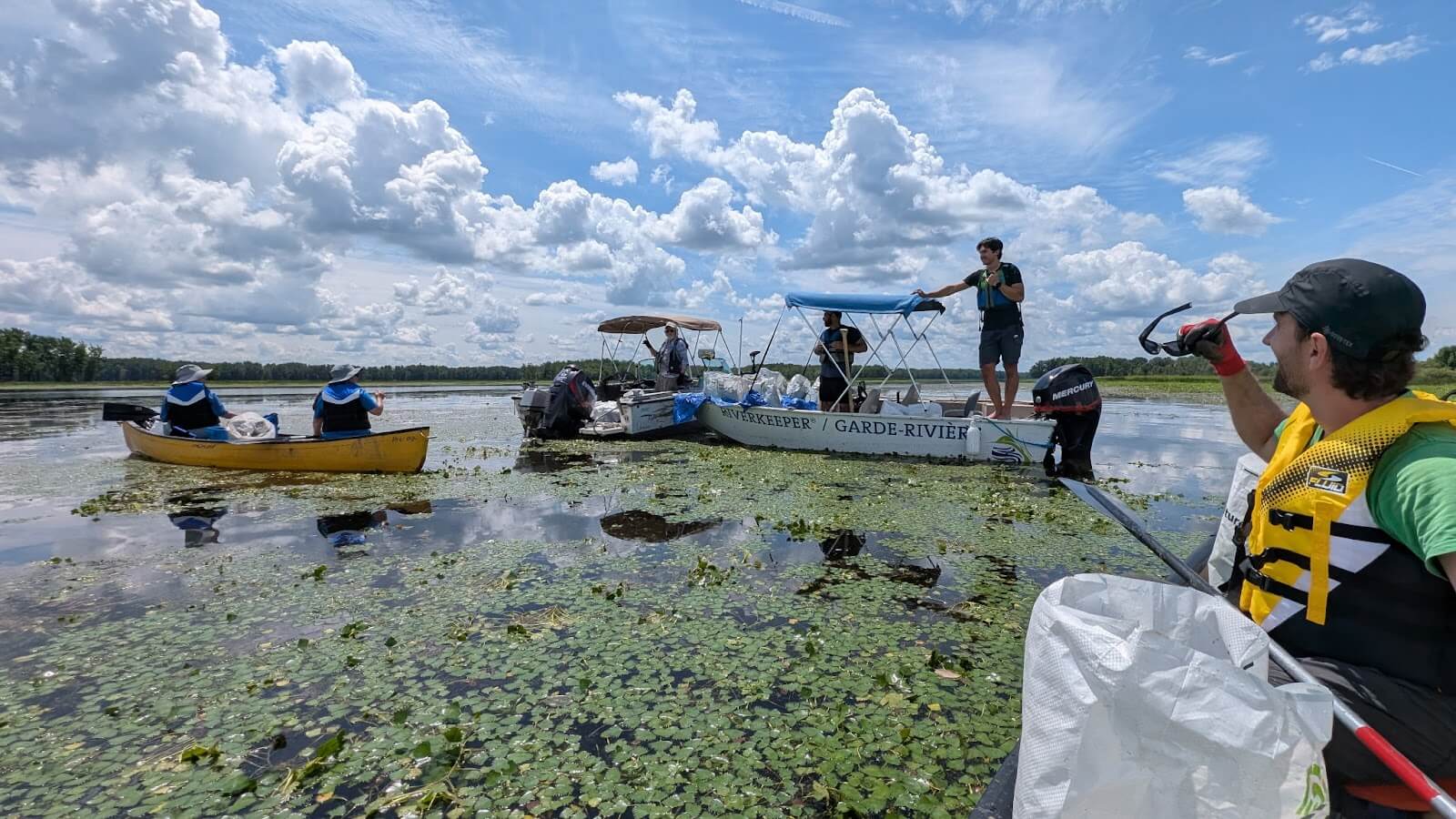
European Water Chestnut is choking parts of the Ottawa River, but what does it take to remove it? This summer, Ottawa Riverkeeper staff joined COBALI and the Kitigan Zibi Guardians Program in a hands-on effort at Baie de Lochaber to tackle this invasive species.
Ottawa Riverkeeper has recently developed a number of tools to help identify invasive species that impact the health of the Ottawa River and its tributaries. The emphasis of these tools is to raise awareness of the species as well as steps to take to avoid spreading them. But what happens if an invasive species establishes itself?
This summer, Ottawa Riverkeeper is supporting a project, organized by the Comité du Bassin Versant de la Rivière du Lièvre (COBALI), to remove water chestnut from Baie de Locaber, one of the many bays located along the Ottawa River in Quebec.
What is Water Chestnut, and why does it need to be removed?
European Water Chestnut (Trapa natans; also known as Water Caltrop) is an aquatic plant native to Europe, Asia, and Africa. The plant is easily identified by its triangular floating leaves with toothed edges and small white flowers with four petals. Underneath the surface, European Water Chestnut has a unique root system consisting of fine, feathery roots that branch into sediment.
In many regions where European Water Chestnut is native, its “chestnuts”, hidden underneath a shell with sharp barbed spines, are commonly eaten as a snack or cooked into dishes such as stir fries. In North America, this plant has been used as an ornamental water garden plant, which likely facilitated its introduction into the Kichi Zibi (Ottawa River).
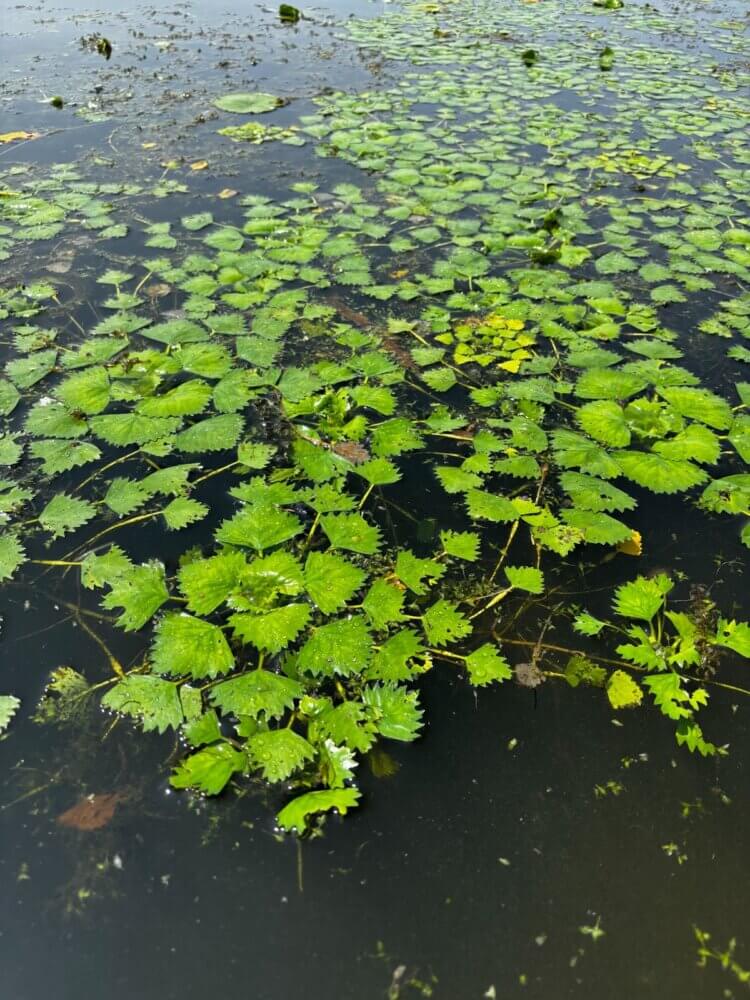
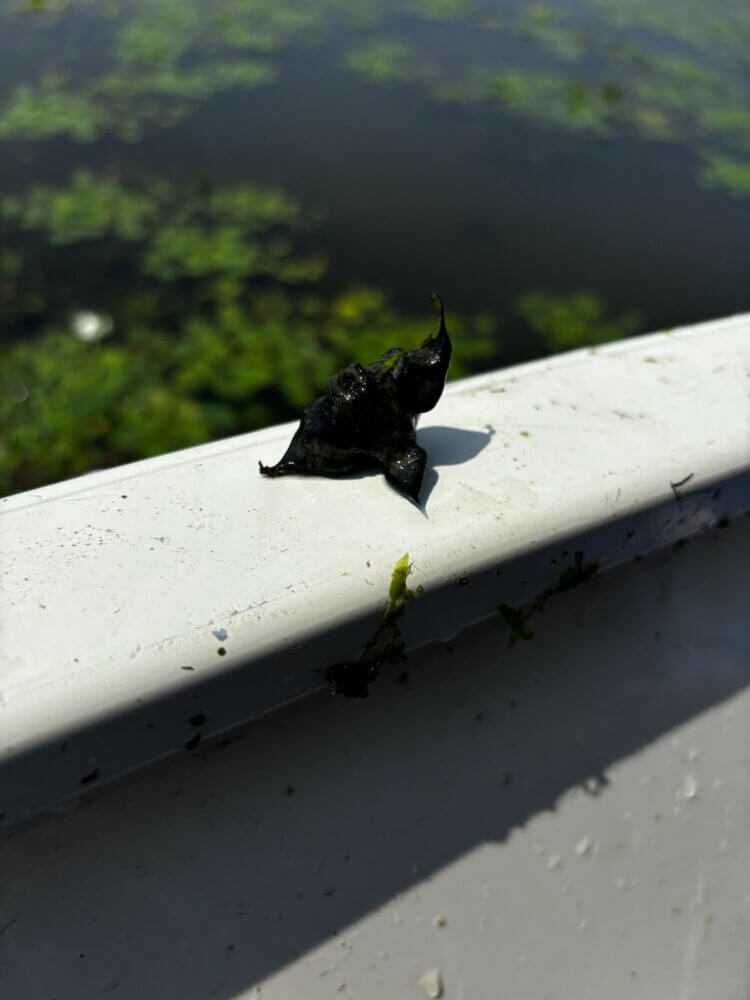
European Water Chestnut in the Ottawa River. (Left) Leaves of several European Water Chestnut plants on the surface. (Right) The pointy “chestnut” seed of the European Water Chestnut.
In several areas of the Ottawa River, such as Baie de Carillon and Baie de Lobacher, large populations of European Water Chestnut have been established. In shallow bays, this invasive plant can grow rapidly, covering large areas and outcompeting native plants.
As European Water Chestnut takes over an area, the thick mats of vegetation reduce light penetration and, when these plants die off in the fall, they create large amounts of decomposing vegetation which can decrease dissolved oxygen levels, potentially harming native organisms like fishes.
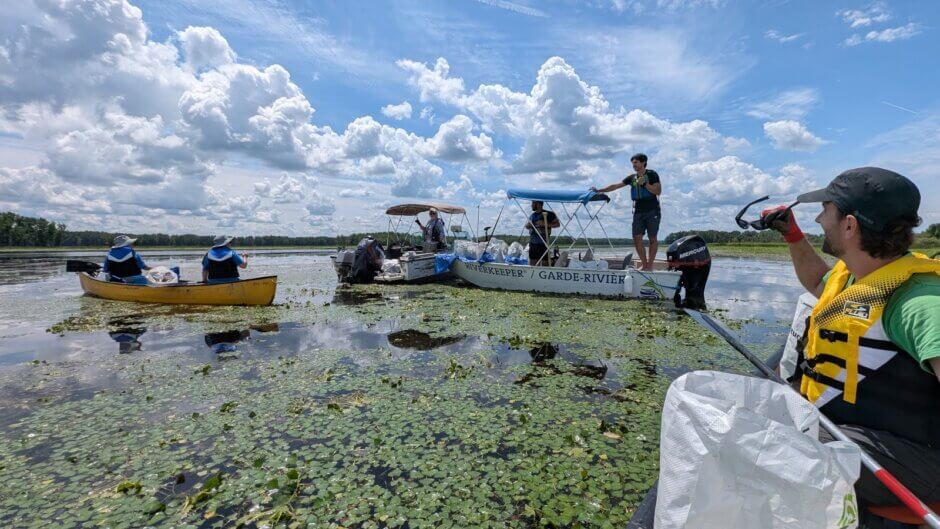
Comité du Bassin Versant de la Rivière du Lièvre (COBALI) and Ottawa Riverkeeper preparing to remove a large patch of European Water Chestnut in Baie de Lobacher.
Reflections from our removal efforts
This July, Ottawa Riverkeeper is supporting a project organized by the Comité du Bassin Versant de la Rivière du Lièvre (COBALI) to help with removal of European Water Chestnut from the Baie de Lobacher.
Science Assistants Kevin Adeli and Andrea O’Halloran, as well as Corey Twenish with Kitigan Zibi’s Nagadjitòdjig Akì (Guardians Program), pitched in and enjoyed experiencing this beautiful portion of the river. Baie de Lachober was teeming with amazing wildlife like black terns, great blue herons, pied-billed grebes, smallmouth bass, and longnose gar. Nonetheless, the extent to which European Water Chestnut has established itself in the area was very concerning.
Notably, in areas with high densities of European Water Chestnut, there was often no native vegetation whatsoever, which many other native organisms rely on. Removing this invasive species was a messy process, as their roots often carried heaps of mud up from the river bottom.
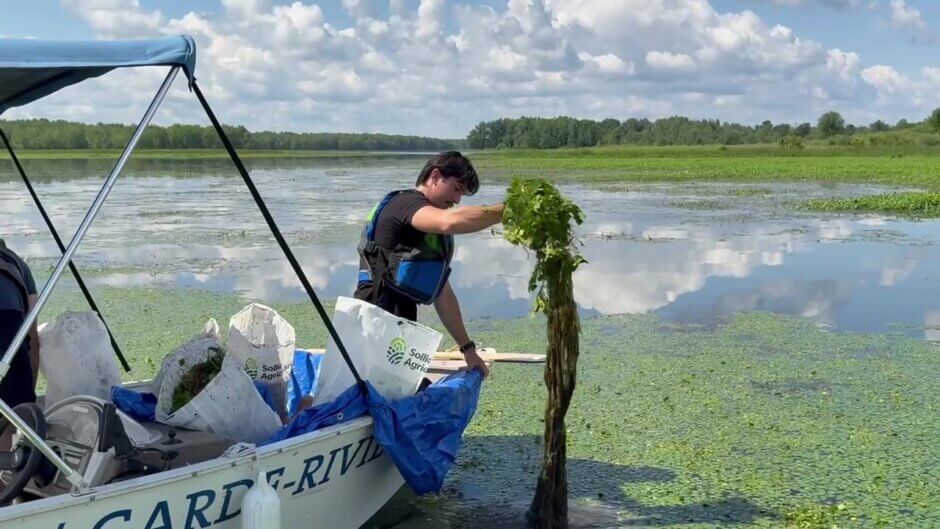
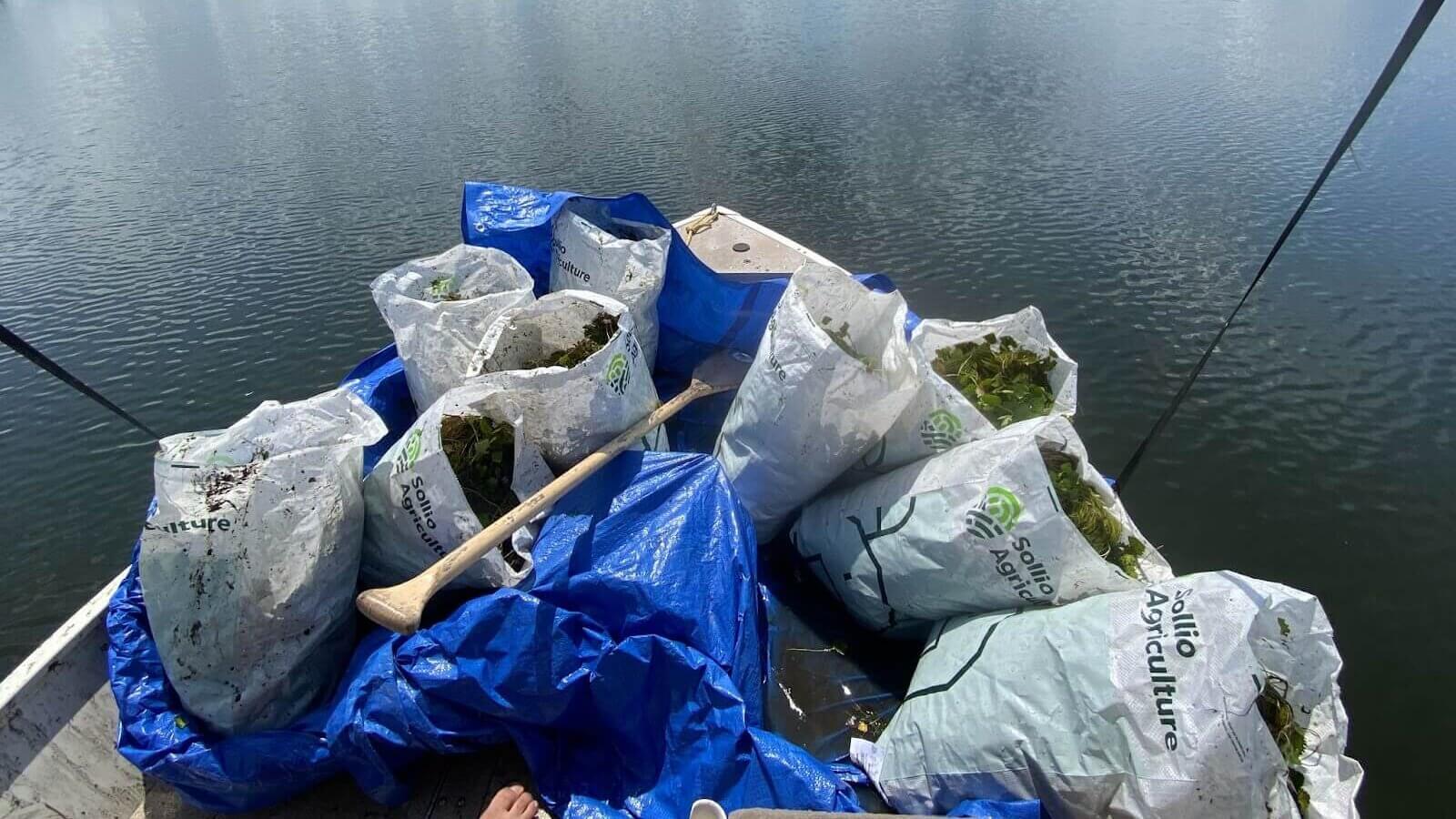
European Water Chestnut removal in Baie de Lochaber. (Left) Kevin Adeli, Science Assistant with Ottawa Riverkeeper, removes a large handful of European Water Chestnut. Note its long root system! (Right) Many bags full of European Water Chestnut being transported to a composting site.
While pulling large bundles of European Water Chestnut, we reflected on how the introduction of just one plant can cause such a large-scale problem. Indeed, European Water Chestnuts can be particularly difficult to eradicate because any roots left in the soil can regrow, and their seeds can sprout years after plant removal. Altogether, this illustrates the importance of not transporting species outside of their native range. Planting native species and properly disposing of aquarium plants can help avoid the introduction of invasive species. Additionally, washing boats and cleaning motor propellers before entering a new waterbody can help prevent the spread of aquatic invasive species such as European Water Chestnut.
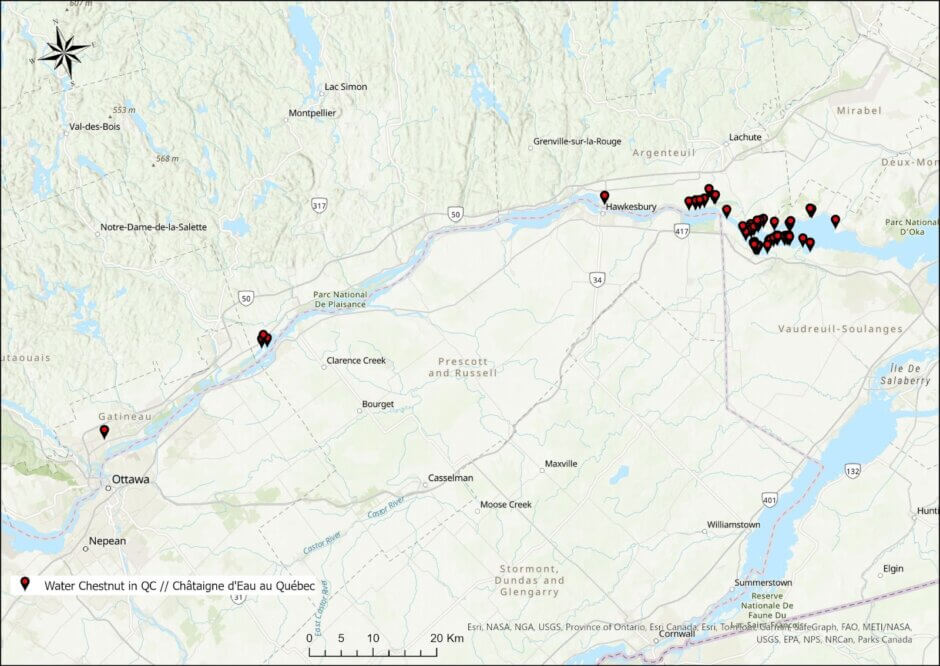
Reports of European Water Chestnut in Quebec. Currently, there have been no reports of Water Chestnut in the northern regions of the Ottawa River watershed.
If you happen to see European Water Chestnut in the field, we encourage you to photograph it and report it on the Ottawa Riverkeeper’s Invasive Species Monitoring page or iNaturalist.
Ottawa Riverkeeper has also developed a series of quizzes to learn more about the most concerning invasive species in the watershed that threaten the Ottawa River and how to report them if you find them!
Here is the quiz for European Water Chestnut. See if you can learn to identify it:
E. Waterchestnut Quiz by Ottawa Riverkeeper < Previous post Next post >
Leave a Reply