
Posted: December 11, 2025
Taking steps towards a less salty watershed
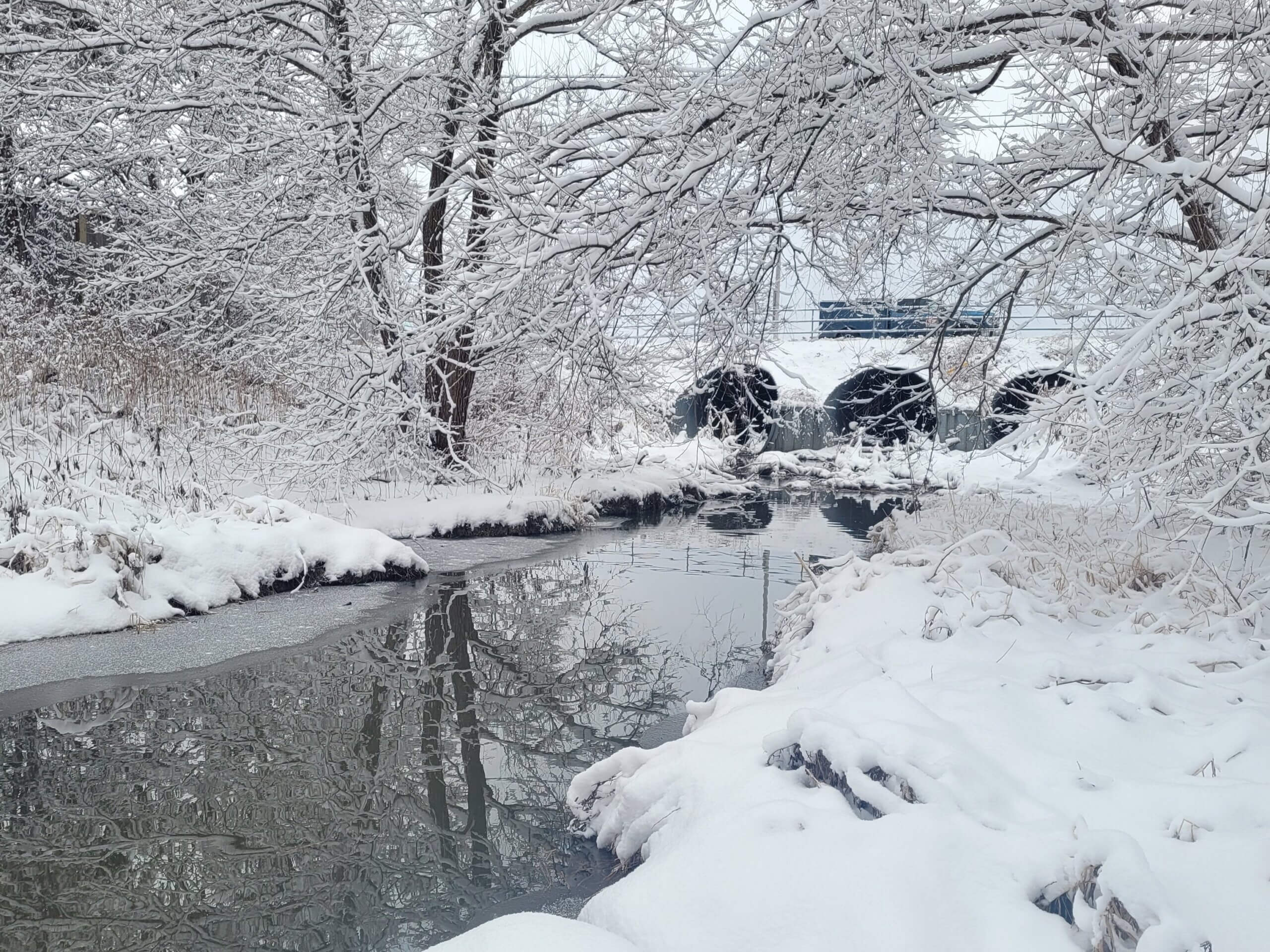
As our 2025-2026 road salt monitoring gets underway, we take a look at how the program is evolving and how we’re pushing for better public accountability on road salt management in the National Capital Region.
In January 2025, we released a report looking back at the previous 5 years of data collected through our Road Salt Monitoring Program. This report examined road salt application in the National Capital Region and highlighted the extreme levels of chloride in urban freshwater ecosystems resulting from road salt.
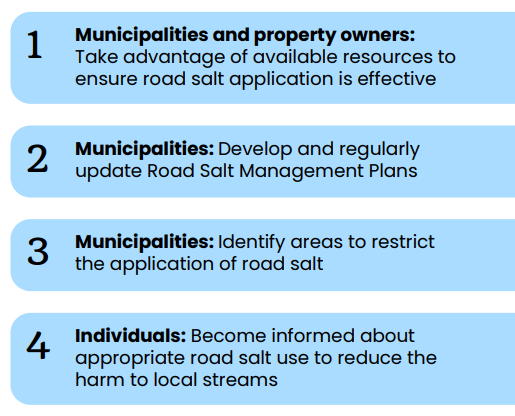
Included in the report was a short list of recommendations geared towards municipalities, property owners, and individuals to tackle the issue of oversalting in the region. As we move into this winter’s monitoring season, we’re taking steps to ensure that the recommendations we made in the 5-year report are addressed.
Grading Road Salt Management Plans
One of the four recommendations we highlighted in our 5-year monitoring report was that “Every municipality and large property owner should have a road salt management plan in place, with a goal to update this plan at regular intervals, such as every 3-5 years.” To make progress on this recommendation, our team reached out to organizations and municipalities that have Road Salt Management Plans, with the goal of grading them for their effectiveness and public accountability. During this process, we will hold meetings with municipalities and other large land-owning organizations to ensure that these reports are completed and made publicly available.
During the evaluation, our team will be looking for several important aspects within each Road Salt Management Plan. These will include best practices for road salt use, that there are measurable goals, and steps are taken to both identify vulnerable areas and then reduce road salt in those areas. The evaluation will also include more practical questions, such as whether the plan is publicly available and easy to access, and how often an audit of road salt practices is done.
We’ve included our rubric here, with scores for the City of Toronto’s Road Salt Management Plan as an example.
Look out for an update later this winter regarding the Road Salt Management Plans available in the National Capital Region.
Expanding road salt monitoring for 2025–2026
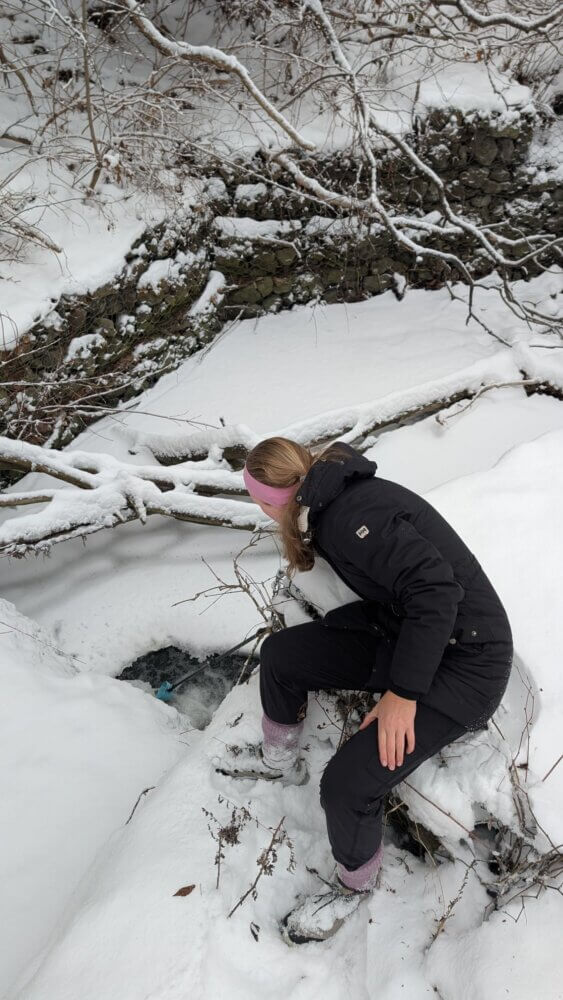
Alongside our advocacy work this winter, we are continuing to monitor streams throughout the region. Starting in late November, community scientists have braved the cold to collect samples from their local creeks and streams.
This season, we’re excited to have added new monitoring sites! These are sites where we have little to no knowledge of the chloride concentrations, so including them will give us a better understanding of the levels of road salt throughout the National Capital Region and help to identify potential road salt hotspots.
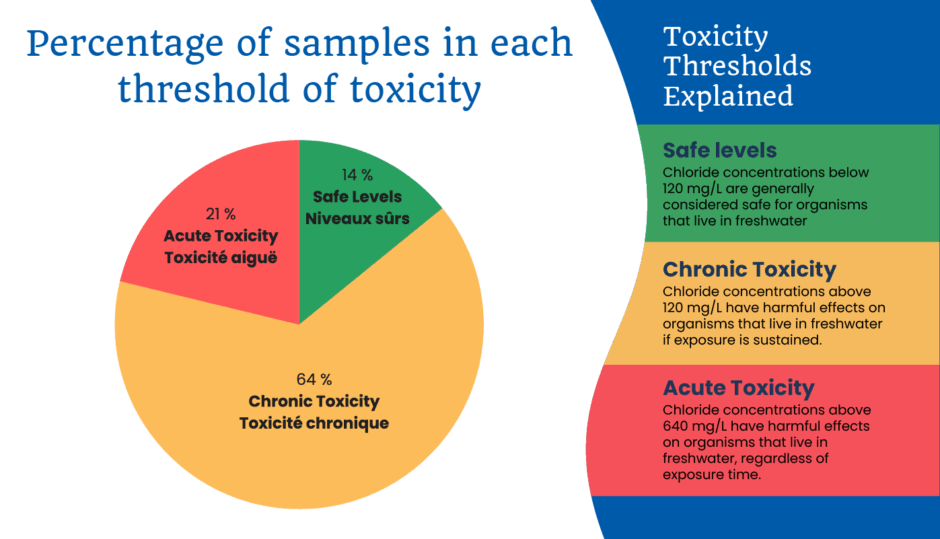
For the 2025-2026 season, we’re so grateful to have 30 dedicated volunteers who are monitoring 32 different sites. Early snowfall meant heavy salt application had already begun when monitoring started at the end of November. That means we’re already seeing high concentrations of chloride from the initial samples collected by community scientists.
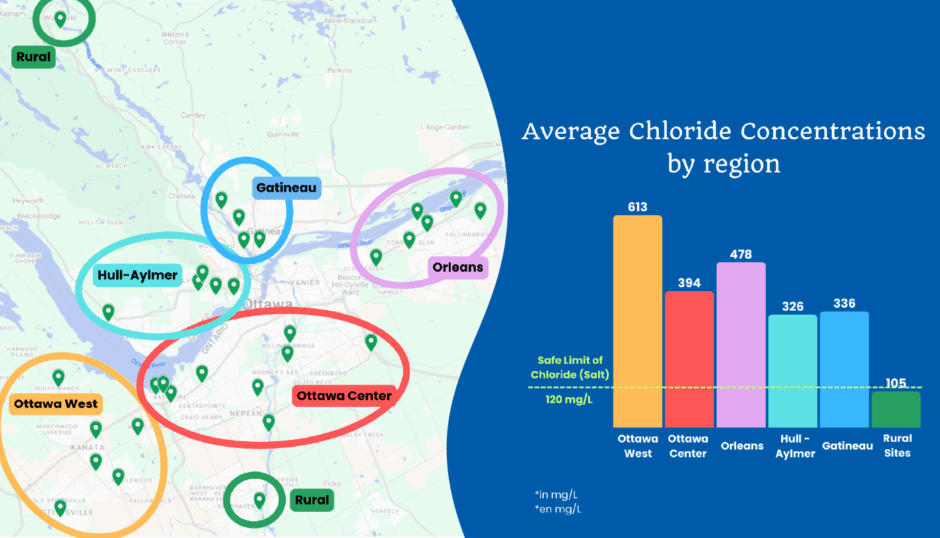
Sadly, the data we’re collecting is in line with the alarming levels we’ve seen in previous years. As outlined in the 5-year report, these consistently high levels of salt are extremely harmful to the ecosystems of small waterbodies like creeks and streams.
Kicking road salt to the curb, together
Road salt is an issue we can tackle if we work together. It is an issue of habits and social expectations, and those take time to shift. However, year after year of consistent data on oversalting is starting to grab the attention of those living in the National Capital Region, and many are calling for action to be taken
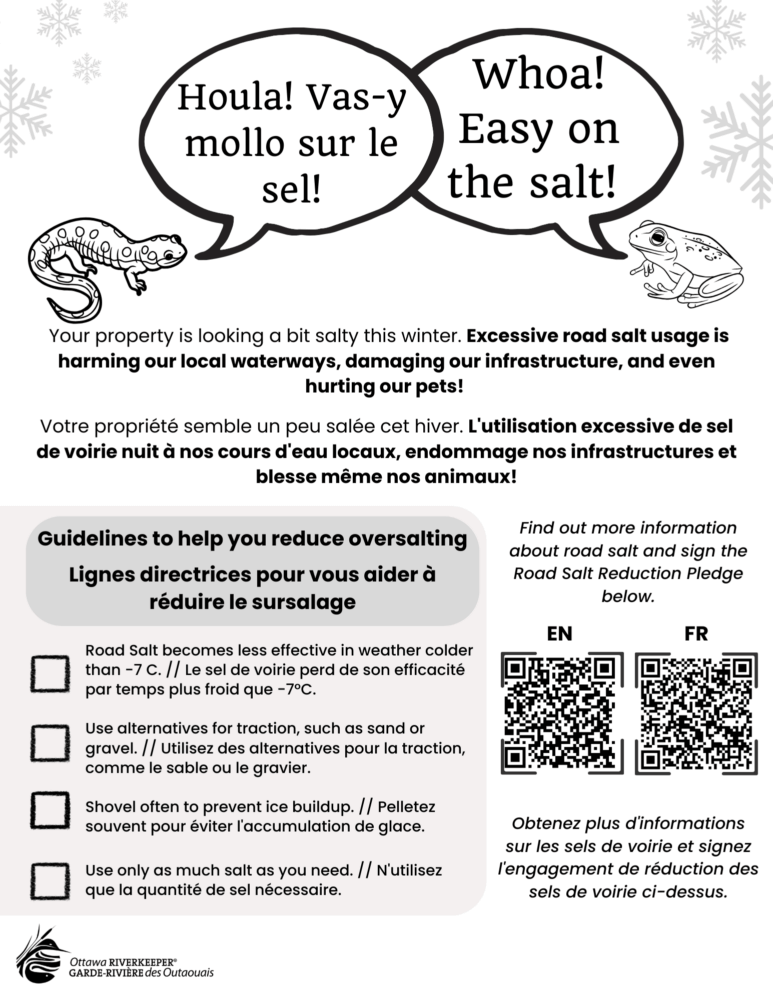
If you want to help spread the word, or if you spot an overuse of salt in your neighbourhood, we have an easy resource that you can print at home and share. This bilingual flyer points people in the direction of learning more about the harms of road salt overuse!
If you know a teacher, consider sharing our Teacher’s Resources with them. They include a module on how to teach students about issues with road salt, helping to shift our culture of overuse by educating the next generation in the proper application and usage of salt.
Together, we can kick our road salt habit and protect urban creeks and streams!
Hello, I just read about a petition to try and get Ottawa to reduce salt and use beet brine.
Excellent idea, but the ‘reporter’ failed to provide information on how to sign the petition.
Plesae let me know.
Thanks,
Hi Bill, thanks so much for taking an interest in this issue! The petition you mentioned is not affiliated with Ottawa Riverkeeper, but instead has been proposed independently by an Ottawa resident who is likewise concerned about the City of Ottawa’s use of road salt. You can find it here.
We applaud residents taking an interest and action on this issue. In our research, we have learned that many alternatives have their own set of considerations, including potential harms posed to aquatic ecosystems. For this reason we remain focused on steps that everyone can take to reduce their road salt use, including the cities and other large land managers in the National Capital Region, and scaling back over-reliance on road salt.
It would be helpful to have some guidance on where we can send complaints about the City over-salting sidewalks and streets. For example, is it possible to upload a simple photo, along with date and location for RiverKeeper to collect and make use of when making the case to the City that more needs to be done?
Or should I simply send such information to my Councillor?
Thanks
Hi Leslie, thanks for wanting to take action on this! Right now, we don’t have a system for collecting these kinds of reports.
Some residents have seen success by reaching out to their local councillors. You can read this blog from volunteer Peter for an example of that (though an update has been posted on Reddit this year that salting restarted, requiring action again).
You can also email 311@ottawa.ca with a general report.
I’m not sure if you’re aware of the large studies regarding road salt, it’s use, the environmental effects, chemical additives, best practices, … (over 100 studies completed) done in the US.
I would also like to tell you about observations I have made in regards to the methodologies/practices of the city and salt truck operators (Combos and Underbellies) which result in excessive negative impacts on the environment. Up until 2014 I drove a Combo (Salter on a truck, with a plow and wing).
In addition, I have twice written to my councillor, and every member of the relevant committee about the waste, the poor management and the regular habit of ignoring the present winter maintenance policy (2003, since a new policy hasn’t been approved yet).
I would be willing to share the information I know/have, if you could provide me with an email address to send it to.
Hi Grace,
Thanks for your comment, and for reaching out to your Councillor on the issue of road salt.
We are aware of studies in the US, and are also in conversation with the City of Ottawa on their salting practices. We know the City is working on a new salt management plan, and have discussed with them about what we’d like to see in it (some of which is covered in this blog), and are anxiously awaiting its release. Given your experience as a driver, we are interested to hear what practices would have made reducing road salt easier when driving a Combo. Updating equipment is one part of this but so is training and management practices.
Thanks again for your interest in this issue, and your initiative in sharing your observations with your Councillor.