
Posted: May 1, 2026
Wrapping Up the 2025-2026 Road Salt Season
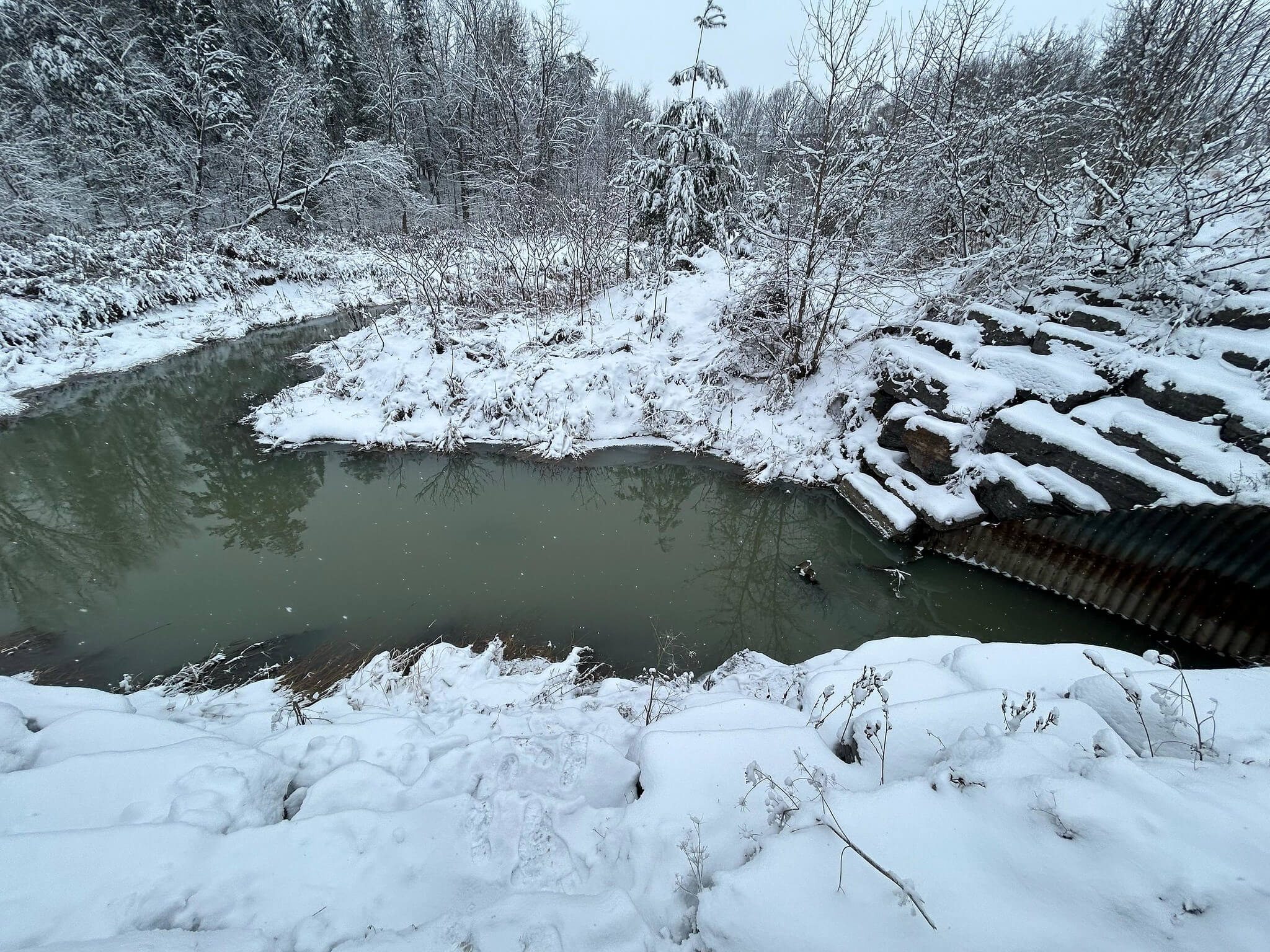
Spring has finally sprung! The sun’s out, the weather is warming, and the days of blowing snow and ice are finally behind us. We can now look back after we’ve crunched the data on an especially salty year in the National Capital Region.
Road salt is an important component of winter safety, reducing dangerous ice buildup on sidewalks and roads. However, as we’ve highlighted for many years now, it also has a detrimental impact on the ecosystems of our urban creeks and streams.
As weather conditions change throughout the seasons, excess road salt is transported into surrounding ecosystems, where it does not break down. As a result, chloride concentrations fluctuate throughout the year, with the highest levels in urban streams typically being recorded in the winter months. Conversely, the lowest concentrations of chloride in the summer remain at relatively high levels, especially when compared to rural streams, suggesting that road salt remains in the environment even after winter ends.
This season’s road salt data
This winter, salt levels around the National Capital Region were particularly high. A number of factors can contribute to elevated chloride concentrations, so what could have caused this?
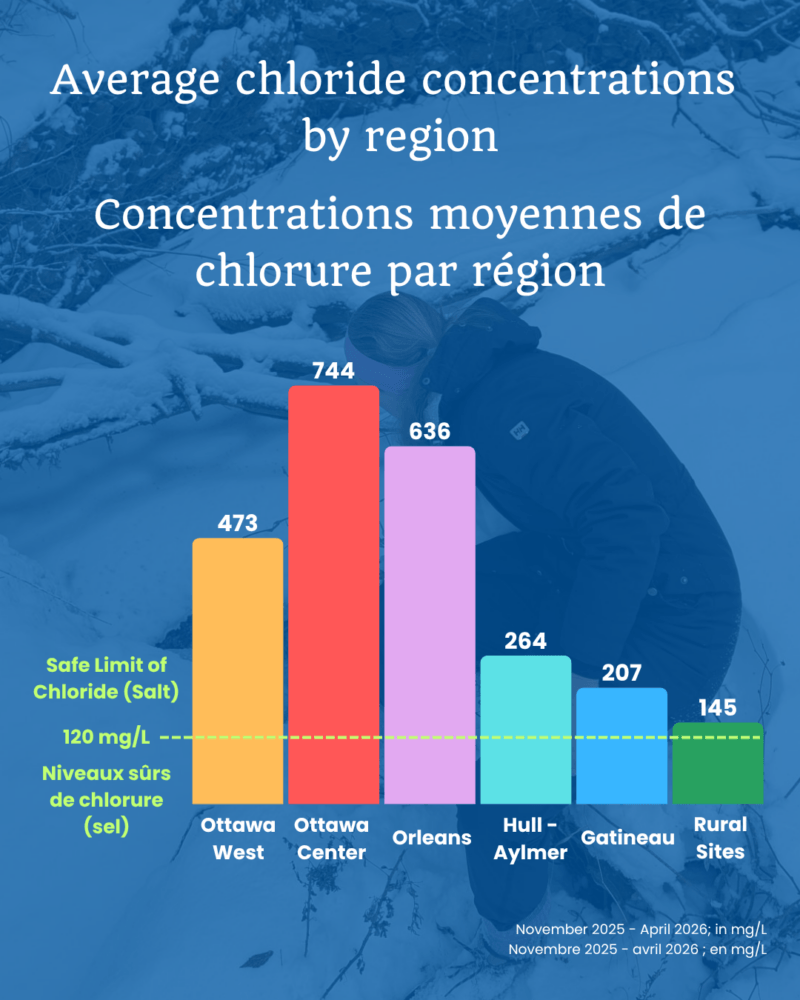
The long, snowy winter and frequent fluctuations in temperatures likely contributed to an increase in salt usage. In fact, this winter showed the highest average concentrations of road salt that we’ve seen in the last four years, especially in Ottawa Centre. Orleans saw the biggest increase in salt use this year compared to the last five years.
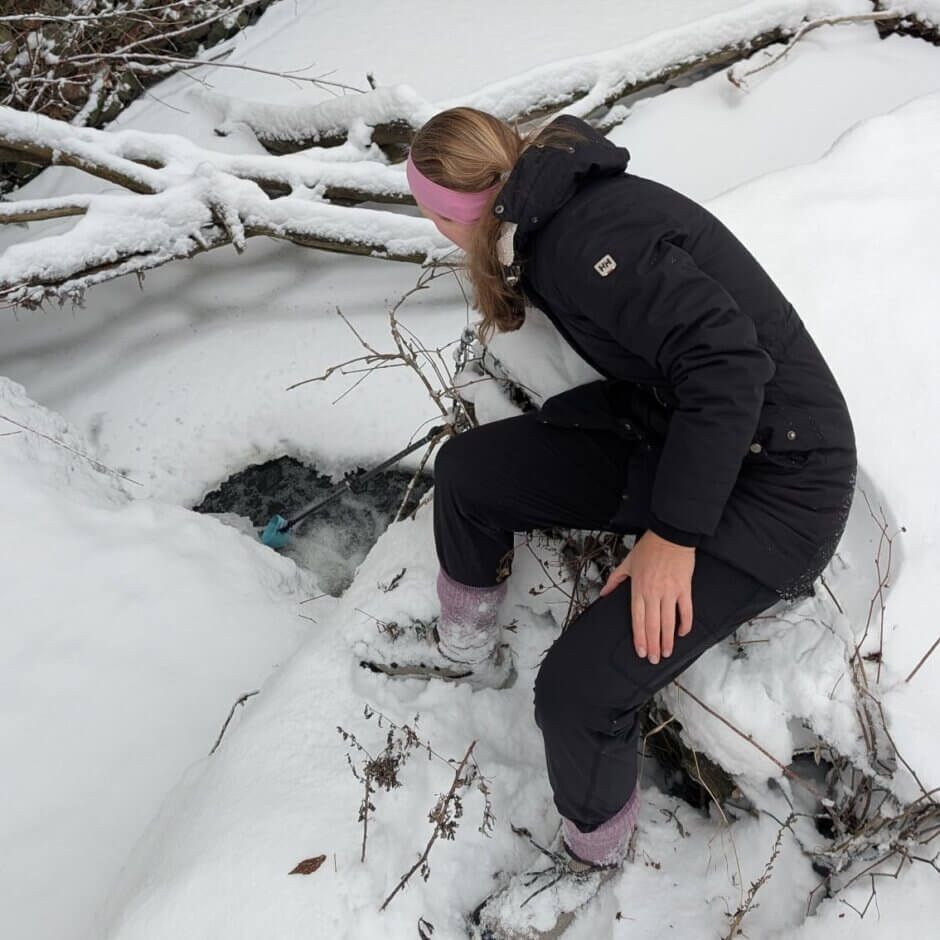
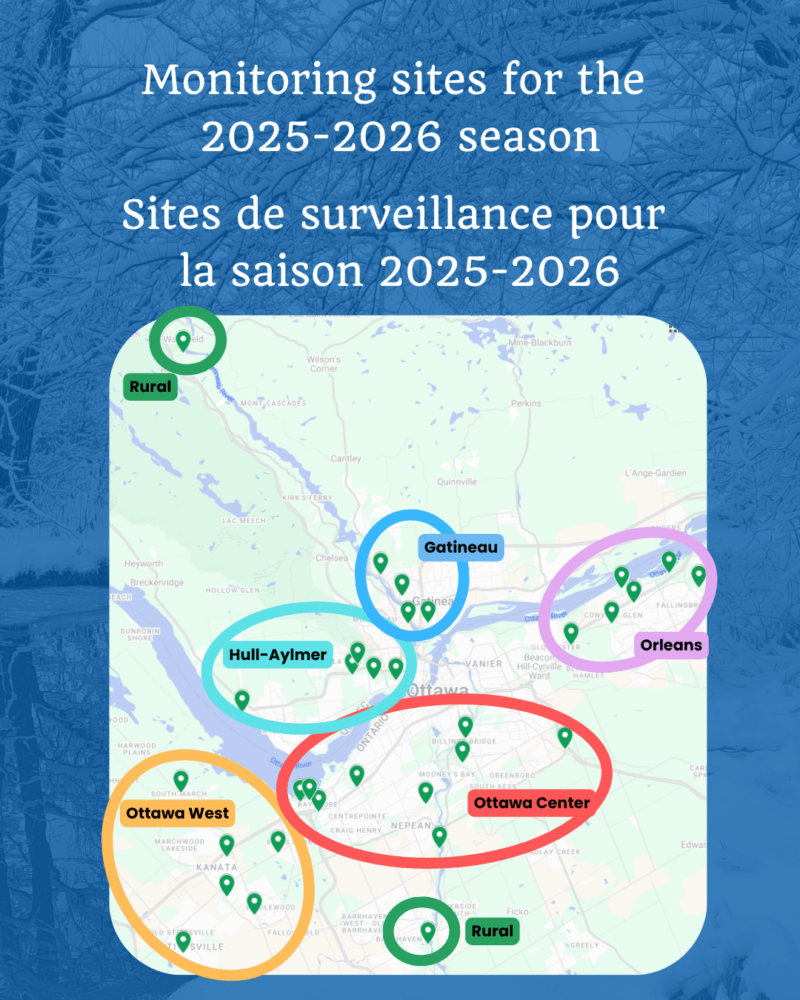
We would like to give a special shout-out to the hardworking volunteers who helped us collect 264 samples from 32 different monitoring sites across the National Capital Region this winter. Their work makes all this data collection and analysis possible!
If you want to dig deeper, all the findings from our monitoring initiatives can be found on our Open Data Portal here.
Taking action on road salt overuse
While the use of road salt in the National Capital Region continues to be a source of concern, some steps are being taken to address the issue. The City of Ottawa has expanded a pilot project to test sidewalk salt controllers that monitor and adjust road salt application.
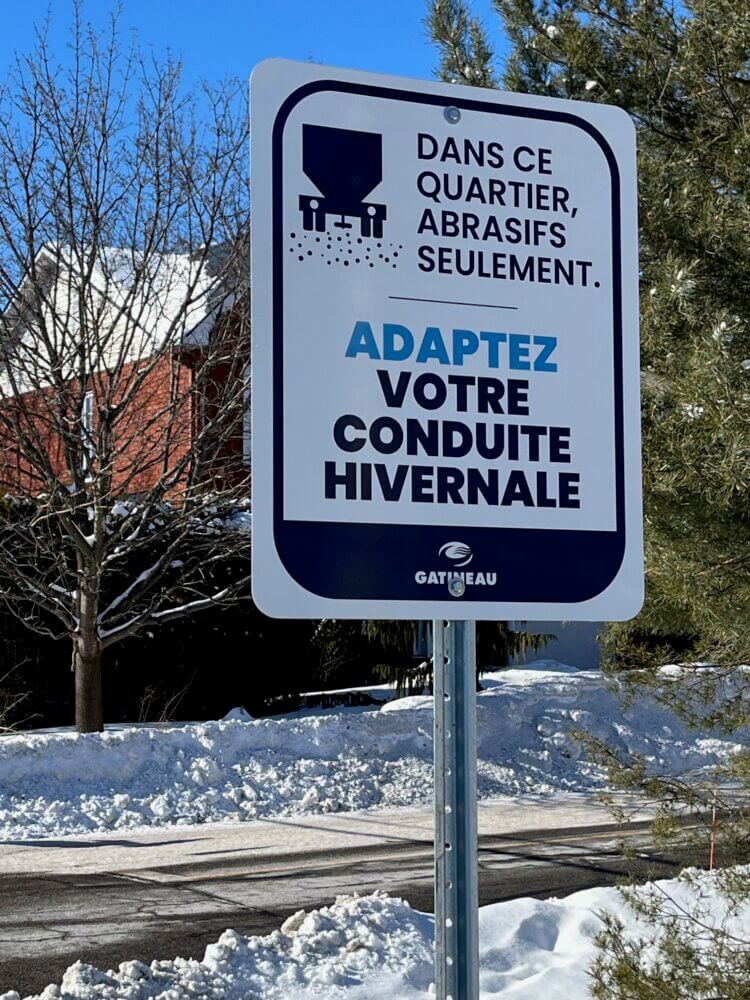
The City of Gatineau has also been running a road salt reduction program, as part of their Ecological Neighbourhoods project, that uses traction aids like sand and gravel as opposed to salt. The goal of the program includes using less road salt to try to protect fragile ecosystems, reduce road maintenance costs and decrease infrastructure damage. We hope to see the adoption of more salt-reduction practices in the watershed in the future!
At Ottawa Riverkeeper, we are continuing to develop our project to evaluate Road Salt Management Plans in the National Capital Region, based on the recommendations for our 5-year Road Salt Report.
In the meantime, what can you do? Here are some quick things to consider:
- Share our tips for reducing road salt usage with your family, friends, and neighbours.
- Become an ambassador for the river and volunteer with community-based monitoring projects that keep an eye on salt levels in the watershed during the summer months. Volunteers keep Ottawa Riverkeeper running!
- Check out our 5-year Road Salt Report findings and learn more about our salt monitoring program.
- Consult our online learning library for educational resources, perfect for teachers and students looking to learn more about road salt pollution and other threats facing the watershed.
Leave a Reply