
Posted: June 11, 2025
Sign our petition to restore daily testing at Ottawa beaches!
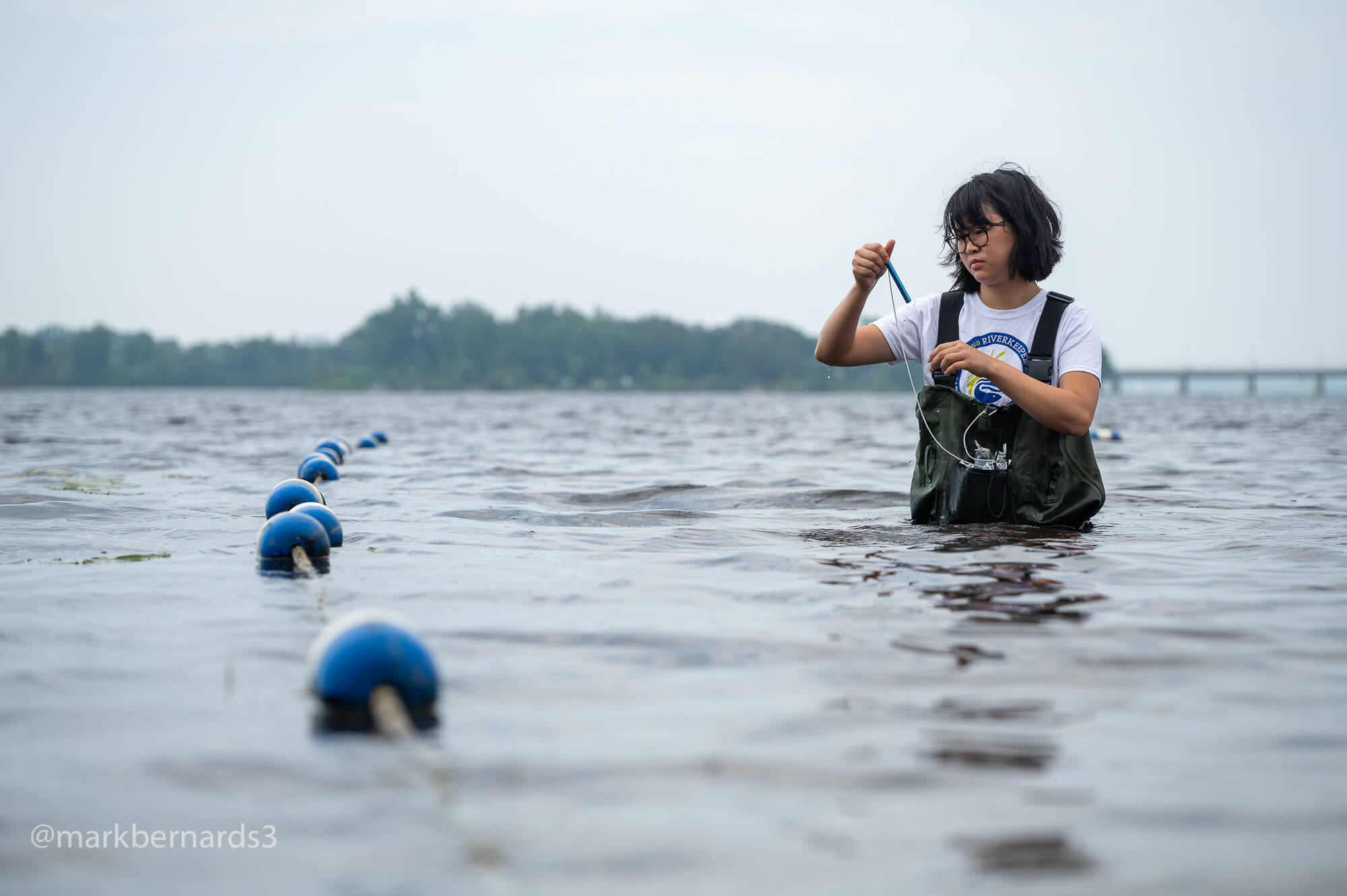
Ottawa has long been a leader in taking water quality seriously. However, recent reductions in testing, as announced by the City of Ottawa, are a massive step backward. Urge the City to return to daily testing in 2025 so swimmers have the information they need!
For the past decade, Ottawa Riverkeeper has pointed to the city of Ottawa as an example of how cities can support residents and visitors in accessing public beaches. The City invested millions of dollars to reduce combined sewer overflows to improve water quality in the Ottawa and Rideau Rivers, notably through the Combined Sewage Storage Tunnel. The City has also been at the forefront of information sharing, recently unveiling a live and real-time map to track sewer overflows. And until this summer, the City of Ottawa has provided daily water quality results so that every person accessing one of the 5 City beaches could make informed decisions about swimming.
It was therefore a massive disappointment to learn that the City of Ottawa is planning to reduce its testing of water quality at City beaches from 7 days/week to only 1 day/week. This is a huge step back by the City of Ottawa, and this decision will negatively impact swim sites at Britannia Beach, Mooney’s Bay Beach, Petrie East Bay, Petrie River, and Westboro Beach.
Why daily testing is important
In urban spaces, water quality is influenced by a number of factors. Over many years, thanks to those daily test results, it is well understood that water quality degrades after a large rainfall, but that within 24 hours, water quality typically returns to a level suitable for swimming.
However, there are other periods outside of these large rainfalls that have poor water quality. Ottawa Riverkeeper reviewed the available data, including temperature, precipitation, and water levels, but found no clear correlation explaining when water quality deteriorates. In addition, there were periods when these poor water quality results persisted for multiple days.
We are concerned. Testing just once a week is not enough to keep the public informed.
We believe that:
- The public deserves to know whether it’s safe to swim or not.
- Testing only 1 day/week is not frequent enough to catch changes in water quality in an urban environment.
- There are too many factors influencing water quality to make an assessment without testing.
Looking at the data
To illustrate our point, we decided to do some digging in the data. We crunched the numbers from the last three seasons (2022-2024) to understand what’s at stake with the City of Ottawa’s new plan.
The results are alarming: In testing 1 day/week, up to 20% of results will be false. In a 12-week swim season, that equates to roughly 17 days with false results: either the beach is open when the water is actually too polluted to swim in, or the beach is closed when the water is actually safe.
Though the water quality of the Ottawa River is usually swimmable, this is not always the case. Many factors can negatively influence water quality. This includes heavy precipitation, sewer overflows, stormwater drainage, higher water temperatures, shallow water, low flow, algal blooms, and the presence of wildlife such as geese, whose feces can contaminate the water. With so many factors influencing water quality, the only way to know for sure whether it’s safe to swim is through testing.
A swimmable river deserves robust testing
City of Ottawa beaches are important for residents and visitors alike. They provide exceptional recreational and tourism opportunities. They allow people to cool off on hot summer days, which are becoming increasingly frequent. And, like all blue spaces, access to urban beaches plays an important role in supporting both physical and mental health.
Robust testing reinforces that the Ottawa River is safe to swim in. But public perception hasn’t caught up to that reality. In a survey conducted by Abacus Data on behalf of Ottawa Riverkeeper in 2020, only 24% of respondents said they believed the Ottawa River was safe for swimming. That’s despite years of daily testing showing otherwise.
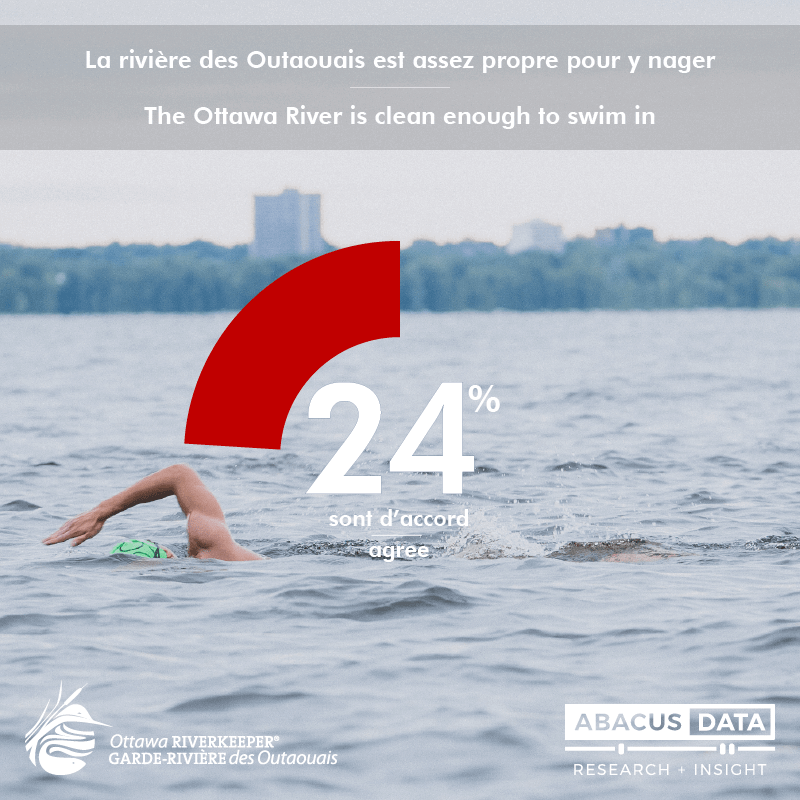
This perception gap matters. The only way to change it is with reliable, frequent data. Cutting back on testing risks undermining the confidence that has slowly been built through years of investment and monitoring.

Simply compare the Ottawa River to any other capital river around the world, and you’ll see how lucky we are. During the 2024 Summer Olympics, swimming events in the Seine River in Paris were permitted even though average E. coli concentrations there were more than 53 times higher than those recorded at the Ottawa River’s NCC River House.
Ottawa is fortunate to have a clean, swimmable river, but only consistent testing will keep the public informed and help people take pride in this river.
You can take action
Ottawa Riverkeeper is urging the City of Ottawa to reinstate daily water quality testing ahead of the 2025 swim season—and you can too!
Ottawa Riverkeeper has launched a petition to make our point. Add your name to let the City know that you care about having the best data about water quality at your local beaches.
I was very surprised and disappointed to hear that the City of Ottawa was changing its policy on testing water, to once a week. This is a decision that could adversely affect the users of the river and their confidence in its water quality. It could also make it more difficult to track changes to the water quality over time. We are a community that appreciates and enjoys our river and its ecosystem. Let’s continue our many years of work to improve it’s health.
If people are swimming in the water, and there are regular instances of pollutants going into the water, the first priority is to make sure it’s safe to swim in. So it needs to be tested every day, not once a week.
Very disappointing and worrisome that the City has chosen this. People will just stop swimming at the beaches or they will risk getting sick.
Re the petition.,.All 3 address fields are required but not actually needed -it won’t accept the submission if you just fill one with your street address, it is not accepted and you have to go back and enter something. Should be an easy change and people might not take the time to fix it.
Ruf said, “…it takes at least a day for results to come back and bacteria levels in water can change within that time period”. So somehow having information that’s a week old is better? This is insane and a ridiculous way to save a pitiful amount of money. City of Ottawa — shame.
The city of Ottawa should absolutely change this unwise decision, which can have a serious impact on the safety and wellbeing of its population. Daily water testing is necessary and beneficial to people who use the waterways; it can also Inform better decisions and responses regarding the environment and fauna. Waiting a week regarding an agressive and harmful bacteria during the warmer months could prove to be disastrous and cost way more in the end. Prevention is always best. Daily water testing is a must.
By not testing the water daily, the City of Ottawa is exposing its citizens, including vulnerable children, seniors and all adults to illnesses that could be detrimental to their wellbeing. Cutting back on safety measures is wrong and could lead to innocent deaths.