
Posted: November 26, 2021
The Hickorynut: A summary of our project to protect this freshwater mussel
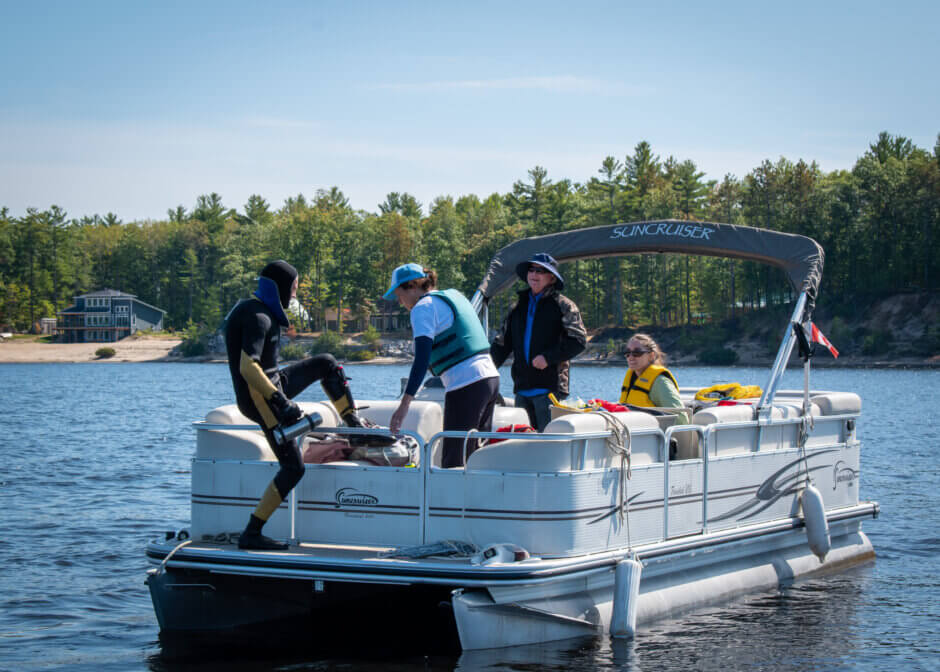
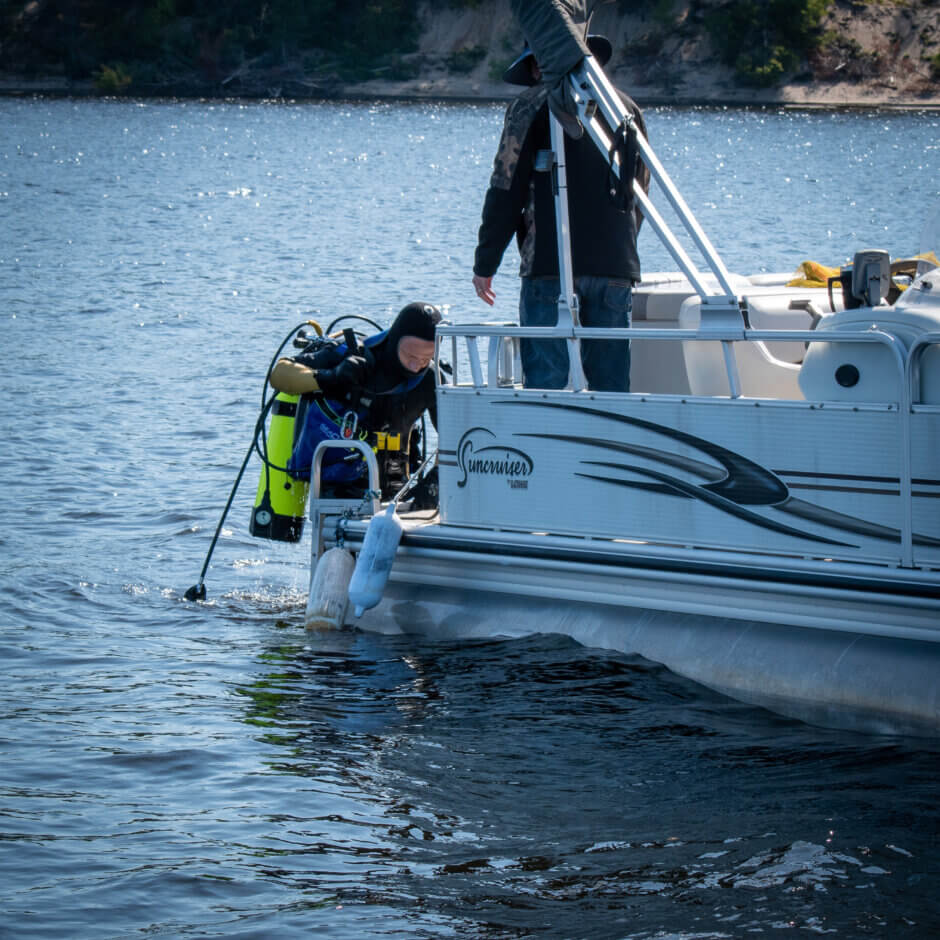
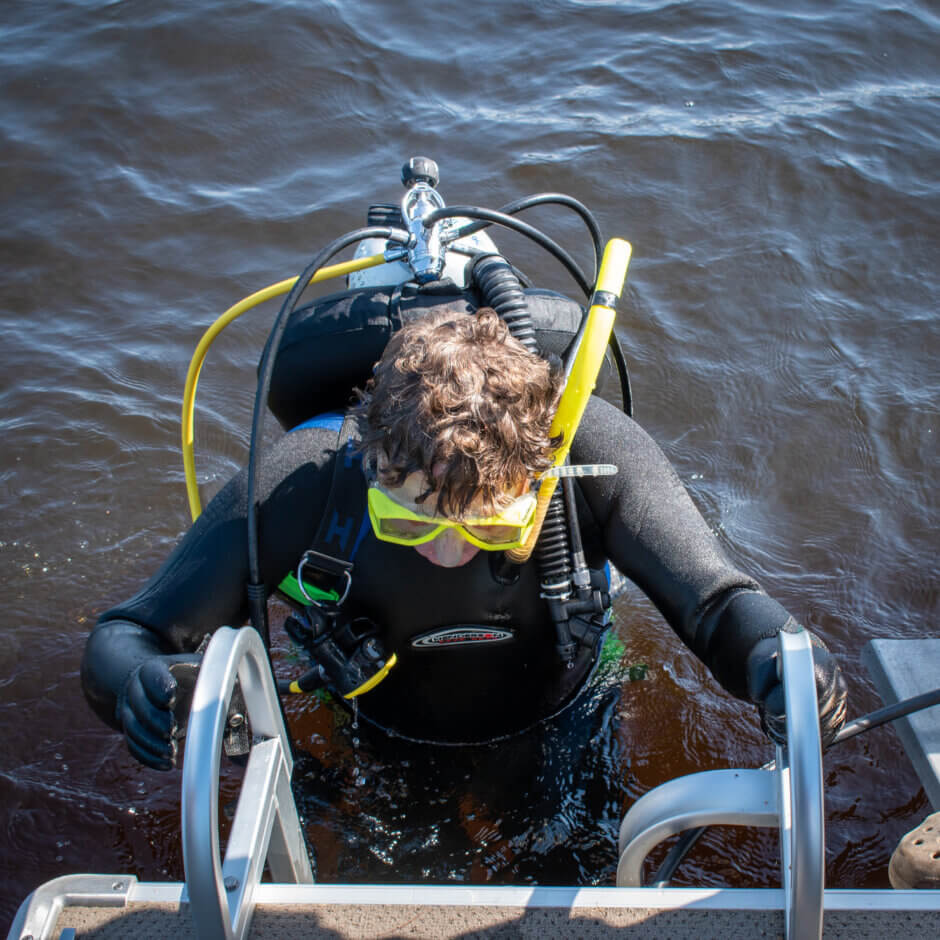
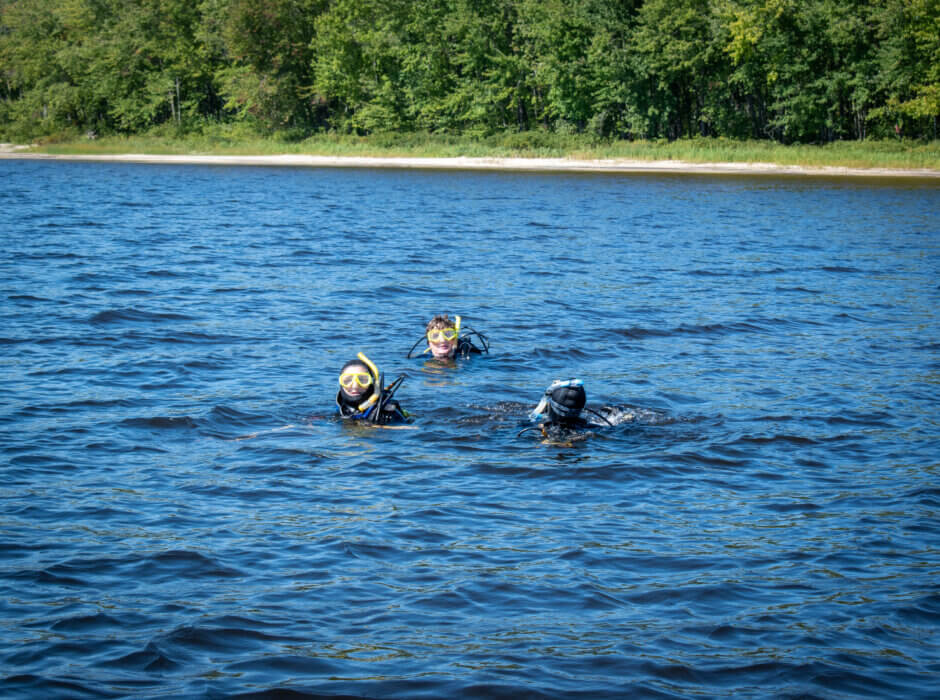
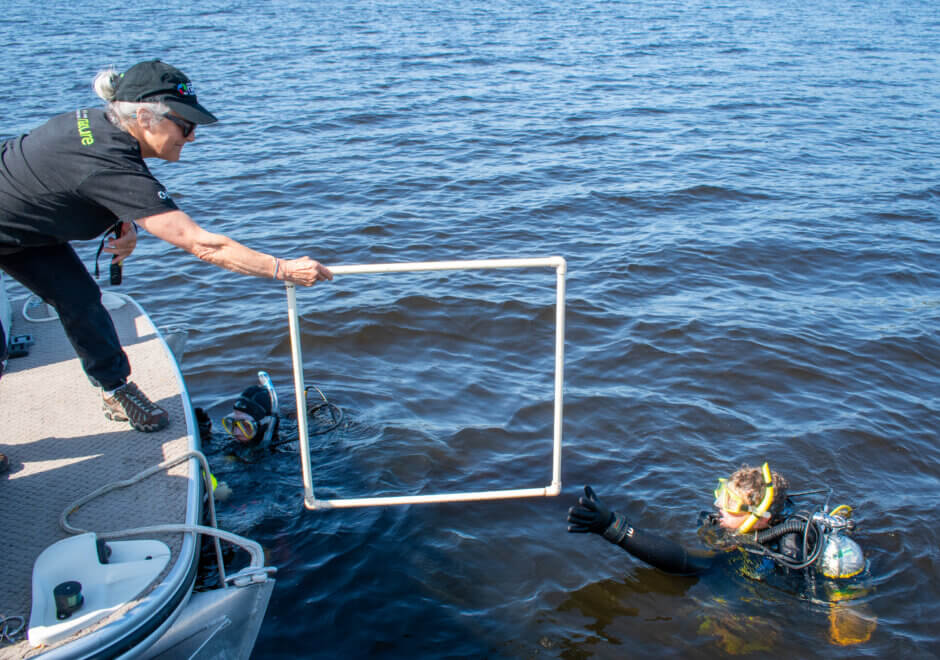
On August 15th, 2019 the Hickorynut was added to Schedule 1 of Canada’s Species at Risk Act, officially making it an endangered species in Canada. That very same day, Ottawa Riverkeeper staff were out on the water at the site of the largest population of Hickorynut in Canada, alongside Canadian Museum of Nature mollusc expert, Dr. André Martel, and his dive team.
The Hickorynut (Obovaria olivaria) is an elusive species of freshwater mussel that lives nestled in the sand or silt deep at the bottom of the Ottawa River. Like all mussels species the Hickorynut requires a host fish – in this case Lake Sturgeon – as part of its reproductive cycle. This means they are never found far from sturgeon habitat, and also that their fate is tied to the host fish.
Unfortunately, both species face several threats to their survival, such as dams, which fragment habitat and impede sturgeon migration, as well as from invasive species like zebra mussels, which contribute to habitat degradation and directly contribute to declines in Hickorynut survival.
In 2019, Ottawa Riverkeeper embarked on a project, in partnership with Dr. André Martel at the Canadian Museum of Nature, to investigate the presence of the Hickorynut and Lake Sturgeon in the Ottawa River. We also wanted to generate public awareness and support for the species’ protection. Following our participation in a number of dive expeditions in the Lac Coulonge reach of the Ottawa River in late summer 2019, Ottawa Riverkeeper staff were more excited than ever to go out and share information about these species with shoreline communities and river users!
And then the pandemic hit…
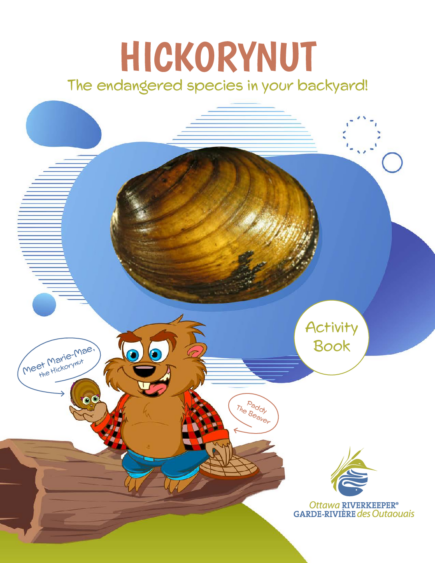
With additional dives and community visits off the table, we quickly shifted gears, and with the help of amazing friends and partners, developed a number of online resources like our Hickorynut Storymap, and animated educational video and accompanying activity book, to share findings from Dr. Martel’s dives. We also hosted some of our very first webinars, taking participants under the surface of the waters on “Deep Dives” into the habitats, life histories and status of the Hickorynut and Lake Sturgeon in the Ottawa River.
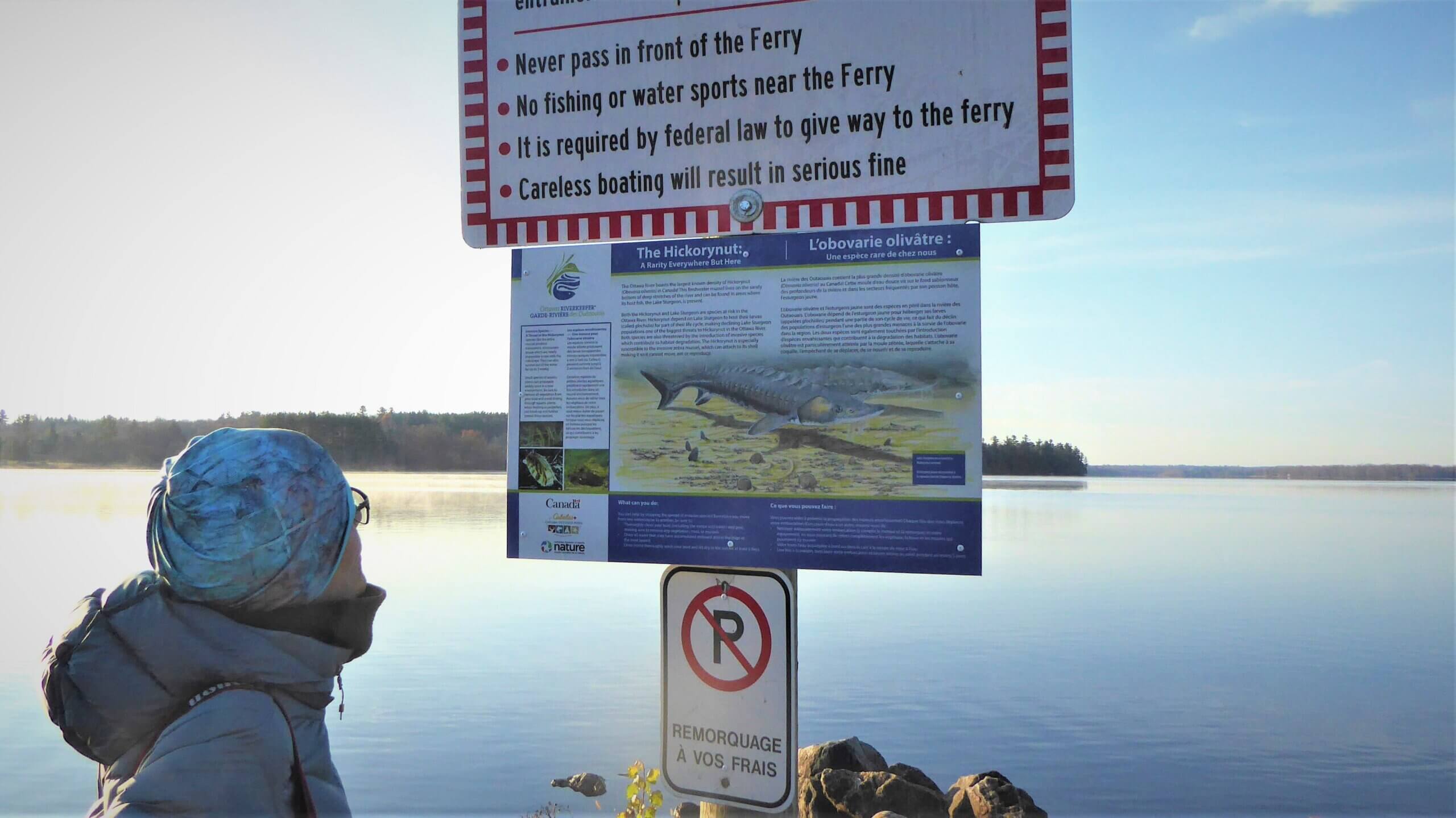
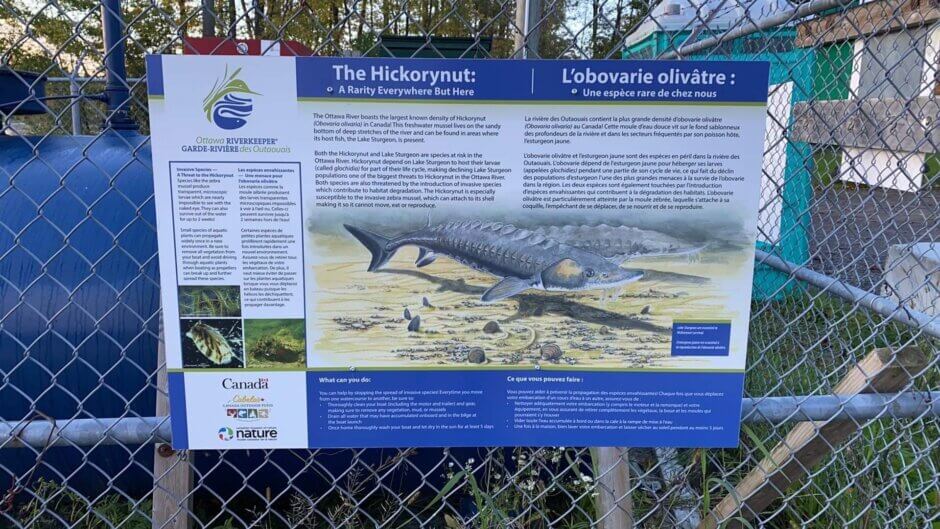
Recently, we also had signage installed at boat launches along the river, in Pembroke (ON), Desjardinsville (QC), Arnprior (ON) and Quyon (QC), locations near known Hickorynut and Lake Sturgeon habitat. These signs feature information on these species and encourage boaters to inspect and clean their boats for common invasive species like Eurasian Milfoil and zebra mussels, that threaten the health of the Ottawa River and its native species.
The installation of these signs marks the culmination of Ottawa Riverkeeper’s Hickorynut project, but that doesn’t mean an end to our work protecting species at risk in the watershed! We will continue to strive for greater protection and public awareness for these species, including the Hickorynut and the Lake Sturgeon.
Participating in our online campaigns, like our current American Eel campaign, or hosting a shoreline cleanup with the help of the iCleanup app are two easy ways you can help to protect species at risk and their habitats. And if you’re a boater, consider adding your name to our Boat Wash Pledge, and show your commitment to inspecting and cleaning your boat for invasive species when moving between water bodies.
A big thank you to Dr. Martel, his volunteer divers and the Canadian Museum of Nature for their participation in this project. Thanks as well to Marc St. Onge for his help with our Storymap, Laurie Dool for her beautiful illustrations and design work on our boat launch signage, to the team at the Kidoons Network for creating the Mussels in a Nutshell video and activity book, and to Cabela’s for funding support. Last but not least, a huge thanks to all our followers and supporters who signed our Boat Wash Pledge and did their part to help us spread the word about protecting habitats and species at risk in the Ottawa River watershed: Thank you!
< Previous post Next post >