
Posted: December 18, 2024
The 2024-2025 Road Salt Program at Ottawa Riverkeeper
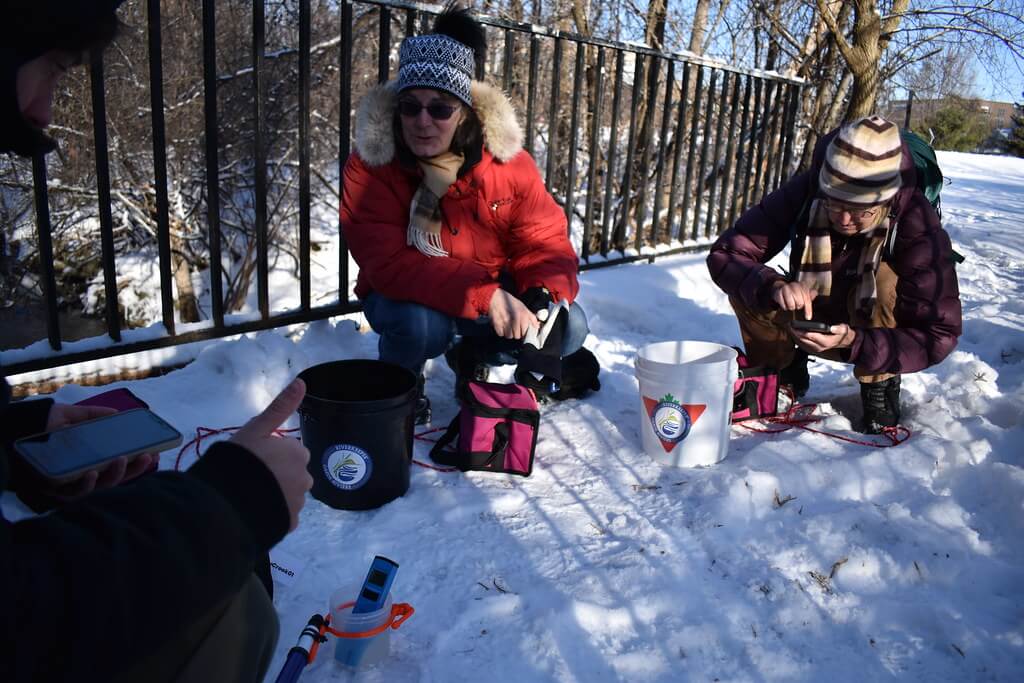
As snow falls in Ottawa and Gatineau, we prepare for another season of road salt monitoring. Read about our latest evolution of the program, changes to our methodology, and what we are seeing so far!
Have you seen the snow in the Ottawa-Gatineau region? Probably a silly question, since it has been hard to miss these last few weeks. However, alongside all the snow, have you noticed something else starting to show up on roads, sidewalks, parking lots, and generally all over the place? Unfortunately for our local waterways, with all the snow comes tons and tons of road salt. While road salt can help to keep dangerous winter conditions in check, too much salt causes significant harm to our urban freshwater ecosystems.
Thanks to amazing and dedicated volunteer community scientists, Ottawa Riverkeeper has been monitoring the impact of road salt in local streams and creeks in the Ottawa-Gatineau area for five years. This year we are continuing to gather data, using new methodology to make the program even better.
Kicking off the 2024-2025 monitoring season
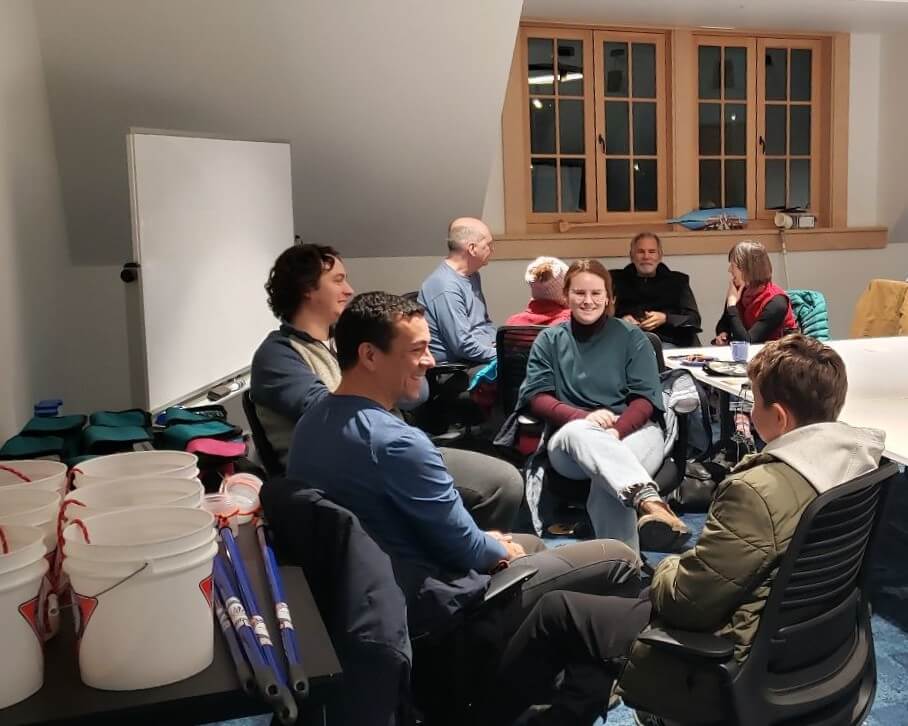
To get everything ready for the winter season, we held two in-person training sessions near the end of November. Over 20 passionate volunteers, including veterans of the program and eager newcomers, received training on collecting data. The sessions were filled with insightful discussions, and paired experienced volunteers with fresh faces during the hands-on training, creating an environment for sharing stories and knowledge.
These training sessions were a great success, helping to strengthen our team and improve the quality of the data we collected. The timing was also perfect, coming right before the region received the first major snowfall of the year. Over the next few months, the science team at Ottawa Riverkeeper will work closely with the road salt monitors to help answer questions and ensure that sampling is done properly.
Changing methodology to capture better data
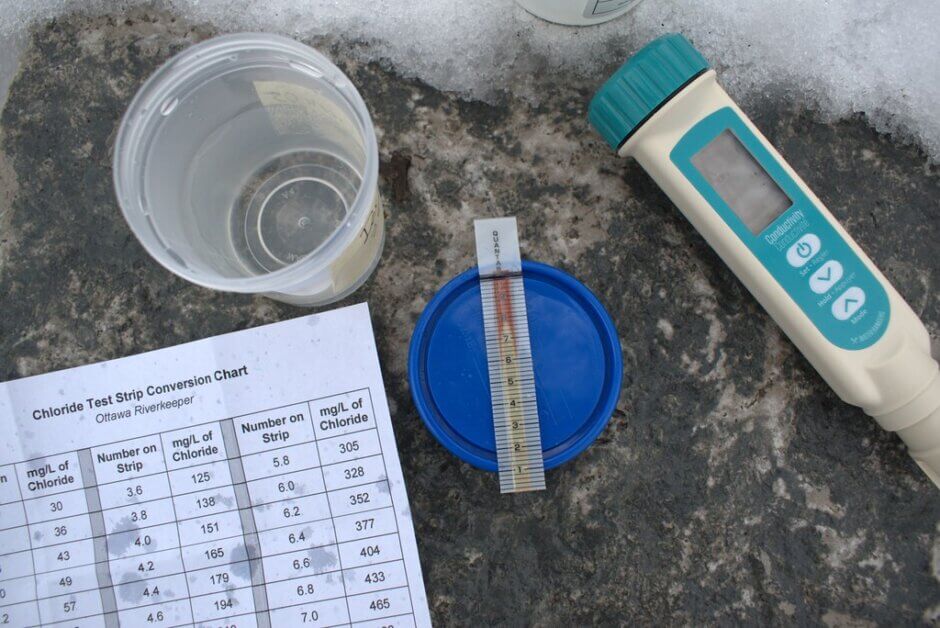
Since the start of the road salt monitoring program, we have adjusted our procedures to make sure we are capturing a variety of important data. Last winter, we piloted new chloride test strips, which work similarly to the pH strips many people use for pools.
These strips are not only cost-effective and easy to use but also align our program with other monitoring initiatives across the country and internationally. By adopting these strips, we can directly compare our findings with those of other groups, providing a broader context for the trends we’re observing.
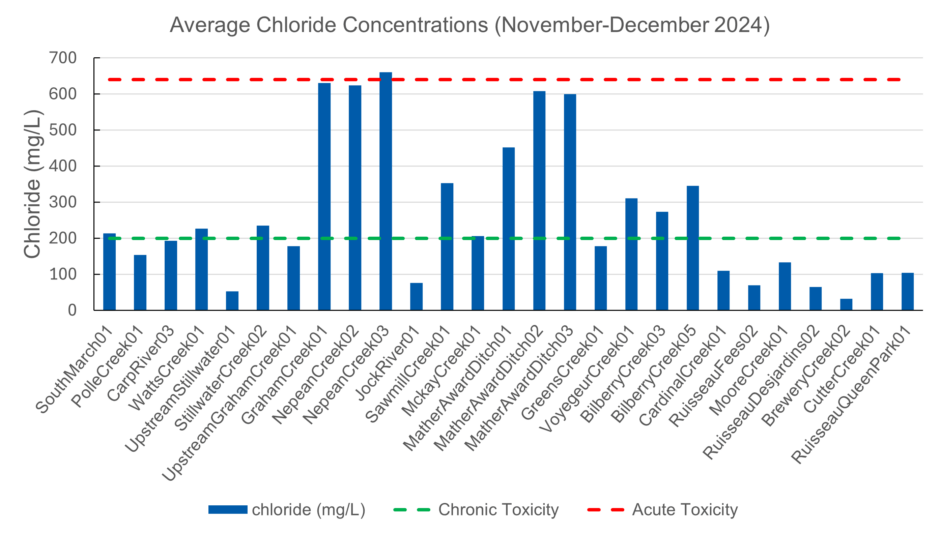
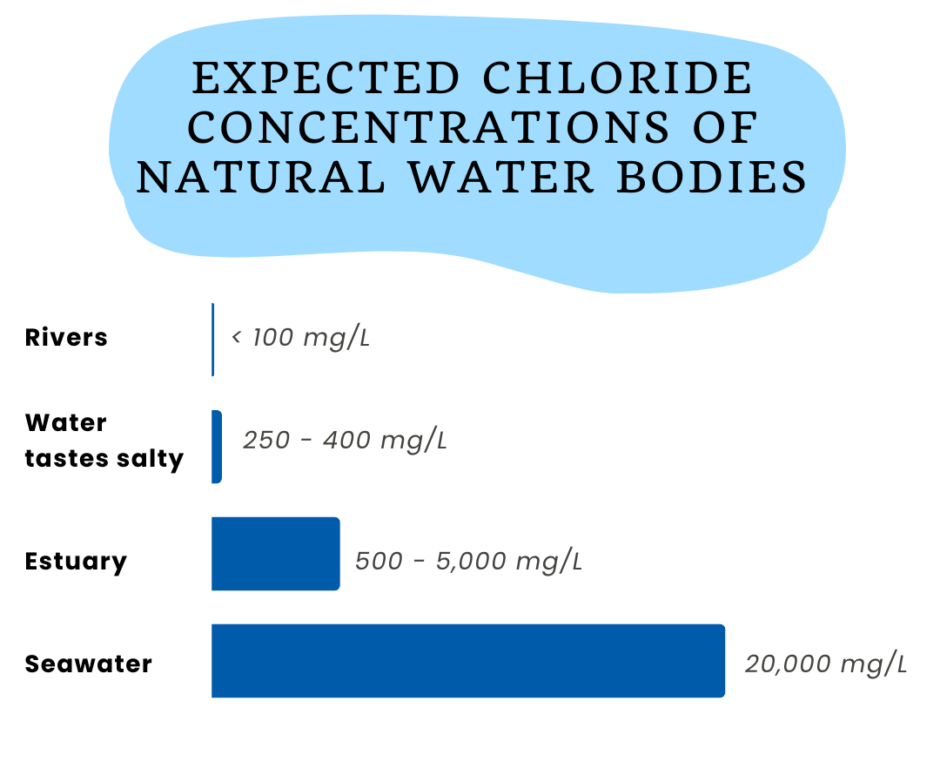
With a successful pilot under our belt, we will be exclusively using the chloride test strips this season. Additionally, we will be shifting our testing schedule to make our data even more reliable. So far, our new methods are working well! Since the end of November, volunteers have already collected over 50 chloride measurements. Preliminary results show that nearly 70% of our sampling locations have chloride concentrations above the chronic toxicity threshold (120 mg/L), even though winter has just begun. Nepean Creek, in particular, recorded a startling 1016 mg/L of chloride—more than 10 times the normal levels for rivers, which typically remain under 100 mg/L.
To put this into perspective, water with chloride levels between 500 and 5000 mg/L is considered brackish, a condition usually found in estuaries. While our measurements are far below seawater’s 20,000 mg/L, the levels we are seeing still raise significant concerns about the health of our urban waterways.
Reflecting on five years of monitoring
We wouldn’t be here without the help of the community scientists who kindly give their time to support this monitoring. If we didn’t have these amazing individuals willing to brave the winter weather, we’d never have compiled five years’ worth of data on the harms that road salt is causing our urban freshwater ecosystems. To mark this impressive milestone, we are preparing a report pulling together all the data we’ve collected since the project launched in 2019. Look out for more on that in early 2025!
How can you help?
There are lots of ways to reduce your road salt use, and we have been sharing tips and tricks to do so for many years. Check out our blog from last year detailing 5 Tips to Reduce Your Road Salt Use.
Looking for more inspiration? Last year one of our road salt volunteers made a difference by reaching out to their local Councillor about oversalting in their monitoring location, leading to a change! Read that story here.
We’ll have more to share soon as we prepare for our annual Road Salt Reduction Week in 2025, so stay tuned to our blog, subscribe to our newsletter, and follow us on social media to know when we launch and how you can take part!
Please provide infographics regarding the problems of road salt to the marine ecosystem. This info can be easily circulated on facebook.
The city spreads far too much salt on sidewalks. I have written to the mayor (Sutcliffe) but only the usual (feeble) response. Can you tell me if chloride levels are increasing in the Ottawa River and also in its tributaries and in groundwater?
Great question Peter! We only measure chloride levels in small streams and creeks, as they are the most vulnerable to large changes in chloride concentrations. Here is a link to our five year report showing the levels we have observed:https://ottawariverkeeper.ca/wp-content/uploads/2025/01/5-Year-Road-Salt-Report_EN.pdf
We don’t currently monitor groundwater, nor do we monitor the main stem of the Ottawa River as part of our road salt monitoring program. The Ottawa River is incredibly large, and flows quite fast, which means it is less susceptible to increases in chloride levels than smaller creeks or lakes in urban areas.
Where do your thresholds for chronic and acute toxicity come from? Looking for the source for a paper I’m writing, thanks!
Hi Brogahn, great question! These thresholds are set by The Canadian Council of Ministers of the Environment (CCME). Here is a link to the overview on their website: https://ccme.ca/en/chemical/28