
Posted: December 8, 2022
The 2022-2023 Road Salt Program at Ottawa Riverkeeper
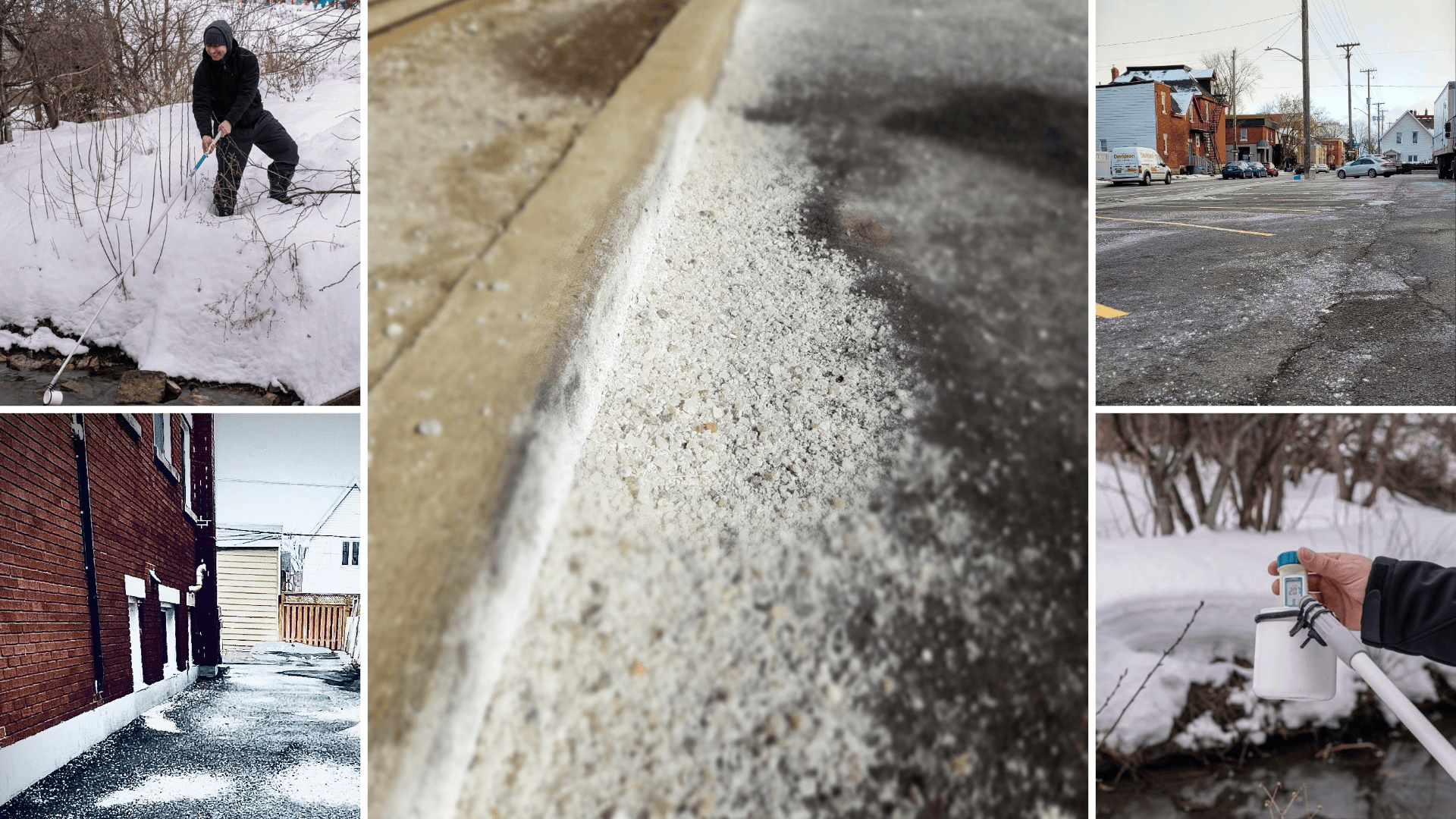
As we prepare for snowy weather in the Nation Capital Region, here is an introduction to our continued efforts to monitor the impact that road salt has on our local freshwater ecosystems. What are we looking for, why is it a risk, and what can residents do about it?
Winter is upon us in the National Capital Region! With colder forecasts, people are unpacking boots, coats, skis, and snowshoes. While some may relish the return of a winter wonderland, many aquatic invertebrates near urban areas are probably not as excited. For three years, Ottawa Riverkeeper has been monitoring the runoff from road salts that enter local rivers and creeks, and our results overwhelmingly show that salts are causing a tremendous amount of harm to these ecosystems. Road salts are a valuable tool to improve the safety and accessibility of cities in the wintertime, but they are often over-applied or misused, needlessly contributing excess pollutants to the environment.
Why is road salt bad for the environment?
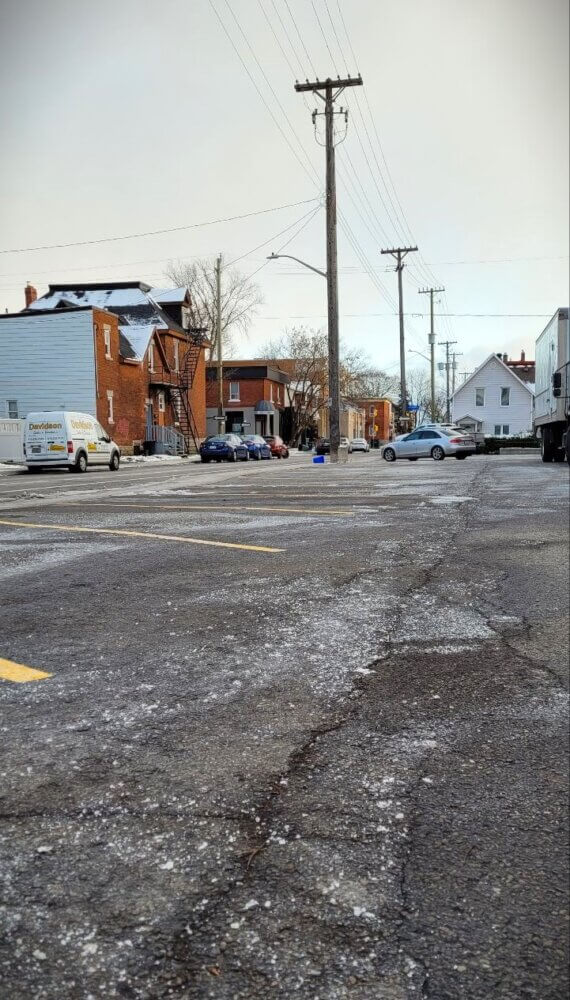
When road salts (usually NaCl) dissolve in water, they separate into sodium (Na+) and chloride (Cl-) ions. While sodium can harm the environment at high concentrations, chloride is much more likely to cause ecological damage because it is very hard to get rid of once it enters an aquatic system. When concentrations of chloride rise, they can harm freshwater organisms by negatively affecting their ability to respire, manage water content, and grow.
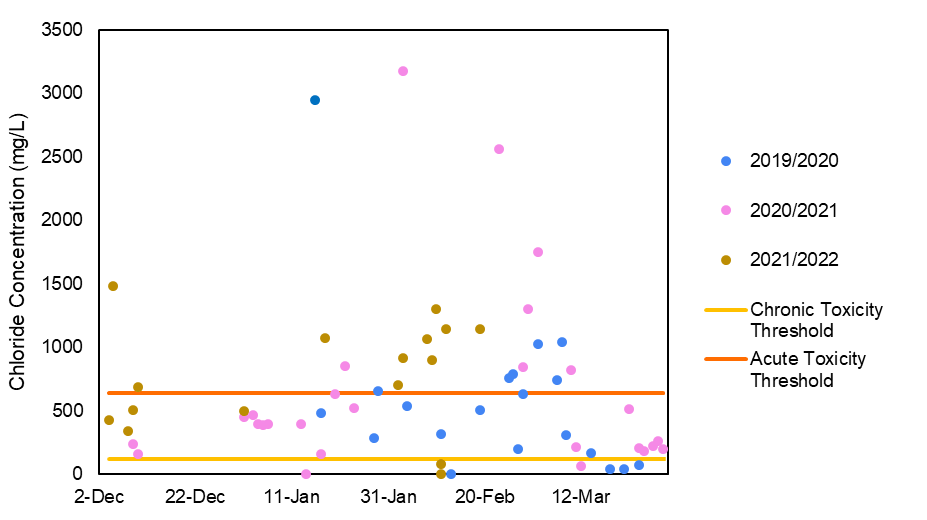
The Canadian Council for Ministers of the Environment has established water quality guidelines for the protection of aquatic life, and has identified two distinct ranges of chloride concentrations that pose problems to aquatic environments. Chloride concentrations above 120mg/L (and up to 640mg/L), are considered ‘chronically’ toxic to an aquatic system, which means that these conditions can prove fatal to many organisms if they are sustained for several days. Above chloride concentrations of 640mg/L, an aquatic system is considered ‘acutely’ toxic, which implies that many organisms may come to significant harm even through very brief exposure.
How are we monitoring chloride concentrations?
Throughout the program’s history, Ottawa Riverkeeper has sought help from community scientists across the region to take an active role in monitoring road salt concentrations in their local streams and creeks. In response to large snowfalls or big snowmelts (events when plenty of road salts are used), these tireless volunteers tromp through the snow or slush to collect water samples from water bodies.
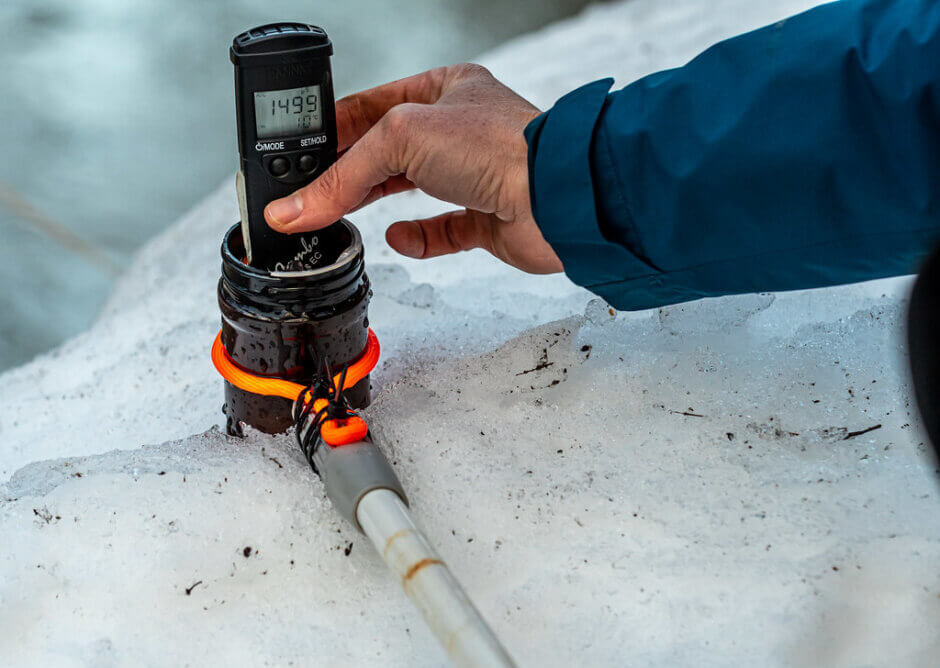
Equipped with a conductivity meter, these winter monitors can estimate the chloride content of their sites. This roundabout method works because the dominant ions in the water come from road salts, and we regularly validate this ‘proxy’ system by having water samples analyzed by a professional laboratory for their true chloride content. Over the years we have discovered a very strong relationship between conductivity and chloride for streams in the National Capital Region.
What have we found?
In our three years of monitoring, over 80% of our samples have exceeded the thresholds which indicate harm to the ecosystem! These results are extremely alarming.
Conditions can vary across different sites, which may be due to differences in flow conditions or perhaps the salting behaviour in the streams’ or creeks’ respective subwatershed. When we investigated chloride concentrations in streams and creeks in more rural areas, we discovered that there is a far lower risk posed to these ecosystems. In the latest monitoring season, we saw that over 30% of our samples from across the city exceeded the threshold for acute toxicity, meaning organisms could be harmed by just brief exposure. Taken together, these results highlight that excessive road salt use is a regional issue and merits broad action to protect local waterways.
Results from Pinecrest Creek
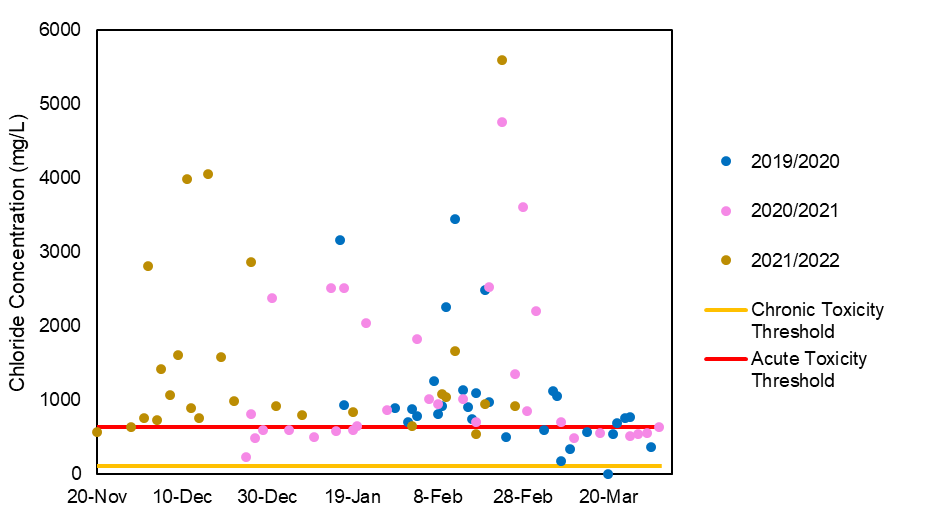
Results from Graham Creek
Having identified that road salts are a demonstrable threat to aquatic systems, Ottawa Riverkeeper has expanded our road salt work beyond monitoring to include proactive measures that seek to minimize road salt usage by commercial users and residents alike. Last year, we offered professional salt-reduction training to 13 individuals in the Ottawa area who were involved in snow clearing at private companies and public institutions. This training, delivered through the Smart About Salt program, educated operators on topics like salt spreader calibration, plowing techniques that reduce the need for salt, and note-taking practices that can minimize the risk of litigation from proper salt application. To validate the effectiveness of the training, we monitored salt concentrations in a creek near where a large operator who had taken the training cleared snow and ice and discovered a 30% reduction in the amount of salt that was entering the creek through its local stormwater drain.
What are we doing this year?
This year, we are once again expanding our program. By continuing to monitor existing sites, and by introducing a suite of new locations into our program, we hope to discover if there are any specific areas where Ottawa Riverkeeper can direct its resources to try and encourage responsible salting. We are also going out into the community to engage with residents about this issue. Look out for our booth at local events, where our outreach team will be sharing information about the latest results and demonstrating proper salting techniques.
You don’t have to be involved in our monitoring, training, or outreach campaign to take good care of your local river! Everybody can be a ‘Salt Hero’ by spreading the word about the issues that road salts pose to the environment. You can use road salt sparingly, shovel often, and use traction aids (like sand) when temperatures are too low for salt to work effectively. For fun, you can take our Road Salt Usage Quiz to test your knowledge about how much salt is needed to responsibly de-ice your driveway, sidewalks, and more! For a more in-depth analysis of the issue posed by road salts to the region, watch our webinar from March 2022: Monitoring Our Road Salt Footprint and Taking Steps to Reduce It.
We know that salt is so harmful to the environment. It’s a reality, but what should we do? In between possible solutions, I suggest using “phytoremediation” methods which are environmentally friendly and economically sound to lessen environmental hazards. This could be practical as a pilot project in a certain place. If the suggestion seems ok, more details will be presented.
As a narrow strip along salt-treated roads receives the most brackish runoff which pollutes soil and groundwater, establishing a buffering zone using hyperaccumulator plant species, could be helpful to mitigate salt hazards at least during spring and summer times.
Hi Merdad, can you provide some details or links related to your suggestion of using phytoremediation to reduce road salt imact.